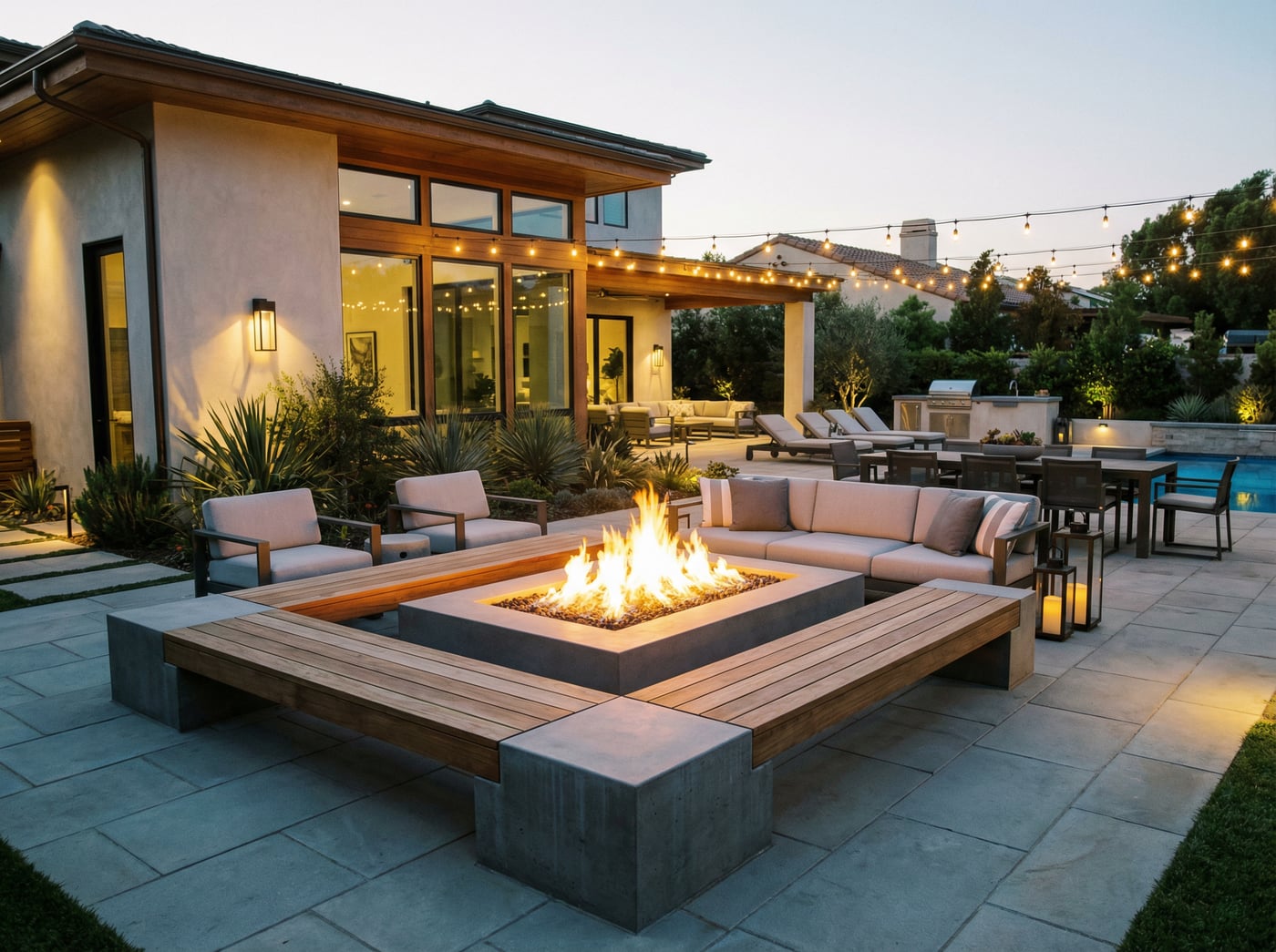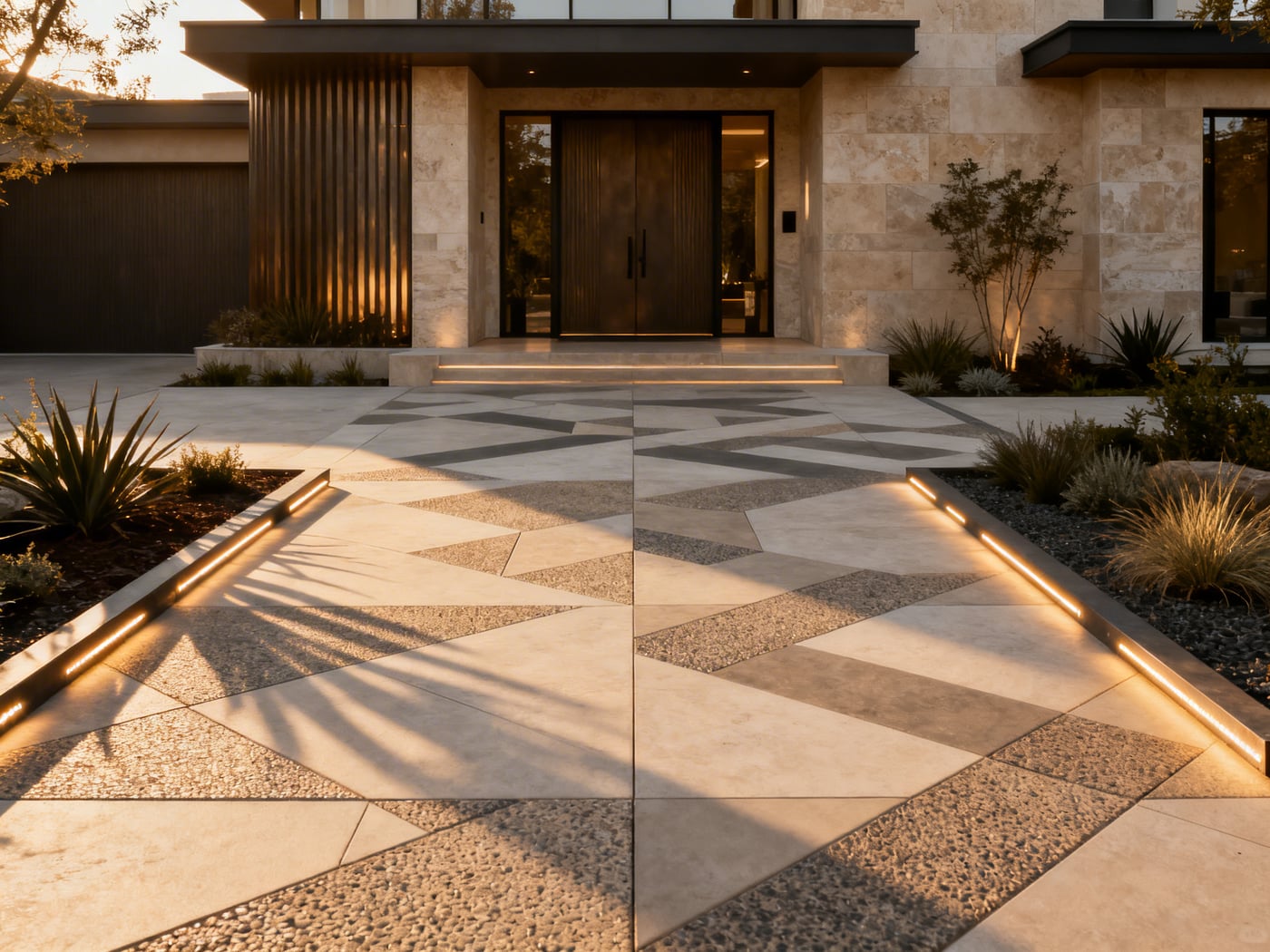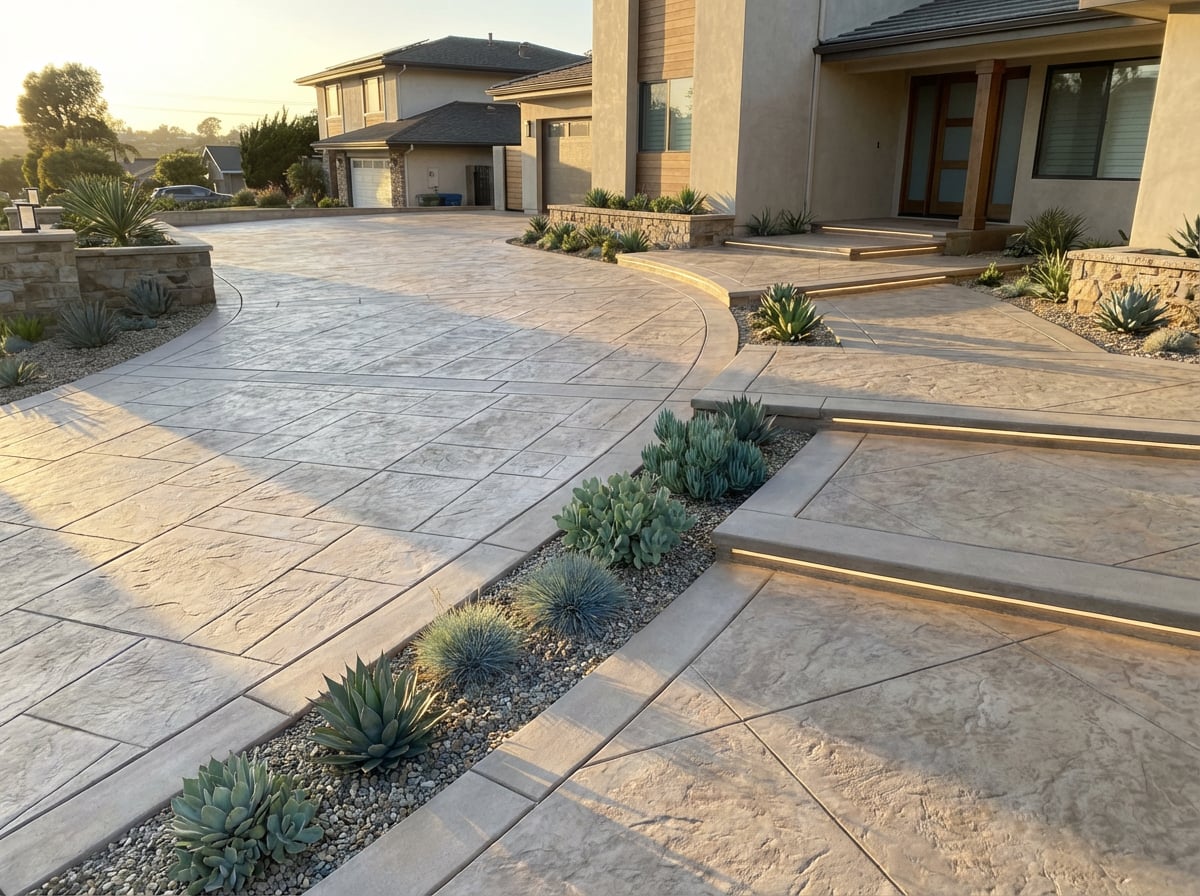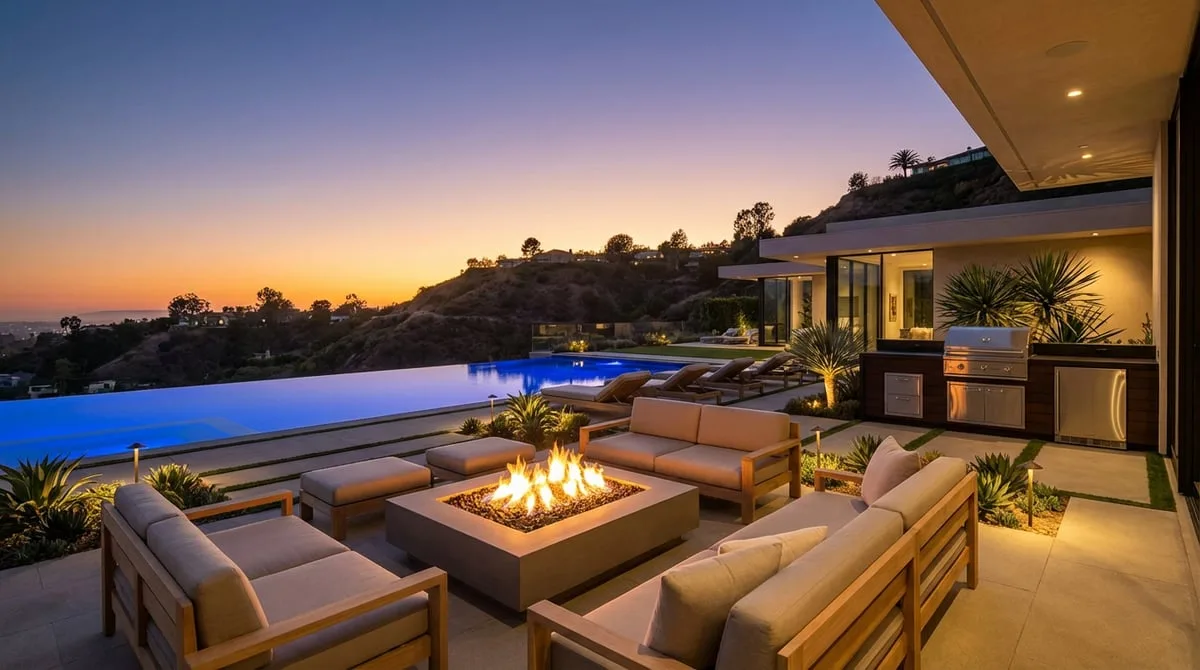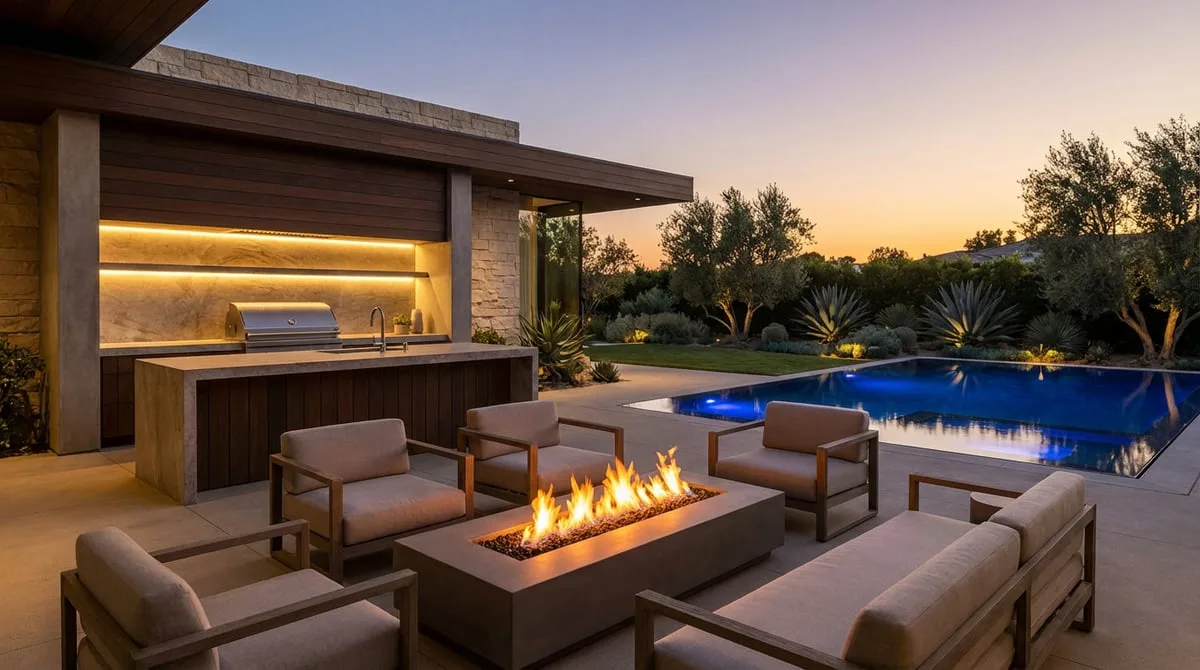
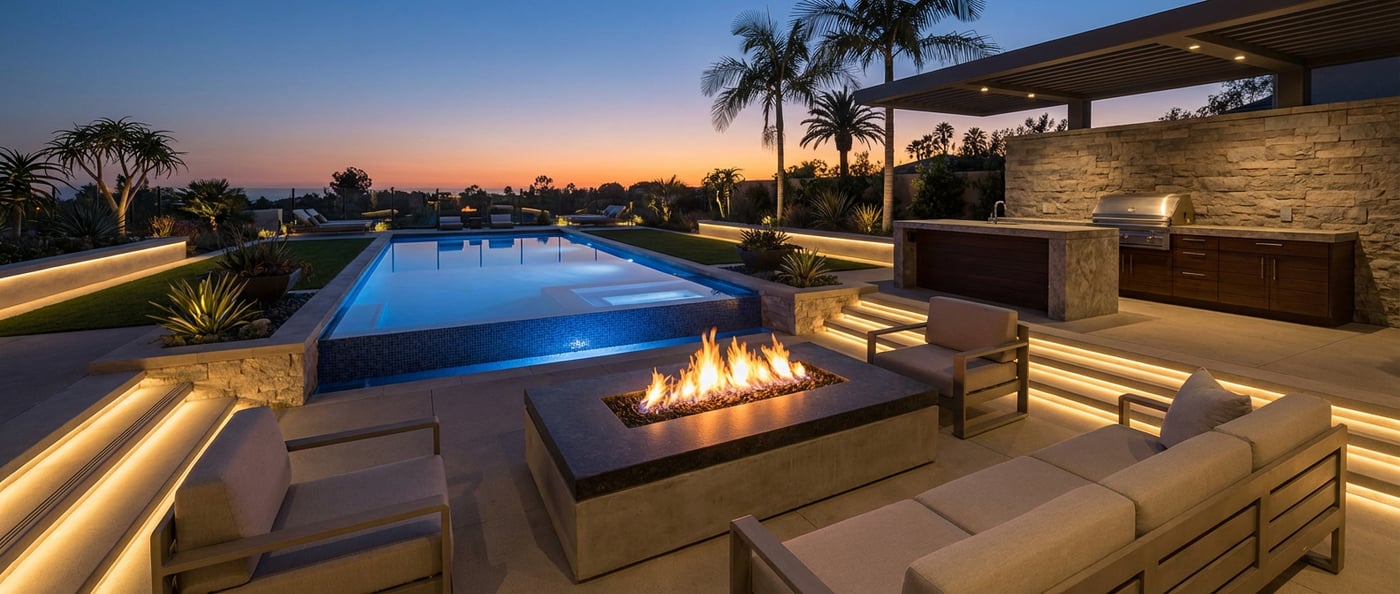
The surround is the pool
The water is not the luxury. The surround is.
A well-built pool with a broomed-concrete deck still reads tract. A modest pool ringed in honed travertine or large-format porcelain, with a cantilevered coping that casts a clean shadow line on the waterline tile, reads estate. The shell is the same shell. The experience is not the same experience. What changes is everything your bare feet, your guests, and your afternoon light actually touch.
Begin with the feeling underfoot. A properly specified deck is cool on a 95-degree July afternoon, the kind of day when the tract neighbors are dragging towels across their patios and apologizing for the temperature. It is slip-secure when wet — when a child climbs out of the shallow end and sprints for a popsicle, the deck holds. It is warm to the eye in the golden hour, the material catching the late light instead of glaring back at it. And it sits quietly against the water rather than fighting it. A good surround is almost the last thing you notice, which is exactly why it is the first thing you feel.
San Diego Landscape Remodeling builds that surround. We do not build the pool itself — we are not pool contractors, and that honesty matters on a project where the two trades have to speak the same language. What we build is the deck, the coping, the surround, and the poolside hardscape. The envelope that decides whether your pool reads like a feature of the house or a fixture of the subdivision.
What our pool-deck work includes
A pool surround is not a patio that happens to sit next to water. It is a separate discipline with its own rules.
Under one scope of work we handle:
- Deck material selection. Honed, filled travertine. Porcelain pavers rated for pool decks. Natural stone — bluestone, flagstone, cut limestone. Stamped and colored concrete when the architecture calls for it. The full range is detailed in our patios and hardscape scope.
- Coping. Bullnose travertine, cantilevered concrete with a cut-stone edge, raised coping with veneer, wet-cast cast-stone coping. The edge is the detail most amateur decks get wrong.
- Drainage. Deck slope, deck drains, and perimeter detail engineered to move water away from the pool shell, not toward it. Addressed under our drainage and grading scope.
- Slip-resistance specification. Tested with water on the actual sample before the material is ordered.
- Installation method. Slab-over-slab overlay where the existing deck can carry it, or a full demo and mud-set when the substrate cannot.
- Integration with the existing pool shell. Expansion-joint layout around the bond beam, waterline tile coordination, and coping detail that reads intended rather than retrofitted.
- Lighting prep. Conduit, transformer locations, and fixture rough-in tied into the larger landscape lighting plan.
- Perimeter detail. The transition from deck to turf, planter, seat wall, or patio — the joint that decides whether the whole yard reads composed or collaged.
We work alongside your pool builder on new construction, or over an existing pool on a remodel. What we do not do is build the pool. That is the first conversation, not the last.
Our process
We run every pool-deck project through the same seven chapters. The sequence is deliberate, and it is the reason the deck you buy at contract is the deck you walk on at punch-list.
Chapter I — The first conversation. Thirty minutes by phone or on the property. We ask whether the pool is existing or planned, who is building it, what is happening underfoot today, and what the deck has to do — how you entertain, how the kids use it, whether the summer afternoons are for swimming or for sitting. We tell you, honestly, whether we are the right fit for the work.
Chapter II — Coordination with the pool builder, or inspection of the existing pool. On new pools, we get into the same room as your pool contractor early — bond-beam height, coping tolerance, waterline-tile coordination, deck slope — before anyone pours. On remodels, we inspect the existing shell, bond beam, and deck substrate honestly. If what is there cannot carry what you want to build, we say so before we commit.
Chapter III — Material sample walk, in hand. We bring physical samples to your property — not a catalog, not a screen. Honed travertine, porcelain pavers, the cut stone you are curious about. We walk them in the sun your yard actually gets, at the hour you actually use the pool. Then we pour water on the samples and test slip. Material decisions made in a showroom under fluorescent light are material decisions that get regretted in July.
Chapter IV — Design decisions. Deck height relative to coping. Coping type — bullnose, cantilevered, raised. Drainage plan. Expansion-joint layout around the bond beam. Waterline and grout coordination. Perimeter detail. We issue a set of drawings and a line-item proposal you can read.
Chapter V — Permitting and procurement. We pull what the jurisdiction requires through the San Diego County Planning and Development Services portal or the city’s equivalent. Material is ordered to the project, from one dye lot or one quarry run.
Chapter VI — Build. Coping first, then deck. Expansion joints laid out against the bond beam before the first stone is set. Grout and seal last. A single crew, from first cut to final clean. Our Field Lead runs the day-to-day, and either Gio or Mike is personally on every project. No account manager, no handoff.
Chapter VII — The 10-Month Walk-Through. Ten months after completion — through a wet winter, a hot September, and the first real summer of cannonballs — we come back. We walk every linear foot of coping, every expansion joint, every drain and perimeter transition with you. Anything the seasons have exposed gets corrected. No invoice. Almost nobody in this trade does this; that is exactly why we do.
Materials and the brands we install
Material choice drives how the deck reads, how it wears, and how it feels on a hot afternoon.
Honed, filled travertine is our default recommendation for clients who want the estate-grade feel underfoot and the warmth on the eye. Light-color stone under direct sun reads measurably cooler — a pale travertine or a lighter porcelain will hold its temperature through the hottest part of the day in a way a dark concrete never will. For clients who want the crispness of a contemporary line, we install porcelain pavers rated for pool decks: Belgard Porcelain for the color depth and edge detail, and Techo-Bloc Industria XL for the large-format modern geometry. Natural stone — bluestone, flagstone, cut limestone — for the properties and programs where a hand-set deck is the right answer. Stamped and integrally colored concrete is on the menu when the architecture calls for continuity with existing site concrete.
Coping is its own decision. Bullnose travertine for the classic soft edge. Cantilevered concrete with a cut-stone or stone-veneer face for the contemporary line. Raised coping where the program wants a bench seat or a visual break between deck and water. A specialty materials background Mike also operates on the stone and tile side gives us supplier access and installation detail most outdoor firms do not see.
The brands matter. The hand that places the stone matters more. The coping either reads intended or it reads tolerated.
Investment and what drives the number
A pool deck and surround with San Diego Landscape Remodeling runs between $30,000 and $150,000 for the large majority of our work.
Near the floor — roughly $30,000 — is a modest perimeter resurface on an existing pool: a slab-over-slab paver overlay, basic coping replacement, and the drainage correction that almost every older deck needs. In the middle — $60,000 to $90,000 — is a larger full surround in premium material, with new coping, proper drainage engineered from scratch, expansion-joint detail set correctly against the bond beam, and a clean perimeter transition back into the yard. At $120,000 and above sits the large estate surround: natural stone or large-format porcelain, complex geometry around a custom pool shape, integrated raised planters or seat walls, coordinated lighting rough-in, and the kind of coping detail that only reads correct at hand-set tolerances.
Cost drivers you should understand before the first conversation:
- Square footage of deck. The first and largest lever.
- Material. Travertine, porcelain, and natural stone sit at different price tiers, and the delta between a standard paver and hand-set cut stone is meaningful.
- Coping type and linear feet. Bullnose travertine, cantilevered, and raised coping are three different labor propositions.
- Condition of the existing pool. On retrofits, the shell, bond beam, and waterline tile dictate what the deck can do.
- Drainage complexity. Flat lots are one number. Sloped lots with an existing backflow problem are another.
- Slab-over-slab versus full demo. Overlay where the substrate can carry it; full demo and mud-set when it cannot.
- Expansion-joint detail. The joint layout around the bond beam is where the deck either moves correctly or cracks.
- Tile and grout upgrade. Waterline tile replacement and premium grout add measurably.
- Site access. A yard a skid-steer can reach is a different job than one that moves by wheelbarrow.
Premium fair value, delivered with full founder access. That is the product.
Where we work
We build pool surrounds across San Diego County — by appointment, by plan, and by design, not by dispatch. Most of the deck work we are commissioned for sits in Rancho Santa Fe, Fairbanks Ranch, and La Jolla, on properties where the pool is a centerpiece of the program and the surround has to carry its weight. Each city brings its own soil, permit, and HOA reality. Start with the city page that matches your address — we write each one from what we see on the ground.
Frequently asked
Do you build the pool itself?
No. We are not pool contractors. We build the deck, the coping, and the poolside hardscape — the envelope around the water. On new construction we coordinate closely with your pool builder from bond-beam height through waterline-tile detail. On remodels we work over your existing pool. If you need a pool builder referral, we are glad to make an introduction to contractors we have worked alongside.
Travertine, porcelain, or natural stone — which is right?
It depends on the architecture, the program, and the sun the deck actually sees. Honed travertine is the warm classical answer and holds cooler underfoot than most alternatives. Porcelain is the crisp contemporary answer and carries color and edge detail beautifully. Natural stone is the hand-set, estate-grade answer where the budget and the architecture support it. We bring physical samples to the property before you decide.
How hot does the deck get in direct sun?
Color, density, and finish drive surface temperature more than material category. A light-color honed travertine or a pale porcelain in the light tones can run measurably cooler than a dark stamped concrete on the same afternoon. We test this with an infrared thermometer on your samples in your yard before material is ordered. Barefoot in July is the acceptance test, not the showroom floor.
What about slip resistance when wet?
We specify finish and texture so the deck holds underfoot when wet. Honed and filled travertine, textured porcelain rated for pool decks, and cleft or flamed natural stone all carry acceptable wet-slip coefficients. We pour water on the sample in your yard and walk it before we commit. A polished finish next to a pool is a finish we decline to install, no matter who requested it.
What coping type looks best?
The coping is the edge where the deck meets the water, and it is the detail most amateur decks get wrong. Bullnose travertine reads classical and soft. Cantilevered concrete with a cut-stone edge reads contemporary and crisp. Raised coping reads architectural and gives the program a seat or a visual step. The right answer is the one that matches the architecture and the geometry of the pool — we show you in drawings before we cut a stone.
Can we overlay an existing concrete deck, or does it need to be demoed?
Sometimes overlay works. Sometimes it does not. The honest inspection is on the substrate — thickness, cracking, settlement, and drainage behavior. If the slab can carry a mud-set or mortar-bed overlay within tolerance, a slab-over-slab approach saves time and money. If it cannot — and about half the older decks we inspect cannot — overlaying is a mistake that will telegraph every existing crack in two winters. We tell you which camp your deck is in before we quote.
How do you handle drainage around the pool shell?
Deck slope, deck drains, and perimeter detail are engineered to move water away from the bond beam and the pool shell. Backflow toward a pool is the single most common older-deck failure we see. Expansion joints are laid out against the bond beam so deck movement does not crack into the coping or the waterline tile. The drainage scope is detailed under our drainage and grading work.
What kind of workmanship warranty do you carry?
We warranty our workmanship for a minimum of one year, with material warranties extending longer per manufacturer. More importantly, every project includes The 10-Month Walk-Through: ten months after completion, we return to the property and walk every linear foot of coping, every expansion joint, and every drain with you. Anything the seasons have exposed, we correct. No invoice. You can verify Mike’s active Class B general contractor standing through the CSLB license lookup at any time.
Who do we actually talk to during the project?
Gio or Mike. Every project is personally run by one of the founders — no account managers, no handoffs, no “I will check with the team and get back to you.” You have both cell phones from the first call. Our Field Lead runs the day-to-day on the ground. Direct-Founder Access is part of the product, not a premium tier inside it.
Can we walk a finished surround in person?
References available on request. During discovery, we are glad to take you past completed pool surrounds so you can see coping, joint detail, and deck behavior as they live — not as they photograph. At launch we are not publishing client testimonials or quotes. That is a deliberate editorial choice, and we will revisit it once our first completed San Diego Landscape Remodeling surrounds are ready to be spoken about with the people who swim in them.
References available on request
We do not publish testimonials. When a pool surround is complete, we invite future clients to speak directly with the homeowners who have lived in the finished work — a real conversation, not a cropped quote. During discovery, we will also walk you past completed surrounds in the neighborhoods where they sit. It is the old-fashioned way to vet a builder, and on a project where the details live underfoot for twenty years, it is still the best one.
When you are ready
If the pool is planned or already in the ground, and the surround is the project, we would like to hear about the property. A first conversation is thirty minutes — by phone or on your yard — and there is no cost to begin. We will listen, we will tell you what we see, and we will tell you honestly whether we are the right fit for the work.
Licensed and insured general contractor, operating under Mike’s Class B license. CSLB #1139785.