Skip to content
SDLR — San Diego Landscape Remodeling
Book a Consultation
(619) 613-2511
Artificial Turf Installation in San Diego — San Diego Landscape Remodeling

Services

Artificial Turf Installation in San Diego

Turf selection is driven by how the space is actually used.

A lawn chosen the way the family actually uses it

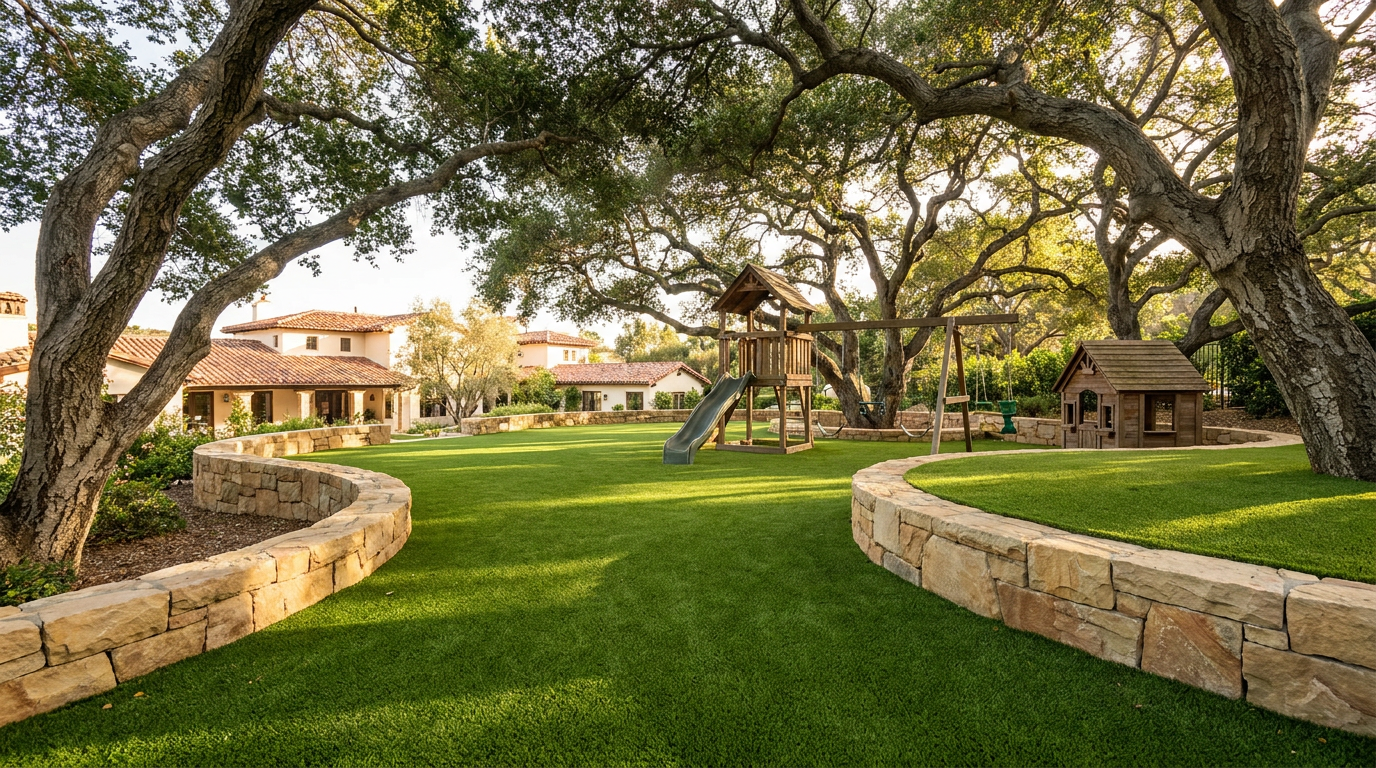
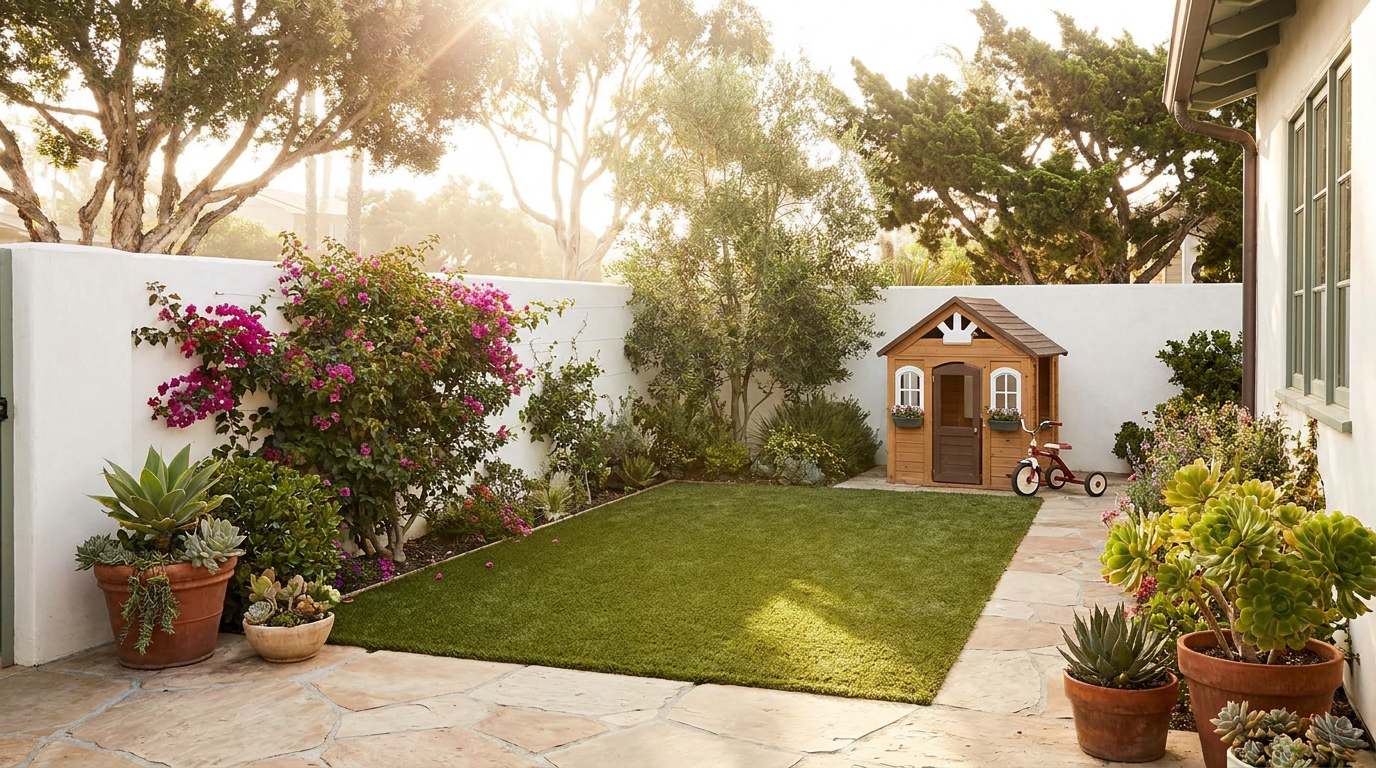
Picture the Saturday you are buying. Two Labradors running a hard loop around the yard at 7 a.m. A three-year-old barefoot on the grass at 4 p.m. in July. Your mother, in from Ohio, standing on the lawn in slippers on Christmas morning because it is seventy-one degrees and she cannot believe it. The turf under each of those feet is not the same turf. The turf a family with two shepherds needs is built, backed, and infilled differently than the turf a grandmother wants underfoot. The turf that looks right on a shaded north-facing side yard is not the turf that survives a south-facing inland afternoon where the surface hits a hundred and forty in direct sun.

Artificial turf is the most misunderstood material in a San Diego yard. It is sold as a commodity — square footage times a unit price, rolled out over whatever is under it, called done. At our tier it is not a commodity. It is a use-case decision, and the base underneath it is the job. Three to four inches of engineered, compacted class-II aggregate, cut to a real slope, with sub-surface drainage where the soil says so, is the difference between a lawn that drains, stays flat, and reads natural for fifteen years — and a lawn that puddles, wrinkles, and is pulled up in four.

San Diego’s water constraints, inland heat loads, and the reality that most of our clients have dogs shape every product call we make. We lead with how the yard will actually be lived on. The catalog comes second.

What our turf work includes

A turf install at our tier is a small engineering project, not a flooring install. Under one scope of work we coordinate:

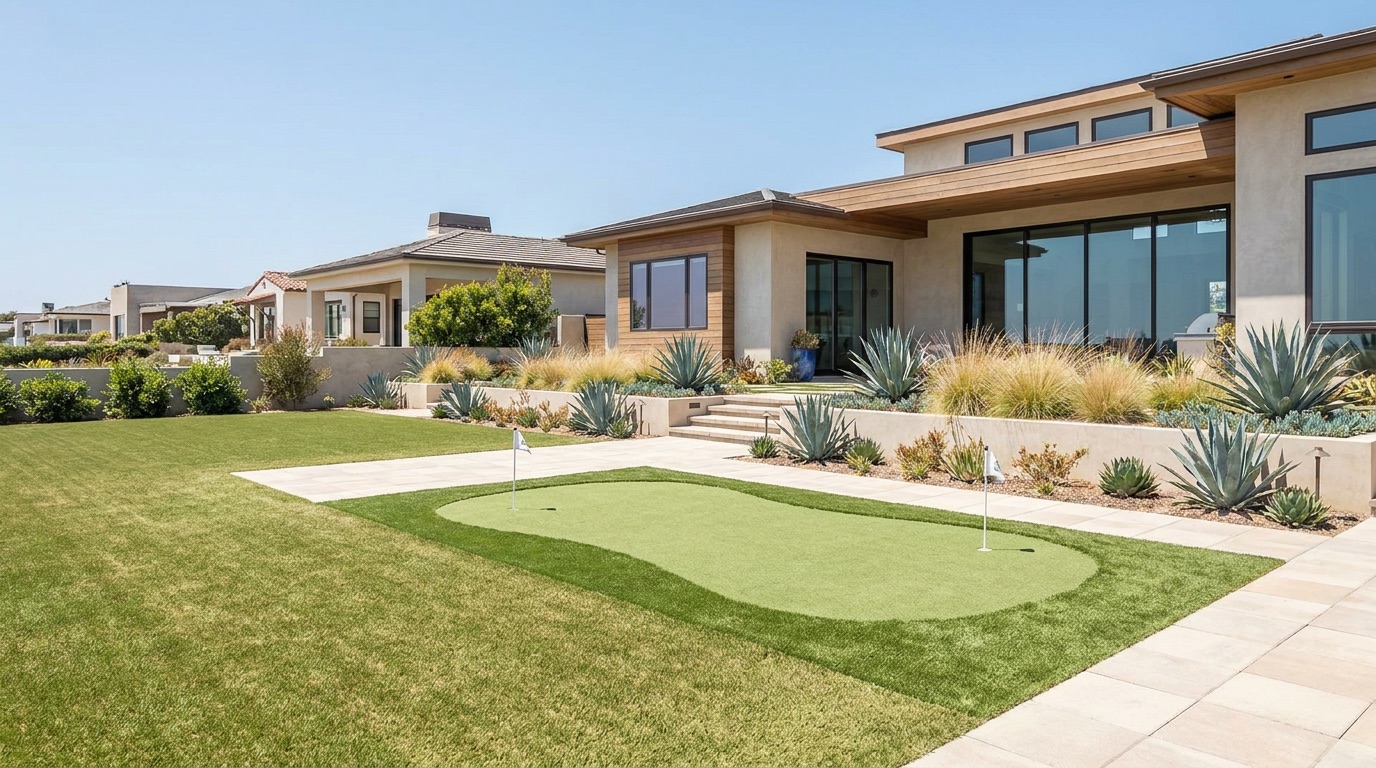
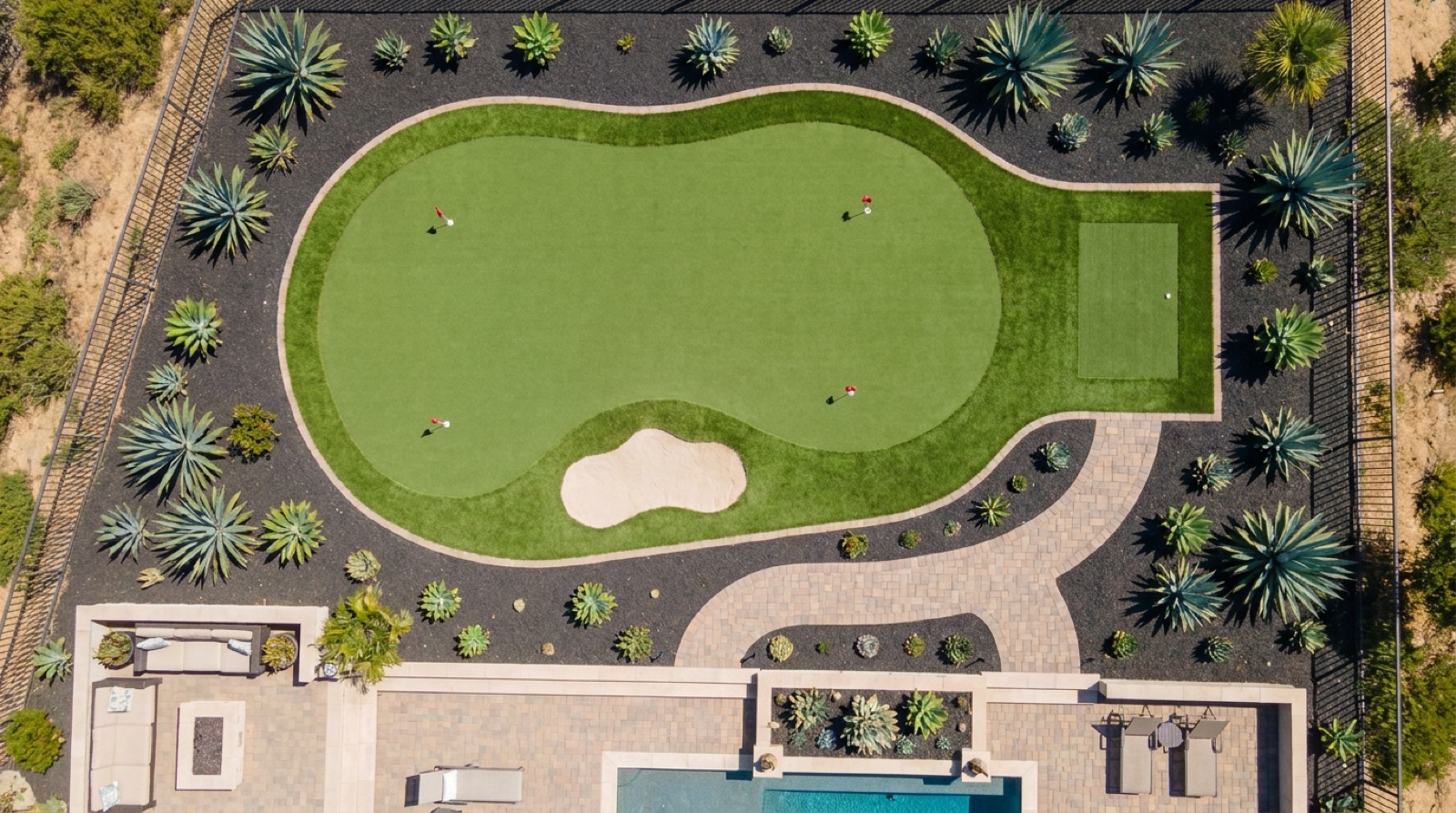
  • Product selection driven by use. Pet-focused systems with flow-through backing and shorter, denser pile for traffic and cleaning. Landscape-aesthetic systems with multi-tone fiber and thatch for a lawn that reads real from six feet away. Heavy-traffic systems for play zones and the path dogs wear along a fence. Putting-green systems for short-pile, true-roll surfaces integrated into a larger backyard plan.
  • Engineered base. Three to four inches of compacted class-II aggregate, shaped to a real slope away from the house. On dense clay soils we run a percolation test before we commit a base section — see our drainage and grading work for how we handle soils that do not cooperate.
  • Sub-surface drainage. French drains, perforated collection lines, and positive daylight where the lot demands it — designed under the lawn, not bolted on after.
  • Infill selection. Silica sand for baseline ballast, Envirofill antimicrobial coated sand for pet households, Durafill for heat-load mitigation and putting surfaces. The infill is not an afterthought; it is how the lawn stands up, cools down, and stays odor-free.
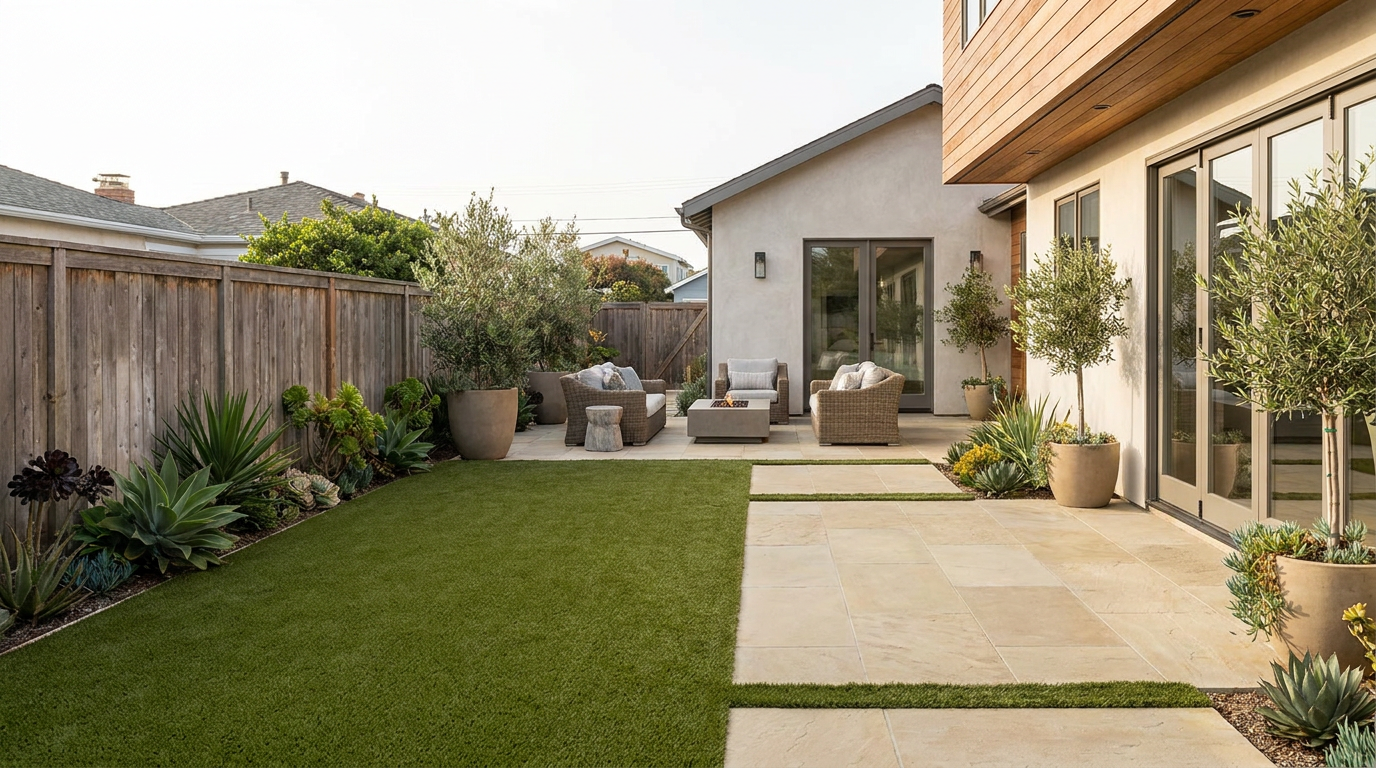
  • Seam work and edge detail. Hidden seams laid to grain, glued and stapled on a joining board. Edge restraint where turf meets patio and hardscape or planter — bender board, steel, or concrete curb depending on the detail.
  • Integration into the larger outdoor plan when the turf is part of a full backyard remodel.

Our process

Every turf scope runs through the same seven chapters. Rushing any of them is the reason most turf installs in San Diego fail by year four.

Chapter I — Use-case interview. Thirty minutes on your property or by phone. How many dogs, what size, indoor-or-outdoor, where they run and where they relieve themselves. Kids and ages. Sun exposure at 3 p.m. in August. How you want the lawn to feel underfoot — firmer like a sports field, softer like a carpet, somewhere in between. Maintenance appetite, honestly stated. Whether a putting surface or a play zone is part of the plan. The product call is downstream of this conversation.

Chapter II — Samples in hand. No product decision gets made from a website photograph. We bring physical samples of every product under consideration, in the lighting of your yard, at the time of day you will use the lawn. Fibers look entirely different in afternoon shade than in morning sun, and no monitor reproduces it honestly.

Chapter III — Base engineering and percolation. Where the soil is dense clay — common across much of San Diego County — we run a percolation test before we commit to a base section. The test tells us whether a standard three-inch base will drain or whether we need a four-inch base, a sub-surface drain line, or both. Base depth is not a default; it is a decision.

Chapter IV — Sub-surface drainage design. Where the lot, the soil, or the program requires it, we design positive drainage under the lawn — French drains, collection lines, daylighted outlets — so water moves off the base rather than pooling against the backing.

Chapter V — Installation, one crew. Demo of existing turf or sod. Sub-base cut, class-II aggregate placed and compacted in lifts, final grade shaped to the slope we drew. Turf rolled, stretched, seamed, and fastened. Every square foot installed by the same crew from first cut to final clean, under our Field Lead and with Gio or Mike on the property.

Chapter VI — Infill, brushed in. Infill is dropped, brushed into the pile, and brushed again. On pet installs we use Envirofill antimicrobial sand as the primary infill, not a topical spray that washes out.

Chapter VII — The 10-Month Walk-Through. Ten months after we hand the yard over, we come back. Turf settles more in the first winter than in any year that follows — seams can relax, infill can migrate, a low spot can appear where the base rode out a long rain. We walk every square foot with you, re-tension where needed, top up infill, reset edges. No invoice.

Materials and the brands we install

Not all artificial turf is the same material. The rolls at a big-box store are not the product we install, and pretending otherwise would be dishonest.

We install SynLawn — a bio-based fiber with strong heat-reflective performance and a deep pet product line. We install FieldTurf Landscape for its sports-field heritage and durable traffic performance in heavy-use yards. We install Shaw Sportexe where a dense, resilient system is called for on play zones and putting surrounds, and ForeverLawn where a client wants the pet-specific system with certified antimicrobial infill.

Products are specified by pile height (typically one and a half to two and a quarter inches for landscape work, shorter for putting surfaces), face weight (a proxy for fiber density and durability, generally fifty to over a hundred ounces per square yard on the tier we install), fiber composition (polyethylene for softness and a natural read, nylon for resilience under traffic, blends where the application earns it), and backing (conventional dual-layer or flow-through backing engineered to pass liquid through the full sheet, critical on pet installs).

Infill is either silica sand for straight ballast, Envirofill antimicrobial coated sand on pet households and high-use zones, or Durafill where heat-load mitigation and a true putting roll are on the table. The cheap roll with no face-weight spec, no backing spec, and no infill plan is not the product we put our name on.

Investment and what drives the number

Our turf work runs between $15,000 and $60,000 for the large majority of our scopes.

Around $15,000 is a modest footprint — a few hundred square feet of pet or landscape turf, mid-tier product, a straightforward base on cooperative soil, a standard edge detail. It is the smallest scope we take on as a standalone service.

Between $30,000 and $40,000 is a larger footprint, a premium product tier, engineered base with full slope and compaction in lifts, integrated edge restraint (steel or concrete curb), and sub-surface drainage where the soil calls for it.

Fifty thousand and up is the scope with integrated putting surface, shaped contouring, the top-tier product with antimicrobial infill, and significant drainage engineering — often part of a larger backyard program where the lawn, patio, and planting are designed together.

Cost drivers you should understand before the first conversation:

  • Square footage. The largest single driver, but not the whole number.
  • Product tier. A fifty-ounce landscape turf and a hundred-plus-ounce pet system with flow-through backing are different products at different prices.
  • Base depth. Dictated by soil. Clay soils and problem drainage push the base deeper and add sub-surface lines.
  • Drainage complexity. A flat lot with percolating soil needs far less than a sloped lot with clay.
  • Edge length and detail. A simple rectangle is one number; shaped beds, curved edges, and long hardscape transitions are another.
  • Pet-household specification. Antimicrobial infill, flow-through backing, and additional edge sealing add material cost that pet households almost always want.
  • Putting-green integration. Shorter pile, tighter infill spec, shaped contouring, and often a separate roll package.
  • Water rebate coordination. Lawn replacement can qualify for the City of San Diego and San Diego County Water Authority turf rebate programs. We coordinate the paperwork where the project qualifies — a small line item that recovers real money.

Premium fair value, priced honestly, delivered with direct founder access. That is the product.

Where we work

We install turf across San Diego County. Coastal microclimates, shaded canyon lots, and inland yards with full south-facing afternoon exposure ask different things of a lawn. Inland heat loads matter — certain fiber compositions and infills hold surface temperatures materially lower than others in direct sun, and for a yard in 4S Ranch, Rancho Bernardo, or Poway we spec toward the cooler end of the curve.

Each neighborhood also carries its own soil and HOA reality, both of which shape the base design and the product selection. We write to what we see on the ground.

Frequently asked

How is a real installation different from a big-box turf roll?

A rolled-out big-box install skips the base. The product is stretched over whatever soil happens to be there, seamed quickly, infilled lightly, and handed off. Ours is engineered. Three to four inches of compacted class-II aggregate, cut to a real slope, with sub-surface drainage where the soil demands it. The product on top of a real base lasts three to four times as long and reads natural for the whole run.

Does turf smell with dogs?

Not when it is installed correctly. The drivers are flow-through backing (so urine passes through rather than pooling against a non-permeable sheet), a properly graded base (so water moves off), and antimicrobial infill — Envirofill or equivalent — that inhibits the bacteria responsible for the odor. A pet-spec install with the right infill does not smell. A generic install with silica-only infill eventually will.

How hot does it get in direct sun?

Honestly, warmer than natural grass. In full inland sun, conventional turf can reach surface temperatures around one-forty Fahrenheit in August. The gap closes meaningfully with heat-reflective fiber, lighter backing, and Durafill or equivalent cooling infill — enough that the lawn is usable barefoot in the evening and in shaded hours. For yards with heavy midday use we will say so in the use-case interview and spec accordingly, or recommend a mixed solution.

How do you handle drainage and water?

Drainage is the first thing we design and the last thing we compromise. The base is sloped. The backing is specified to pass water. On dense clay we run a percolation test and, where it fails, we install sub-surface French drains and daylighted collection lines before the turf ever comes out of the truck. See our dedicated drainage and grading scope for the approach on the harder lots.

What is the realistic lifespan?

A properly installed premium system, maintained with a light brush-up and occasional infill top-off, runs fifteen to twenty years before the fiber begins to flatten past recovery. A cheap roll on an unprepared base is four to seven. The difference is the base, the product, and the seam work — not the brand sticker.

Can we get a water rebate?

Often, yes. The City of San Diego water conservation program and the San Diego County Water Authority’s regional turf replacement rebate can apply to lawn replacement, subject to their current rules and property eligibility. We prepare the required before-and-after documentation and coordinate the filing on qualifying projects. Programs and rebate amounts change; we will confirm current eligibility during your proposal.

Pet-focused versus landscape turf — what is the difference?

Pet systems use flow-through backing (permeable across the entire sheet, not just at perforated holes), a shorter and denser pile that is easier to clean and resists matting where dogs run, and antimicrobial infill. Landscape systems prioritize the read — multi-tone fibers, longer pile, integrated thatch that looks organic from a few feet away. Some clients want one zone of each. We plan the transition so the seam does not read.

What is the workmanship warranty?

A minimum one-year workmanship warranty on every install, with material warranties extending longer per the manufacturer’s program — often eight to fifteen years on premium lines. More importantly, the 10-Month Walk-Through is part of every project. We come back, inspect, re-tension, top up infill, and reset any edge the first winter has moved. No invoice. Most of the industry does not do this.

Who do we actually talk to?

Gio or Mike. Direct-Founder Access is part of the product, not an upsell. Our Field Lead runs the day-to-day on the ground. You have both cell phones from the first call. You can verify Mike’s active Class B general contractor standing any time through the CSLB license lookup.

Can we walk an installed yard before we sign?

Yes. We do not publish client testimonials at launch — a deliberate editorial choice. During discovery we will take you past completed projects in person so you can see the lawn as it lives: the seam work, the edges, how it reads off the patio, how it holds up a year or two in. References available on request.
References available on request

We do not publish testimonials. When a project is complete, we invite future clients to speak directly with the homeowners who have lived in the finished work — a real conversation, not a cropped quote. During discovery, we will walk you past completed yards in the neighborhoods where they sit.

When you are ready

If the yard deserves a lawn chosen for how you will actually live on it — not the cheapest roll a crew can push out in a morning — we would like to hear about the property. A first conversation is thirty minutes, by phone or on your yard, and there is no cost to begin. We will listen, we will walk the use case, and we will tell you honestly whether we are the right team for the work.

Begin the conversation here.

Licensed and insured general contractor, operating under Mike’s Class B license — CSLB #1139785.

San Diego luxury outdoor craftsmanship

References

References available on request.
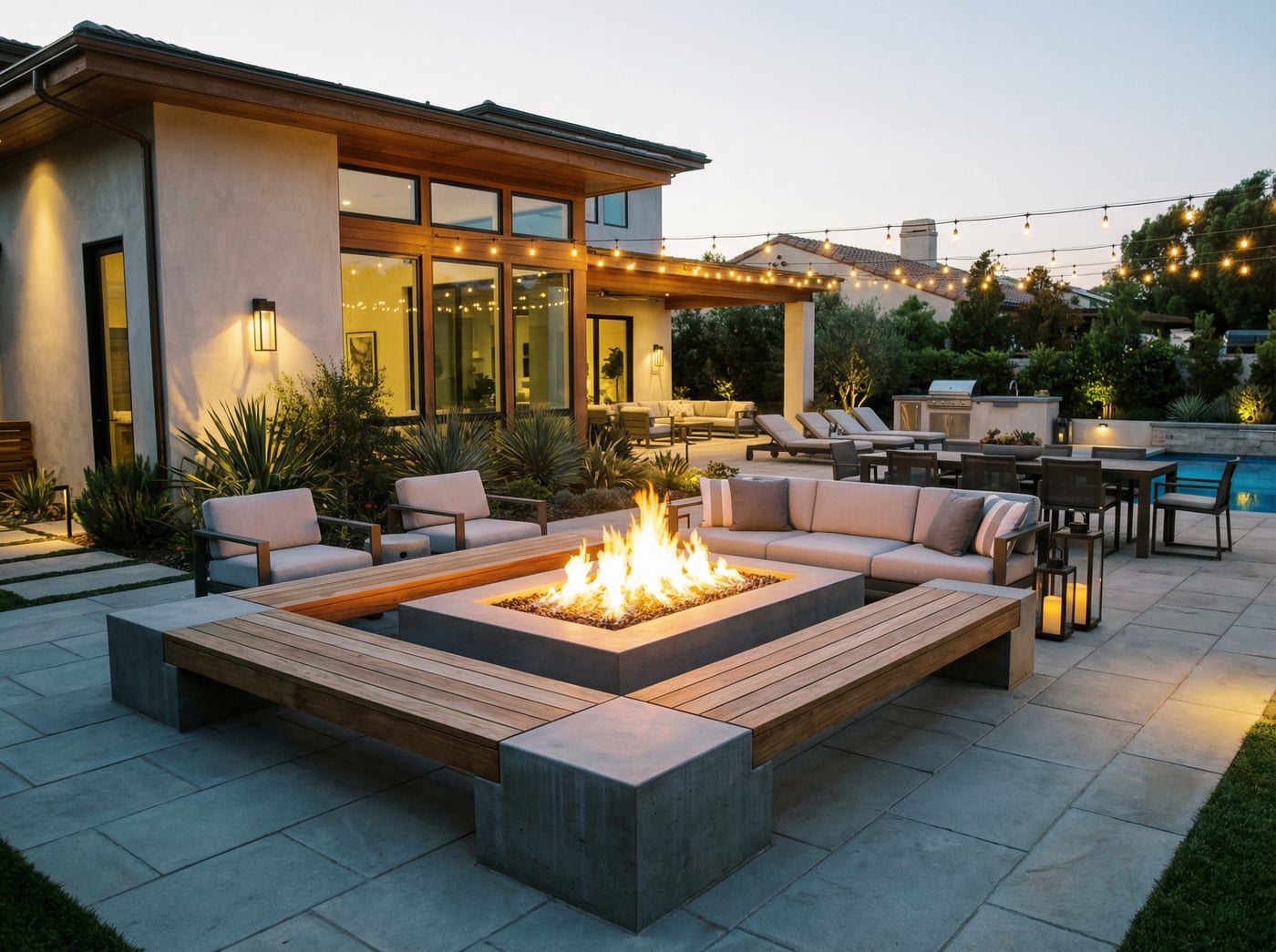
We are happy to walk you past completed projects during your discovery conversation. The quality of the work is best read in person.

San Diego County luxury outdoor remodeling

Want to talk through your project?

A first conversation is thirty minutes. By phone or on your property. No obligation, no sales pressure.