The room where the outdoor remodel earns its keep
Picture a Thursday night in June. Nothing is catered. Nobody is in heels. Your daughter is home from her second year of college, a neighbor has drifted over with a bottle of something worth opening, and dinner is a piece of fish you bought at three o’clock without a plan. The grill is already at temperature. The cutting board is where it always is. The sink has water. The ice maker is full. You pour two glasses, slide the fish onto the grate, and nobody goes inside for the next three hours.
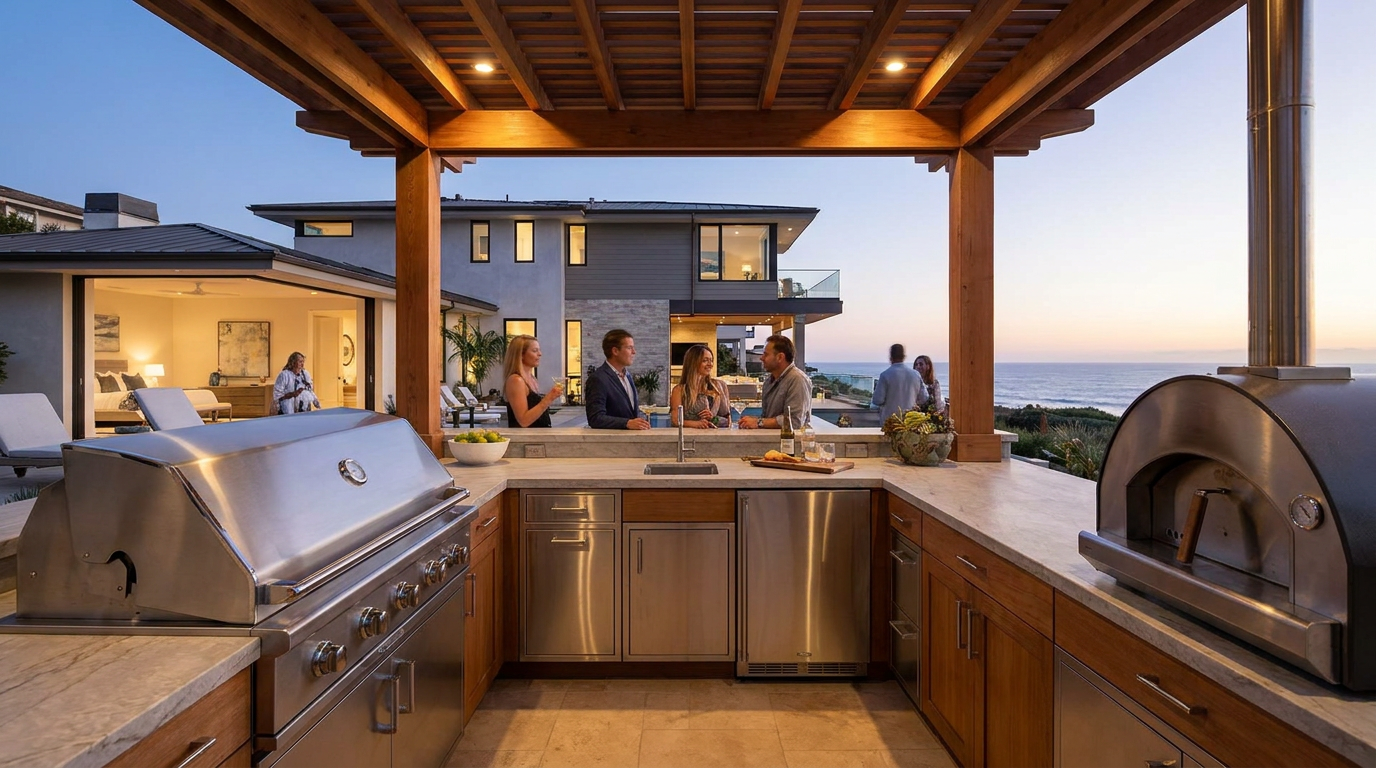
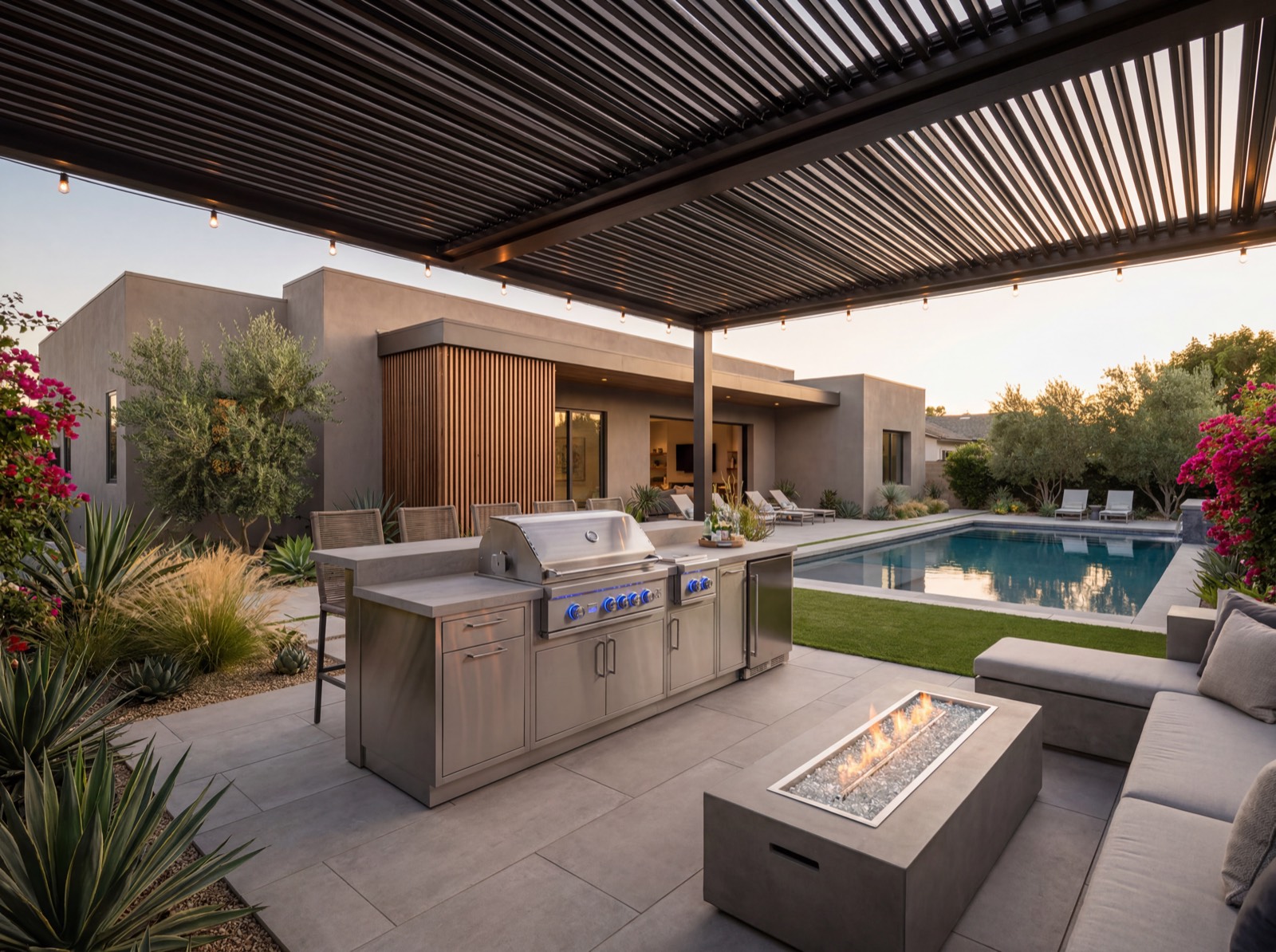
That is what an outdoor kitchen, done properly, actually buys. Not an island. Not a grill on a concrete pad at the edge of the yard. A working room — the one that gets used on the Thursday nights nobody plans for, not just the catered Saturdays everybody remembers.
Most of what passes for an “outdoor kitchen” in San Diego is a grill bolted onto a veneer box, dropped next to a patio somebody else poured last spring. It looks fine the week it is installed. By the second season the counter has staining nobody warned the owner about, the gas pressure is a hair low because the run is undersized, and the refrigerator sits in a cabinet that was never vented for it. The owner uses the grill. They stop using the rest.
Our outdoor kitchens are drawn inside a single design decision, not assembled after the patio is set. Gas, electric, water, drainage, structural load for a masonry base, hood ventilation or pergola-integrated shade, countertop species, appliance package — all sit inside one set of drawings, permitted once, built by the same crew that pours the patio around it.
What an SDLR outdoor kitchen actually includes
A finished SDLR outdoor kitchen is one coordinated installation, not a stack of parts. Under one scope of work we detail:
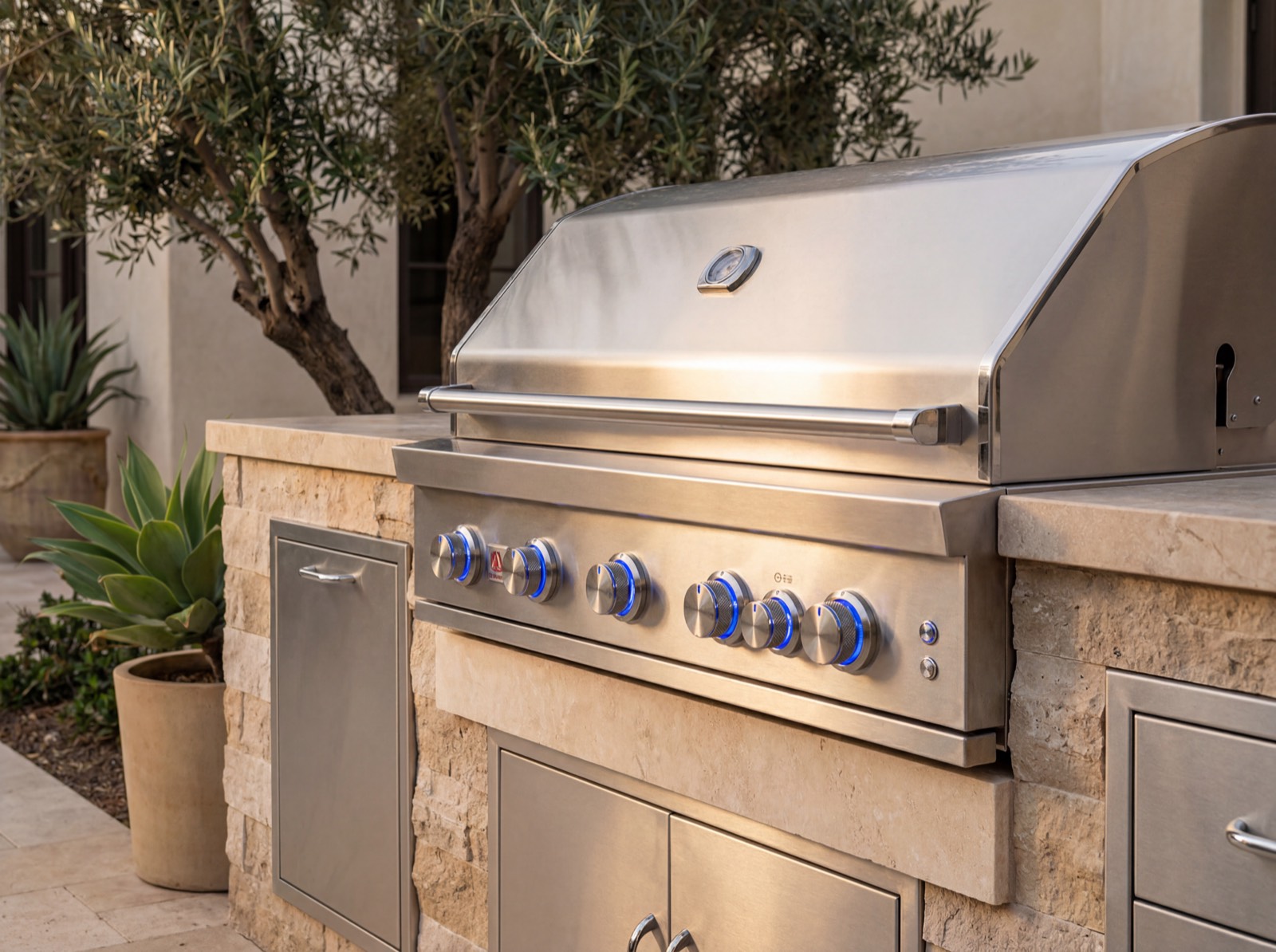
- The island itself. Engineered masonry or steel-stud base with a concrete-board substrate, clad in full-bed natural stone, manufactured stone veneer, or large-format porcelain tile. No hollow cabinetry that warps after two winters of marine air.
- The countertop. Quartzite, granite, or honed natural stone — cut, mitered, and sealed for UV and salt exposure. Edge profiles detailed in drawings before templating.
- The appliance package. Built-in grill, power burner or side burner, under-counter refrigeration, ice maker, stainless sink with disposal where code allows, warming drawer, and a pizza oven when the program supports one.
- Utilities. Gas line sized to the appliance load, permitted and pressure-tested. 20-amp outdoor-rated electrical on GFCI protection. Cold water supply with a freeze-season shutoff. A drainage path from the sink that does not rely on a surface bucket.
- Ventilation and shade. A stainless hood on a covered installation, or heat and smoke managed by the pergola or shade structure the kitchen sits under.
- Storage, seating, and finish. Drawer banks rated for outdoor use, a bar run for seating when the plan allows, integrated lighting for the counter and grill surface.
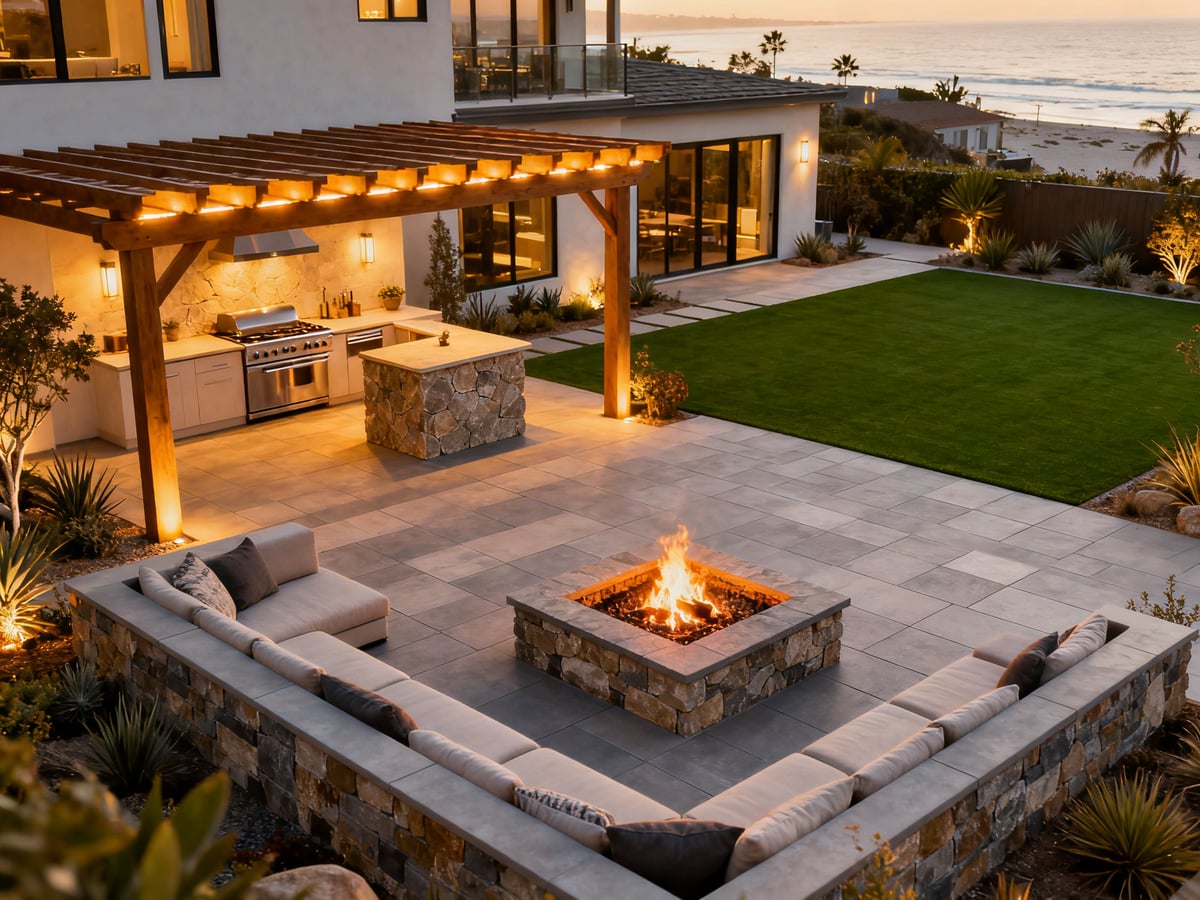
The kitchen lives inside a larger patio plan. Surfaces, setbacks, and sightlines are resolved alongside our patios and hardscape scope rather than after it.
Our process
We run every outdoor kitchen through the same seven-chapter sequence we use on a full remodel. It is deliberate, and it is the reason the finished kitchen gets used on a Thursday instead of admired on a Saturday.
The first conversation. Thirty minutes by phone or on your property. We ask how you actually cook — not how you imagine yourself cooking. Grill four nights a week or twice a month? Host six or sixteen? Need a pizza oven, or just think you do? We tell you, honestly, whether we are the right firm. If we are not, we point you to who is.
Site visit and program brief. Both founders walk the property. We measure the gas meter run, the nearest sub-panel, the patio slope, the prevailing wind off the canyon or the coast. We ask what the mornings are for, what the evenings are for, and who carries plates in and out. By the end we have the program, you have how we work.
Design-to-reality visualization. Our design process begins as a hand sketch on the property and ends as a photorealistic 2D and 3D rendering of your actual yard — your house, your setbacks, your view. You see the counter run, the appliance placement, and the cladding choice in context before a single paver is cut. Revisions happen on paper where they belong, not on a jobsite where they cost real money.
Proposal and contract. A line-item proposal — island construction, countertop, appliance package by brand and model, utility runs, permitting, finish selections, payment milestones — stated plainly. No surprises inside the fine print. We review it with you in person.
Permitting and procurement. Gas line and electrical are permitted; outdoor kitchens in most San Diego jurisdictions require it, and we do not cut that corner. Appliances are ordered directly from the manufacturer to the project, not pulled from whatever happens to be in a warehouse that week. Lead times on premium grills and refrigeration are honest — eight to fourteen weeks is common — and we start procurement early so the crew is not waiting on a truck.
Build by a single crew. One team from the first saw cut to the final clean. Our Field Lead — twenty-five years in high-end outdoor work — runs the day-to-day on the ground. Either Gio or Mike is personally on every project, with both cell phones in your contacts from day one. No account managers, no handoffs.
The 10-Month Walk-Through. Ten months after completion — through a wet winter, a hot September, and the first real wear the kitchen will see — we come back. We walk every joint, every appliance, every utility termination with you. Anything the seasons have exposed gets handled. No invoice. Almost nobody in this industry does this. That is exactly why we do.
Materials and the appliances we install
Material choice matters. Material choice without design discipline is wasted money.
For cladding we work in full-bed natural stone, Eldorado Stone manufactured veneer where the detail calls for it, and large-format porcelain tile on projects where a cleaner, more architectural face reads better than stone. For countertops we specify quartzite, granite, or honed bluestone — species that hold up under UV and coastal salt air without the yellowing and delamination low-end outdoor quartz is prone to after two or three seasons. Engineered quartz marketed for outdoor use is, in our experience, a compromise on both longevity and honesty; we will tell you so on the first call.
On the appliance side we install Lynx, DCS, Alfresco, and Twin Eagles — built-in grills, power burners, side burners, warming drawers, ventilation hoods, under-counter refrigeration, ice makers, and outdoor-rated sinks. We specify as an integrated package so the gas sizing, electrical load, venting, and cabinetry cutouts resolve once rather than repeatedly.
A specialty materials background Mike also operates on the stone and tile side gives us direct supplier access on cladding and countertop, pricing we pass through honestly, and installation detail most outdoor-remodel firms simply do not see. The brands matter. The hand that places them matters more. The joint either looks intended or it looks tolerated.
Investment and what drives the number
An SDLR outdoor kitchen runs between $30,000 and $120,000 for the majority of our work. The number tracks the appliance package, the cladding and countertop, the utility runs, and the shade strategy — not much else.
A $30,000 island is disciplined and small: a single premium built-in grill, a single countertop run, stone veneer cladding, and a short gas line extension from an existing stub. Clean, tight, and correct for the owner who cooks but does not host large.
The real-use sweet spot is $60,000 to $85,000 — a multi-appliance package with grill, power burner, and under-counter refrigeration; full-bed stone or large-format porcelain cladding; a quartzite or granite counter; a longer gas run properly sized; and either a stainless hood on a covered install or a pergola-integrated shade strategy over the cook line.
Above $100,000 the program opens up: multi-station cook lines, a pizza oven, integrated bar and lounge seating, refrigeration for both food and beverage, high-end finishes, and the kind of detailing that makes the kitchen read as architecture rather than an add-on.
Cost drivers you should understand before the first conversation:
- Gas line run distance. A meter ten feet from the island is a different proposition than one sixty feet away through a planted yard.
- Electrical panel distance. Same math. A subpanel trenched across a finished patio drives real cost.
- Drainage requirements. Sink waste needs somewhere legal to go. Canyon lots and coastal lots both have rules.
- Countertop material. Quartzite and granite vary two to three times by slab.
- Appliance brand tier. A Lynx-level package and an entry-level package are different numbers by meaningful margins.
- Cladding material. Full-bed natural stone is a premium over manufactured veneer, and porcelain tile varies by format.
- Hood or pergola integration. A covered cook line needs either a rated hood or a planned shade structure — both cost real dollars and both are worth it.
- Permitting jurisdiction. Coastal, hillside-overlay, and certain HOAs add process time and review fees.
Premium fair value, delivered with full founder access. We do not price-match. We do not run “budget” tiers. We give an honest price and deliver the work behind it.
Where we work
We build outdoor kitchens across San Diego County — East and South County (Bonita, La Mesa, Rancho San Diego, Mount Helix, El Cajon, Eastlake, Otay Ranch, Rolling Hills Ranch, San Miguel Ranch, Millenia, Sunbow, Coronado), the central and urban corridor (Point Loma, Mission Hills, Tierrasanta, La Jolla), the North County Coast (Del Mar, Solana Beach, Encinitas, Olivenhain, Carlsbad), and North County Inland (Rancho Santa Fe, Fairbanks Ranch, Santaluz, 4S Ranch, Rancho Bernardo, Poway, Del Sur). By design, not by dispatch — planned, scheduled months ahead, executed by a single crew.
Each city carries its own soil, permit, and HOA reality. If the project is in Rancho Santa Fe, La Jolla, or Santaluz, start with the city page below — we write each one from what we see on the ground.
Frequently asked
How much does an outdoor kitchen cost in San Diego?
Outdoor kitchens in San Diego range from $25,000 for a simple built-in BBQ and counter to $80,000–$150,000+ for a full kitchen with refrigeration, sink, gas burners, and shade structure. The biggest cost drivers are appliance grade, countertop material, and structural complexity.
Do outdoor kitchens require permits in San Diego?
Yes — any outdoor kitchen with gas, electrical, or structural components requires permits in San Diego County jurisdictions. We handle all permitting as part of every project.
What is the best countertop material for an outdoor kitchen in San Diego?
Porcelain, concrete, and quartzite are the top performers in San Diego’s coastal climate. We recommend porcelain or quartzite for the combination of durability, low maintenance, and premium appearance.
Can we add an outdoor kitchen to our existing patio?
Often, yes — with caveats. The slab has to be structurally sound, drained correctly, and located where gas, electric, and water can reach it without tearing half the patio apart. On our site visit we core-test the slab where it matters, trace the utility paths, and tell you honestly whether it makes more sense to build on what you have or resolve the underlying patio at the same time. Sometimes it does. Sometimes it does not.
Natural gas or propane?
Natural gas where the meter supports the load and the run is reasonable — it is cleaner, always on, and the math usually wins. Propane where the run is long, the meter is undersized, or the yard is remote from the house. Either works. Both need to be permitted and pressure-tested, and both need the line sized to the total BTU draw of the appliance package. An undersized line is the single most common reason a premium grill never quite performs the way it should.
Do we need a permit for the gas line?
Yes. Any new gas line, any sub-panel circuit, and any sink waste tie-in triggers a permit in virtually every San Diego jurisdiction. We prepare the drawings, pull the permits through the San Diego County Planning and Development Services portal or your city equivalent, and schedule the inspections. Unpermitted gas work is both a safety issue and a disclosure problem the day you sell the house. We do not cut that corner.
What countertop survives San Diego sun and salt air?
Quartzite is our first recommendation — denser than granite, highly UV-stable, and honest-looking after a decade. Granite is a strong second, particularly in the darker, denser species. Honed bluestone reads beautifully in the right program. We generally steer clients away from low-end engineered quartz marketed for outdoor use; the resin binders yellow under direct UV and do not hold up the way the marketing promises, especially on west-facing installs near the coast.
Which appliance brands do you install?
Lynx, DCS, Alfresco, and Twin Eagles for grills, power burners, and ventilation. Coyote and U-Line for refrigeration and ice where the program calls for a lighter package. We specify the full appliance set as one integrated package — grill, burner, hood, refrigeration, sink — so the gas sizing, electrical load, venting, and cabinetry cutouts resolve together. We are brand-agnostic at the top of the market; we choose the line that fits the program.
Do you build a hood, or use shade from the pergola?
It depends on whether the kitchen sits under a solid roof or under an open sky. Under a solid roof or enclosed cover, a properly sized stainless hood is non-negotiable — smoke and grease have to go somewhere, and that somewhere cannot be the ceiling. Under an open pergola or louvered shade structure, ambient ventilation usually handles it and a hood is optional. We resolve this in design, not in the field.
How do you handle rain and wind exposure?
Appliance selection, cladding detail, and shade strategy all factor in. Stainless-grade appliances tolerate San Diego rain without drama if they are rated and installed correctly. Cladding gets flashed and sealed at every masonry-to-counter joint. Electrical is specified to a weather-resistant outdoor standard with in-use covers. On exposed coastal and canyon lots we detail drip edges and protected storage for anything that does not belong in a winter storm.
What does the workmanship warranty look like?
We warranty our workmanship for a minimum of one year, with material and appliance warranties extending longer per manufacturer. More importantly, we built The 10-Month Walk-Through into every project: ten months after completion we return to your property, walk every joint and every appliance with you, and handle anything the seasons have exposed — on our dime. You can verify Mike’s active Class B general contractor standing any time through the CSLB license lookup.
Who are we talking to during the project?
Gio or Mike. Direct-Founder Access is part of the product, not an upgrade. Every project is personally run by one of the founders — no account managers, no handoffs, no “I’ll check with the team and get back to you.” You have both cell phones from the first call. Our Field Lead runs the day-to-day on the ground. The relationship is the product.
Can we see a finished outdoor kitchen before we commit?
References available on request. During discovery we are glad to take you past finished installations in person so you can see the counter edge, the cladding joint, and the appliance detail as they live — not as they photograph. At launch we are not publishing client testimonials or quotes. That is a deliberate editorial choice, and we will revisit it once our first SDLR outdoor kitchens are ready to be spoken about with the people who cook on them.

References available on request
We do not publish testimonials. When a project is complete, we invite future clients to speak directly with the homeowners who have lived in the finished work — a real conversation, not a cropped quote. During discovery we will also walk you past completed outdoor kitchens in the neighborhoods where they sit. It is the old-fashioned way to vet a builder, and on this kind of work, it is still the best way.
When you are ready
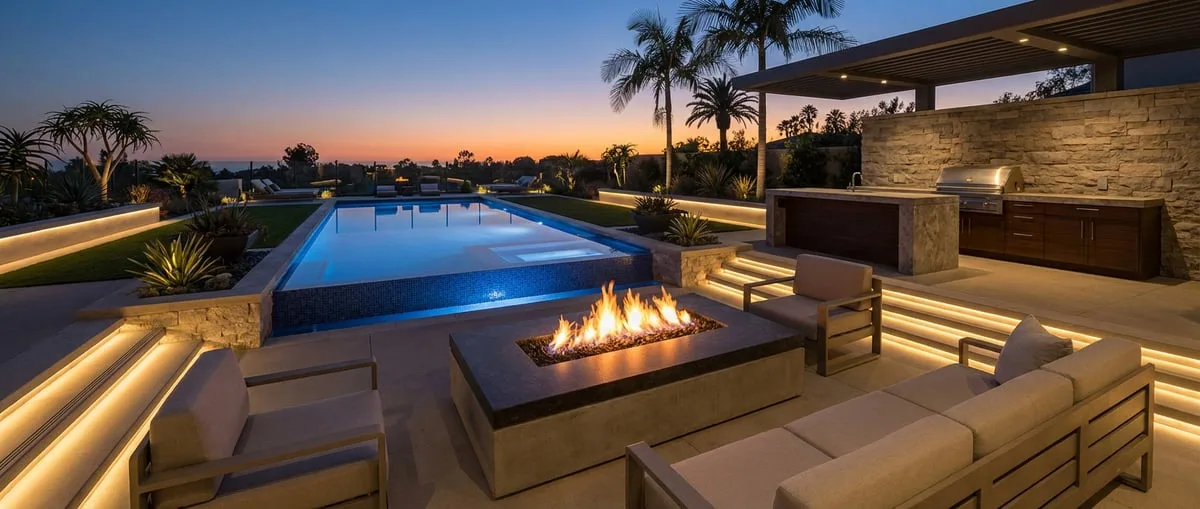
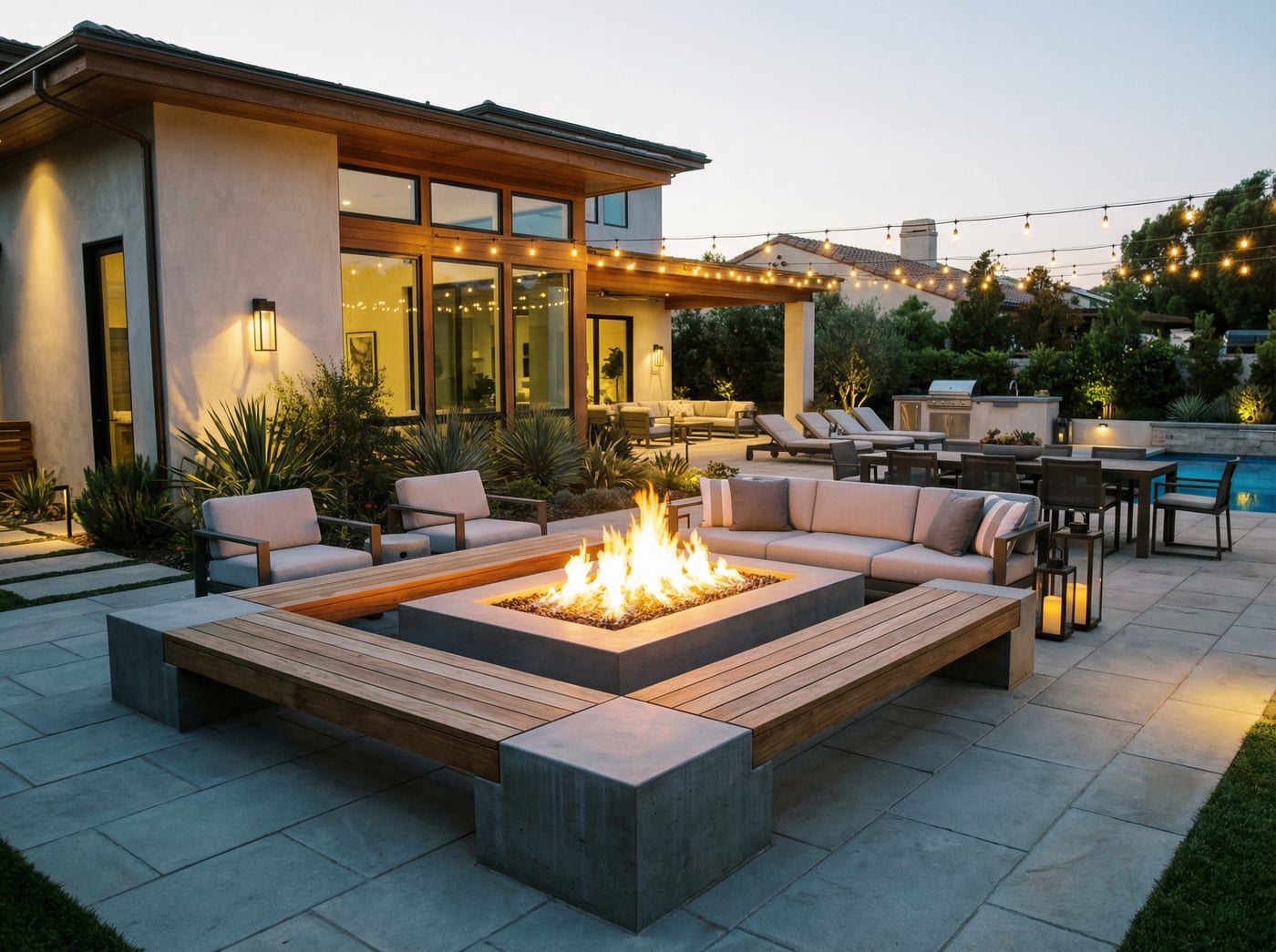
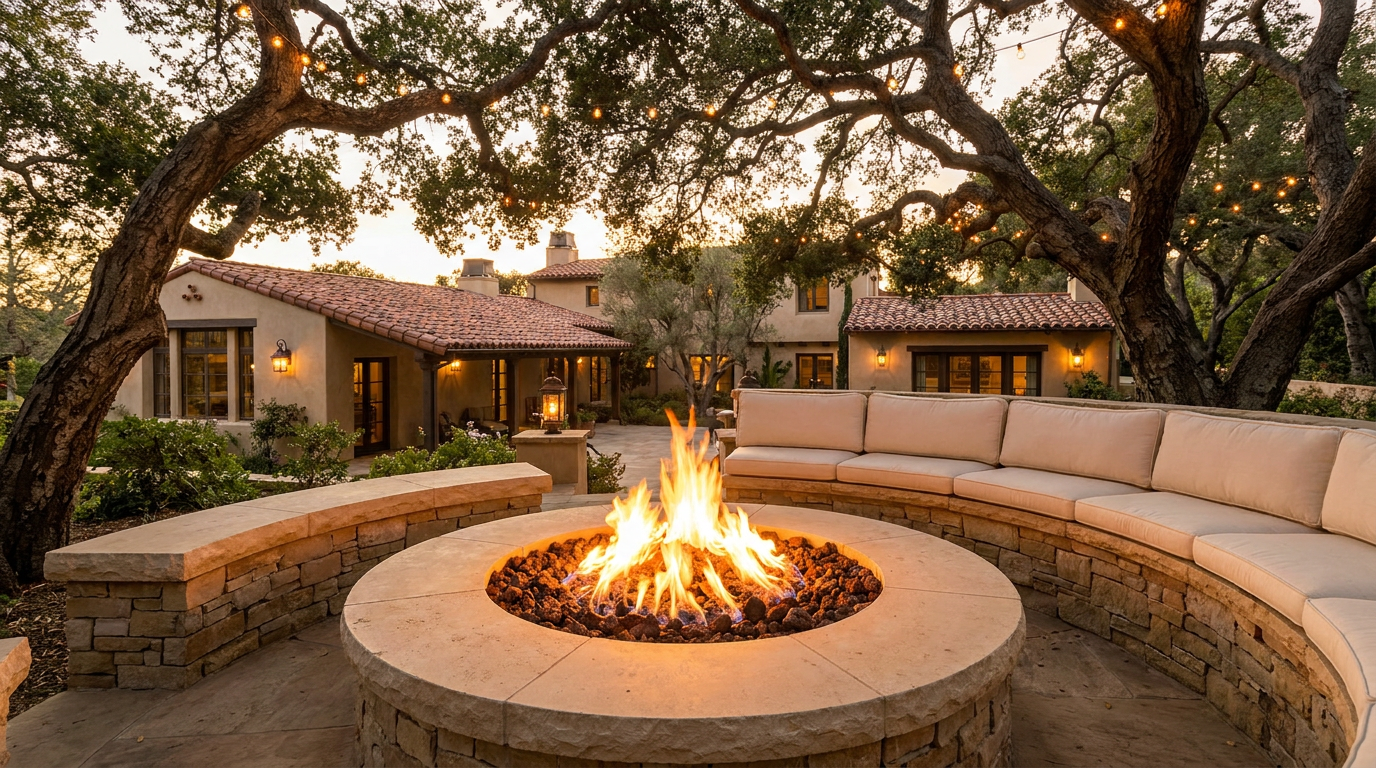
If the timeline is right and the scope is serious, we would like to hear about the property and how you actually cook. A first conversation is thirty minutes — by phone, or on your yard — and there is no cost to begin. We will listen, we will tell you what we see, and we will tell you honestly whether we are the right firm for the work. Add landscape lighting or a fire feature to the scope if the program supports it; we draw it all inside one plan.
Licensed and insured general contractor, operating under Mike’s Class B license — CSLB #1139785.