Skip to content
SDLR — San Diego Landscape Remodeling
Book a Consultation
(619) 613-2511
Fire Pits & Outdoor Fireplaces in San Diego — San Diego Landscape Remodeling

Services

Fire Pits & Outdoor Fireplaces in San Diego

The single most-used square foot of an outdoor room, done right.

The one square foot the whole yard orients around

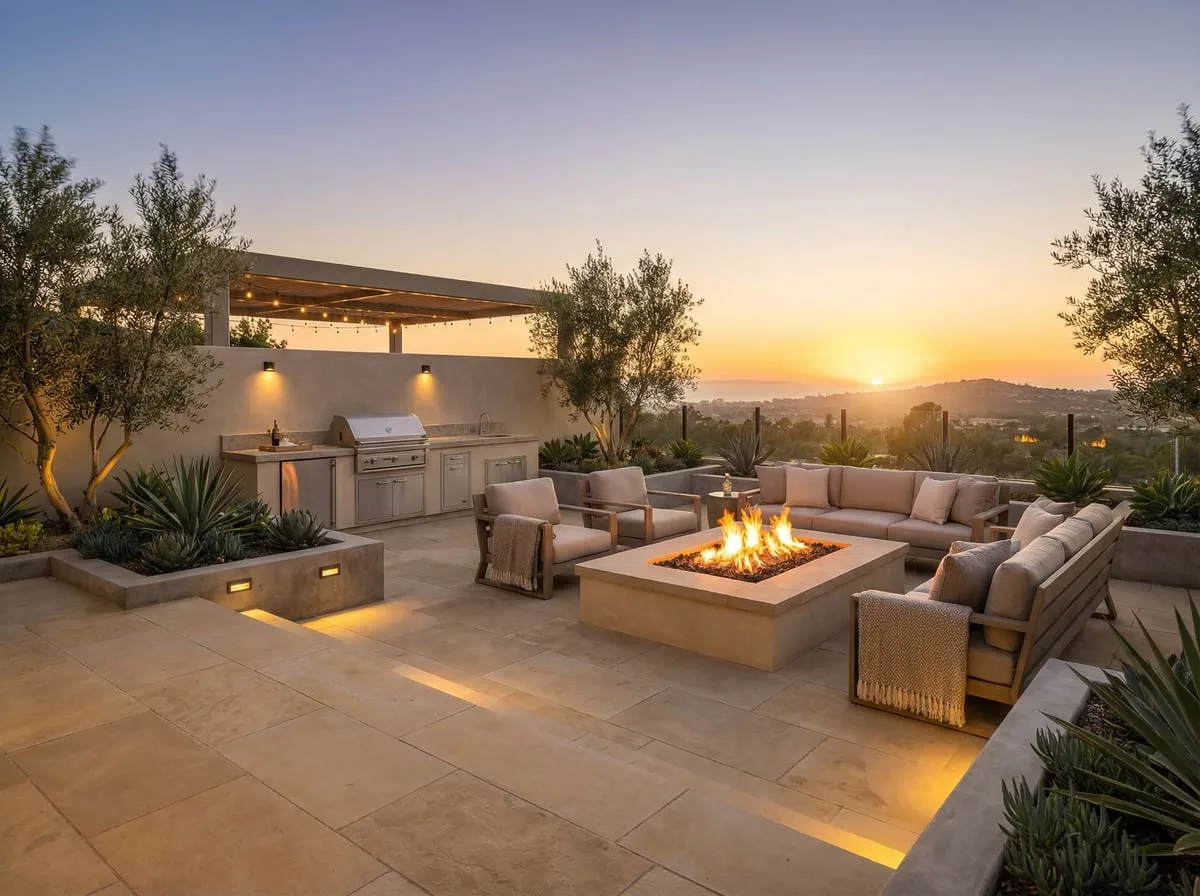
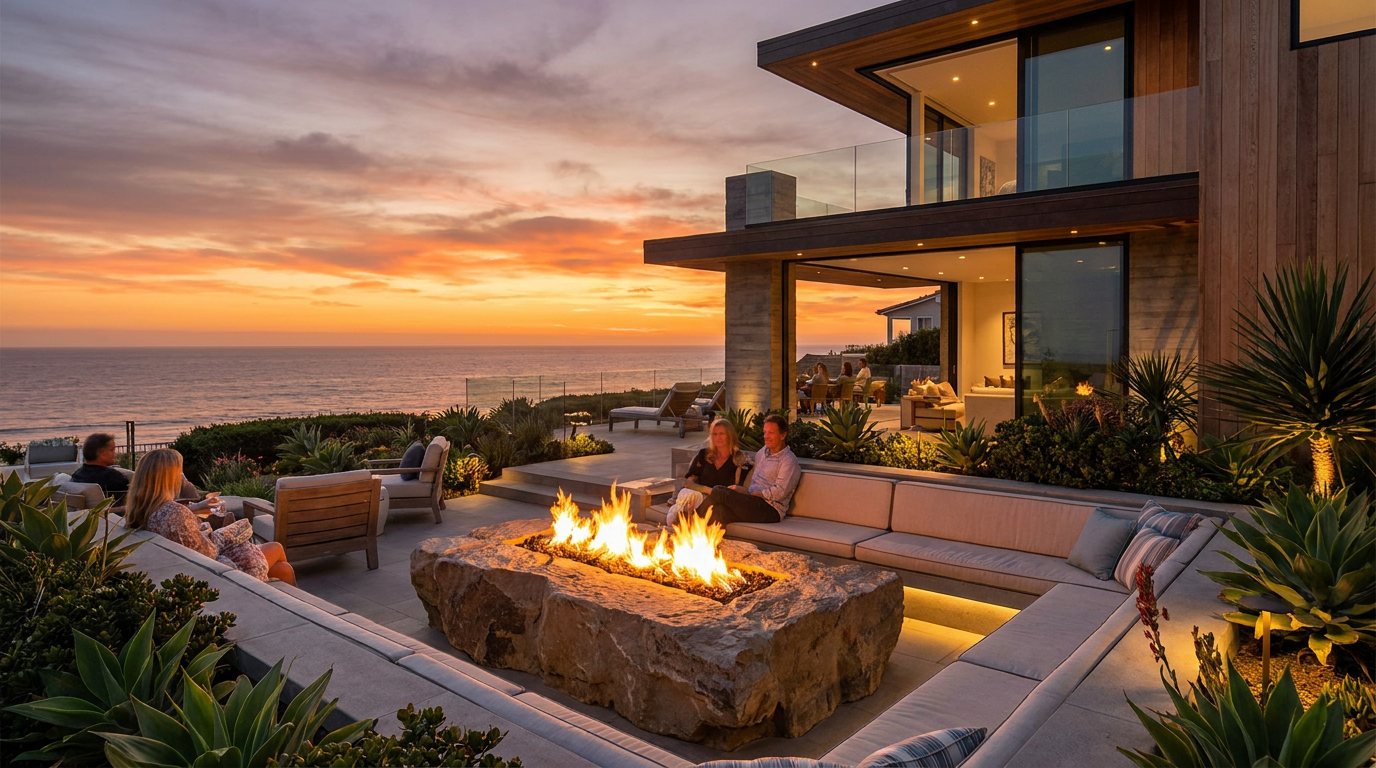
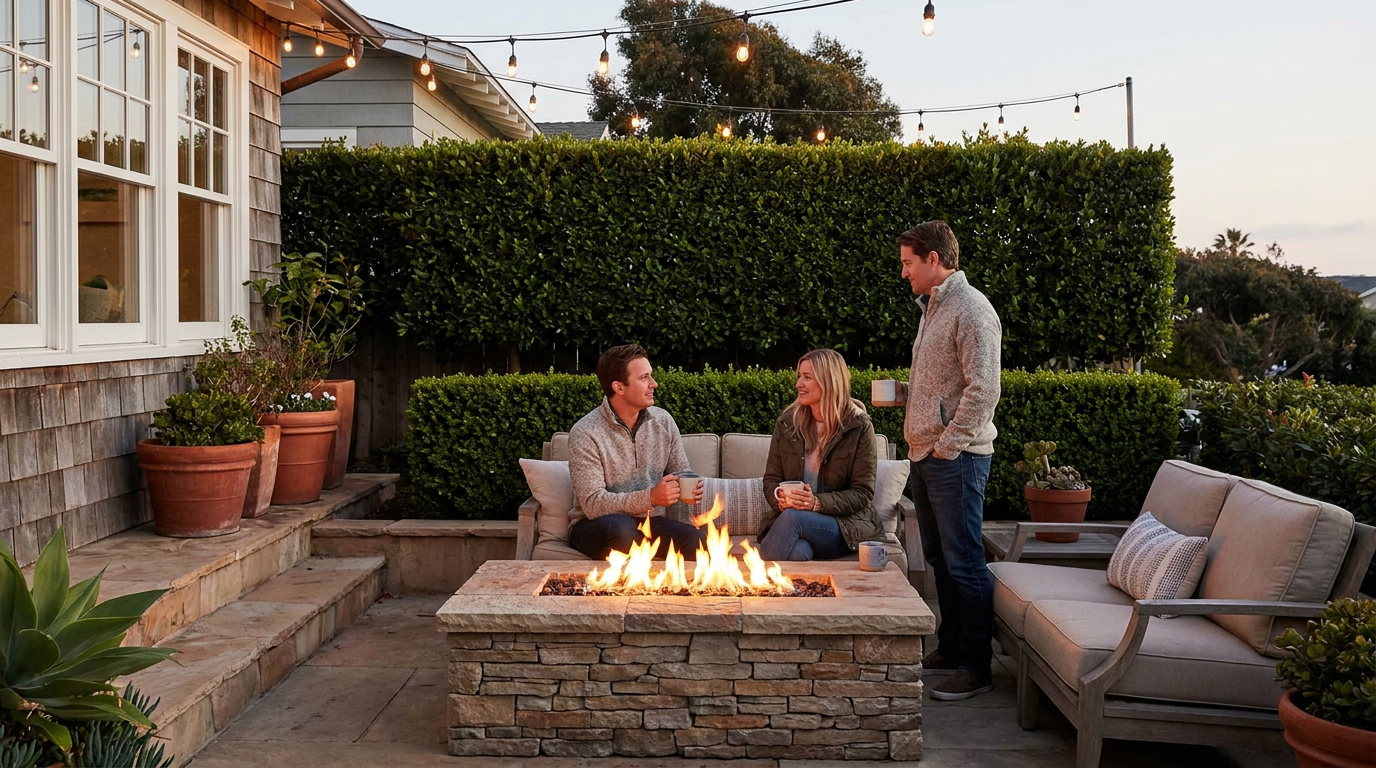
It is a Thursday in March. The sun dropped behind the hillside twenty minutes ago, the air is cool enough for a second layer, and your teenagers are outside without being asked. One has their feet up on the hearth. Your partner is in the chair to the left with a glass of something, talking about nothing important. The dog is closer to the flame than the code inspector would prefer. Nobody looked at a phone for the last half hour.

That is the real product of a well-built fire feature. Not the stone. Not the burner. A reason to use the backyard on a Thursday in March, when most San Diego yards sit empty until Memorial Day.

A fire feature, done right, does something the rest of the yard cannot. It sets the gravity of the space. Chairs orient to it without being told. Conversation slows down. The shoulder seasons — the weeks where the air has a bite to it and the sun is gone by six — stop being lost months. The patio goes from an eight-week-a-year amenity to something that earns its footprint ten months out of twelve.

Done wrong, it is a smoke-producing accessory pushed into a corner — the kind of thing a client hires out without a plan, regrets by the second winter, and covers with a tarp by the third. Wrong orientation to the wind. Chairs a half-step too far away. A flue that pulls in the opposite direction from where the prevailing breeze actually comes from. A burner under-sized for the manifold so the flame never settles into a proper height.

The difference is not the budget. The difference is whether the feature was designed, or whether it was installed.

What our fire work includes

A fire feature is a small scope with a large number of decisions. We design and build all of them, under one crew, as part of a coordinated outdoor room.

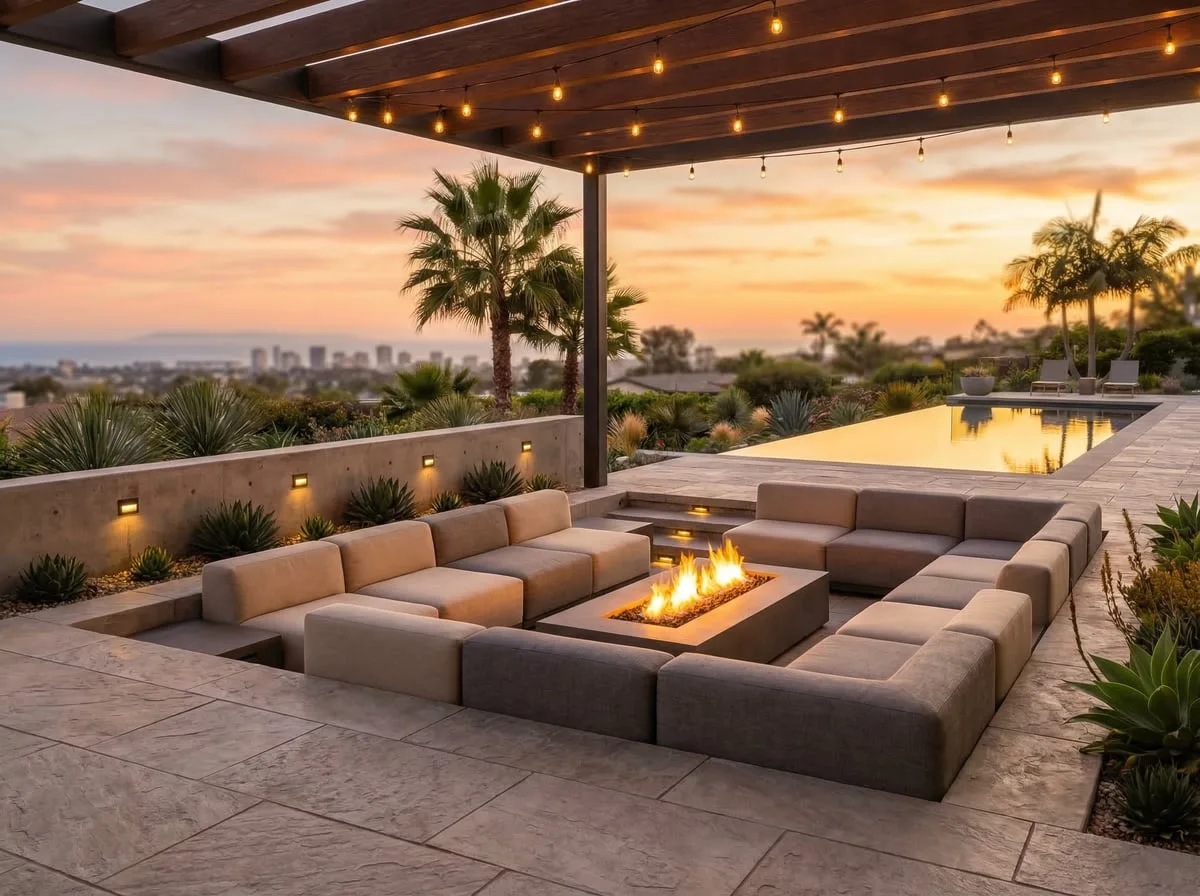
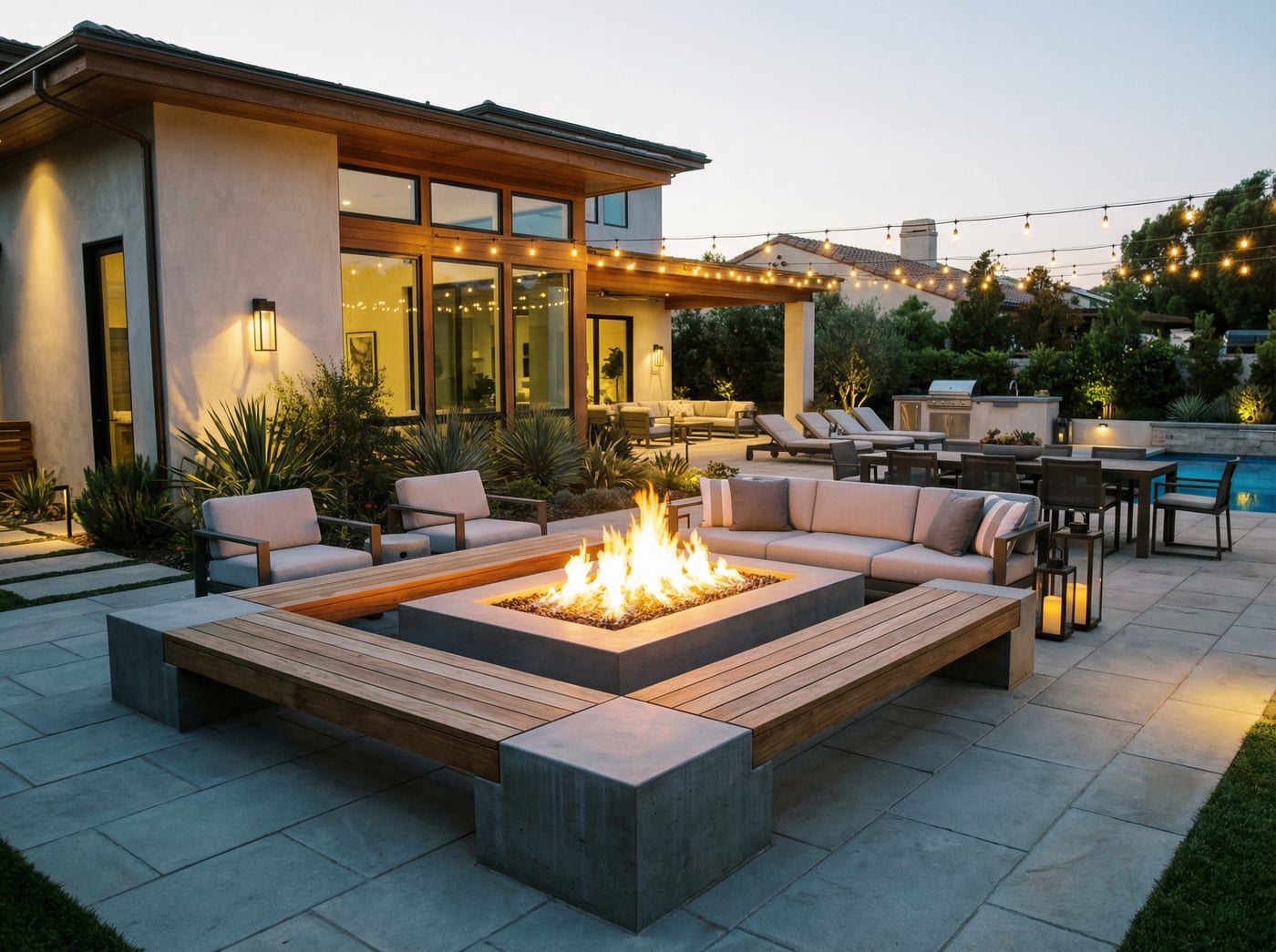
  • In-ground gas fire pits. Permanent masonry or steel vessels plumbed to the home’s gas line, set into a patio or hardscape surface with the correct non-combustible clearance.
  • Above-ground fire tables. Freestanding or built-in, gas-fed, with a surround that reads as furniture rather than utility.
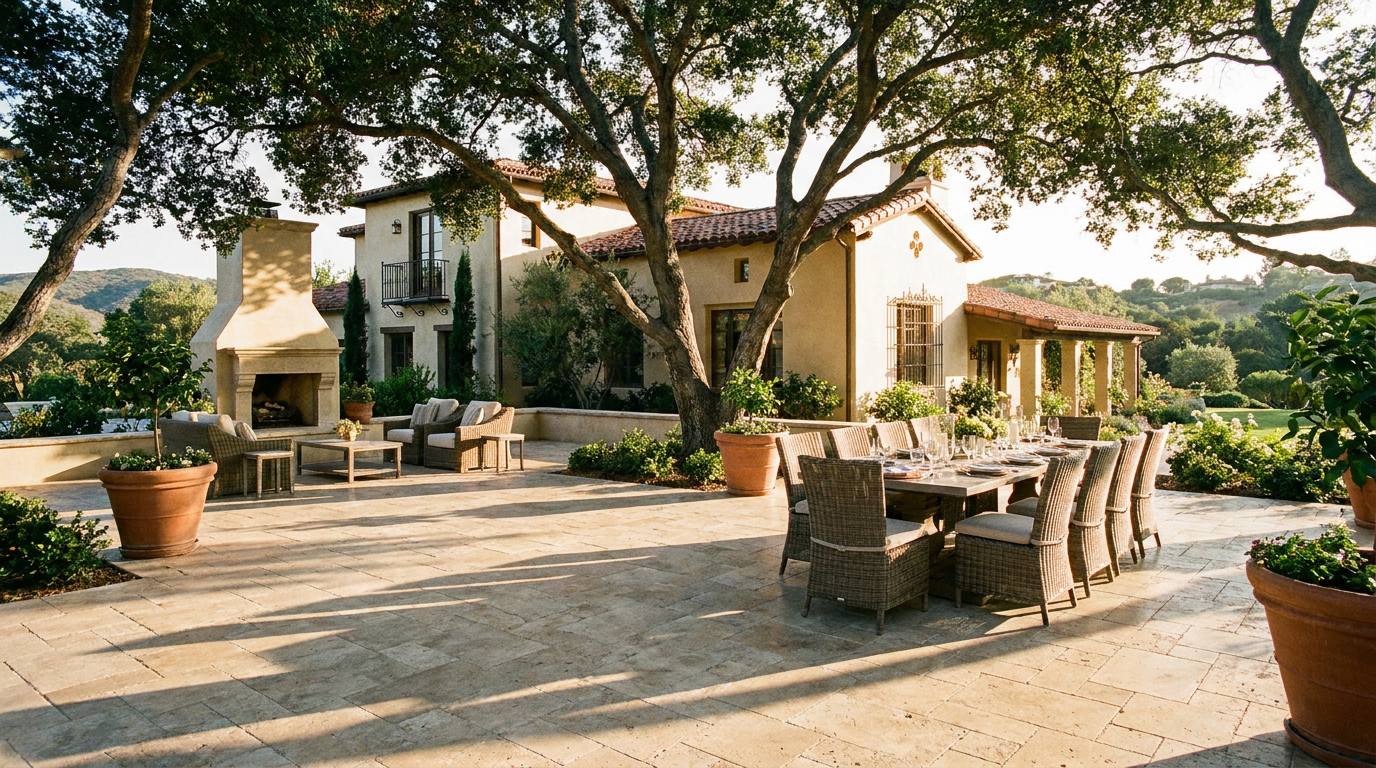
  • Free-standing masonry fireplaces. Hearth, firebox, mantle, and chimney — a full architectural element that anchors a patio the way a hearth anchors a living room.
  • Outdoor fireplaces with engineered chimneys. Drafted correctly for the property’s wind pattern, flashed and capped for San Diego rain, built to pull smoke up and out rather than sideways into the seating area or the house.
  • Steel fire bowls. Weathered or oiled steel — Cor-ten, spun, or formed — installed as sculptural objects with hidden gas runs.
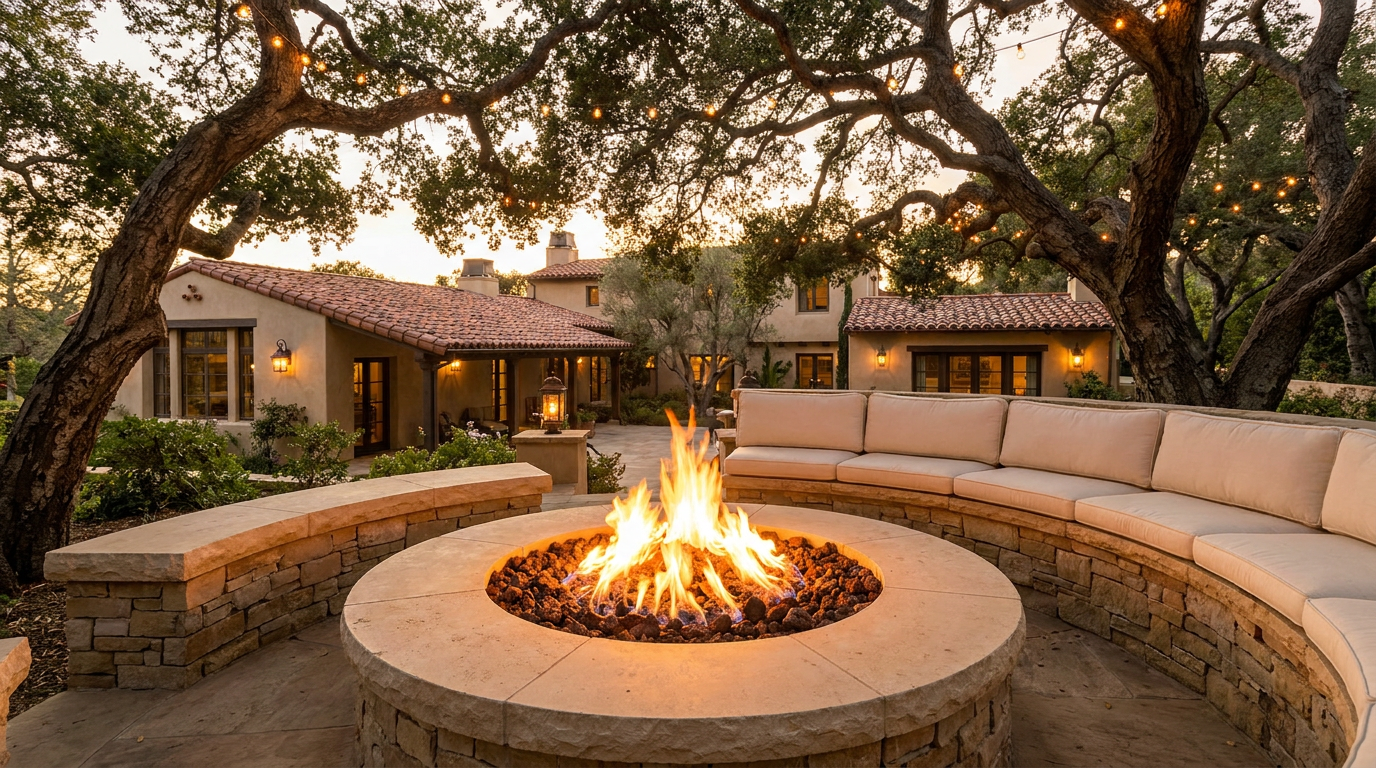
  • Integrated bench seating. Low seat walls wrapping the fire at the correct radius and height, finished to match the surrounding hardscape.

Gas, wood, and ethanol are honest trade-offs, not marketing categories. Gas gives you instant-on, no smoke, and a burner height you can actually tune — at the cost of a plumbed line and an honest dependence on the home’s utility. Wood gives you the crackle and the real heat output, but it also gives you smoke, spark, ash, a storage problem, and a conversation with your neighbors. Ethanol looks clean and installs anywhere, but the heat output is modest and the fuel is ongoing. We walk you through which one fits your property, your setbacks, and the way you actually entertain — before a burner is ordered.

A fire feature rarely lives alone. It talks to the patio underneath it, the pergola or shade structure above it, and the landscape lighting around it. We plan all of those together.

Our process

A good fire feature is seven decisions made in the right order. We run every project through the same sequence.

Chapter I — The first conversation. Thirty minutes by phone or on your property. We ask how you actually use the yard in the shoulder seasons, which direction the evening wind comes from, and whether you are solving for gathering, warmth, or architecture. Three different answers lead to three different builds.

Chapter II — Site walk and orientation. We walk the patio with a wind-rose in mind. San Diego’s prevailing afternoon breeze comes off the water; inland properties get a thermal reversal after sundown. A fireplace set on the wrong wall spends its life pushing smoke at the sliders. We mark where the feature wants to live — which is often not where the homeowner first imagined it — and why.

Chapter III — Chair geometry. A fire you cannot sit around is a TV nobody watches. We draw the seating radius first, then the feature inside it. For a typical gas fire pit, usable warmth lands between 24 and 48 inches from the edge at a reasonable burner output. That dictates the footprint before any stone is specified.

Chapter IV — Permits, setbacks, and gas sizing. We handle the permit and setback review with the San Diego County Planning & Development Services office or your municipal equivalent. Gas line sizing is a real calculation — BTU load, manifold pressure, distance from the meter, existing appliance draw on the same line. Most undersized flames we see in other builders’ work are not burner failures; they are line-sizing failures at the tie-in.

Chapter V — Chimney draft engineering. For fireplaces, the chimney is not decoration. It is a physics problem. Flue cross-section, height above the hearth, termination height above any nearby roofline, and cap detail all govern whether the draft pulls up the chimney or reverses into the patio. We engineer this on paper, not on the jobsite.

Chapter VI — Masonry firebrick vs. manufactured units. Site-built firebrick and refractory mortar gives the longest service life and the cleanest architectural read, but takes weeks and a mason who knows the detail. A manufactured modular firebox — properly installed, properly vented — is a legitimate option for faster timelines and tighter budgets. We recommend the one that fits the project, not the one with the higher line item.

Chapter VII — Finish coordination and The 10-Month Walk-Through. The veneer, cap, hearth, and seat wall finishes are specified against the surrounding patio material so the feature reads as built-with, not installed-on-top-of. Ten months after completion — through a wet winter, a dry September, and the first real seasons of use — we come back. We walk the feature with you. Mortar joints, cap detail, burner pan, ignition, veneer. Anything that needs attention gets attention. No invoice.

Materials and the brands we install

A fire feature is half material and half detail. Both have to be correct.

For masonry surrounds, we install Eldorado Stone veneer where a structure needs to read as built rather than applied, and full-bed natural stone — thin-cut Arizona flagstone, basalt, or local quarried stone — where the architecture calls for it. Firebricks are refractory-grade, set in high-heat mortar rated for the job. Manufactured modular fireboxes from reputable specialty suppliers are an option where timeline or budget warrants; we specify and install the ones we trust, not whatever the local yard has in stock.

For steel work, we install bowls from Solus Decor, Paloform, and weathered Cor-ten fabricated to the property. Each weathers differently; each asks for a different setting. We can walk you through why one wants to sit on a gravel plinth and another wants to be flanked by a poured-concrete bench.

Gas burner systems are a detail most builders hide. We use Warming Trends Crossfire brass jet-burners with electronic ignition where the design calls for a real, full, furniture-grade flame — the kind of flame most outdoor builders never deliver because they default to a stainless ring kit from the box. Ethanol inserts, where appropriate, come from established architectural suppliers with verified certifications.

A specialty materials background Mike also operates on the stone and tile side gives us direct supplier access and installation detail most outdoor-remodel firms do not see.

Investment and what drives the number

A fire feature with San Diego Landscape Remodeling runs between $20,000 and $60,000 for the majority of our work.

Around $20,000 buys a well-designed gas fire pit with a clean stone-veneered surround, a Warming Trends burner, electronic ignition, and a short, appropriately-sized gas line run from a nearby stub-out. Properly permitted. Properly set. A complete, coherent piece — not a box-store insert pushed into a pea-gravel circle.

$35,000 to $45,000 is the common range for a larger custom masonry pit with an integrated seat wall wrapping the feature, finish stone that coordinates with the surrounding hardscape, a longer gas run, and a more involved burner pan. This is where most of our fire-feature work lives.

$50,000 and up is a full outdoor fireplace — hearth, firebox, mantle, chimney, engineered draft, properly flashed cap, coordinated veneer and cap detail. A real architectural element, not a furniture piece.

The drivers that move the number within those bands:

  • Gas line run and sizing. The distance from the meter, the manifold pressure, and whether the line needs to be upsized for total BTU load.
  • Chimney engineering. A fireplace with a proper engineered flue is meaningfully more than one with a modular insert. It is also the only one that drafts reliably.
  • Finish material. Field stone, hand-cut stone, porcelain slab, and steel each carry different labor hours.
  • Seat wall integration. A bench that wraps the fire at a correct radius is a coordinated scope, not a bolt-on.
  • Electronic ignition and controls. Push-button and app-controlled ignition adds hardware and a wired supply.
  • Wind exposure modifications. Coastal properties often need a glass wind guard, a taller chimney termination, or a relocation of the feature altogether.
  • Permit jurisdiction. Coastal, hillside-overlay, and certain HOAs add process time and fees.
  • Fire code compliance. Setback verification, non-combustible clearances, and Cal Fire defensible-space guidance on inland properties.

Premium fair value, delivered by one crew, with founder access from first call. That is the product.

Where we work

We work across San Diego County — by design, not by dispatch. Coastal properties like Coronado and La Jolla bring real wind to solve for and real salt to finish against. Inland properties like Poway bring defensible-space questions and a different HOA landscape. Every city on our serving list carries its own permit, soil, and code reality; we write each location page from what we see on the ground, not what we copied from the last one.

If your property is in the county, we will tell you honestly whether the fire feature you have in mind fits it — and what we would build instead if it does not.

Frequently asked

Gas or wood — which should we choose?

Gas, for almost every San Diego property. Instant-on, no smoke, tunable flame height, no storage problem, no ash. Wood gives you crackle and real radiant heat, but it also gives you smoke drift toward neighbors, spark risk on inland properties, and a conversation with the local air-quality district you probably do not want. Ethanol is a clean option where no gas line is available. We will walk you through the decision against your property, setbacks, and how you actually entertain.

Do we need a permit?

Almost always, yes. A plumbed gas line requires a mechanical permit. A masonry fireplace with a chimney requires structural review. Setbacks from property lines, from the house, and from overhead combustibles are code-enforced. We handle the permit process with the San Diego County Planning & Development Services portal or your city’s equivalent, and we build to the inspection, not around it.

What about smoke blowing into the house?

Solved at Chapter II, not Chapter VII. We set the fire feature against the prevailing evening wind direction for your specific address — coastal breeze in the afternoon, thermal reversal inland after sundown. For fireplaces, the chimney is engineered for draft: flue cross-section, height, termination above any nearby roofline, and cap detail all govern whether smoke pulls up or rolls sideways. This is an engineering problem, not a hope.

Can you put a fire pit on an existing patio, or does the patio have to be rebuilt?

Often we can work on the existing patio, depending on its condition, the non-combustible clearance, and whether the gas line can be run without tearing up most of it. If the patio is already compromised — hollow spots, failing joints, drainage issues — we will tell you honestly whether rebuilding the section under the feature is the better long-term decision. No pressure either way.

What is the setback from the property line?

It varies by jurisdiction and by feature type. Gas fire pits typically require clearance from property lines, overhead combustibles, and structures; masonry fireplaces carry stricter setbacks. We verify the exact numbers with your specific permitting office during Chapter IV — and we design the feature’s location against those numbers before a burner is ordered.

Will our HOA allow a fireplace?

Sometimes yes, sometimes with conditions, occasionally no. Many San Diego HOAs restrict chimney height, approve material palettes, or regulate wood-burning outright. We review the HOA architectural guidelines for your specific community as part of our permit-and-setback review, submit for approval where required, and design within the envelope. If the HOA is a genuine no, we will tell you before you sign.

What does Cal Fire defensible-space guidance mean for an inland property?

For properties in or near wildland-urban interface zones, Cal Fire defensible-space rules govern clearance from vegetation, ember-resistant construction, and — for wood-burning features — spark-arrestor and screen requirements. Gas features avoid most of the risk profile; wood-burning on an inland lot asks for real engineering attention. We design to the guidance rather than around it.

What is the workmanship warranty?

We warranty our workmanship for a minimum of one year, with material and burner warranties extending longer per manufacturer. More importantly, every fire-feature project includes The 10-Month Walk-Through: ten months after completion, we return, walk the feature with you, and handle anything the seasons have exposed — on our dime. Mortar joints, cap detail, burner pan, ignition, veneer. Almost nobody in this industry does this.

Who do we actually talk to during the project?

Gio or Mike. Every project is personally run by one of the founders — no account managers, no handoffs. You have both cell phones from the first call, and our lead craftsman runs the day-to-day on the ground. Direct-founder access is part of the product, not a premium add-on.

Can we see one in person?

References available on request. During discovery, we are glad to walk you past completed fire features in person so you can see how they sit in the yard, how the flame actually reads at dusk, and how the seat wall meets the patio. You can also verify Mike’s active Class B general contractor standing any time through the CSLB license lookup.

References available on request

We do not publish testimonials. When a fire-feature project is complete, we invite future clients to speak directly with the homeowners who have lived with the finished work through a full set of seasons — a real conversation, not a cropped quote. During discovery we will walk you past completed fire features in the neighborhoods where they sit, at the time of day they are meant to be used.

When you are ready

If the scope is real and the property is ready for a planned build rather than a rushed one, we would like to hear about it. A first conversation is thirty minutes — by phone, or standing in the part of your yard where the fire wants to live — and there is no cost to begin. We will listen, we will tell you honestly where the feature wants to sit, and we will tell you whether we are the right builder for the work.

Begin the conversation here.

Licensed and insured general contractor, operating under Mike’s Class B license. CSLB #1139785.

San Diego luxury outdoor craftsmanship

References

References available on request.

We are happy to walk you past completed projects during your discovery conversation. The quality of the work is best read in person.

San Diego County luxury outdoor remodeling

Want to talk through your project?

A first conversation is thirty minutes. By phone or on your property. No obligation, no sales pressure.