The question estate pools answer
A standard pool answers “where do we swim?” An estate pool answers a better question: why would anyone get out? The two features that answer it most completely are the swim-up bar and the grotto — the signature moves of resort pool architecture, scaled to a private backyard.
The swim-up bar, done as architecture
The residential swim-up bar is a composition in three parts:
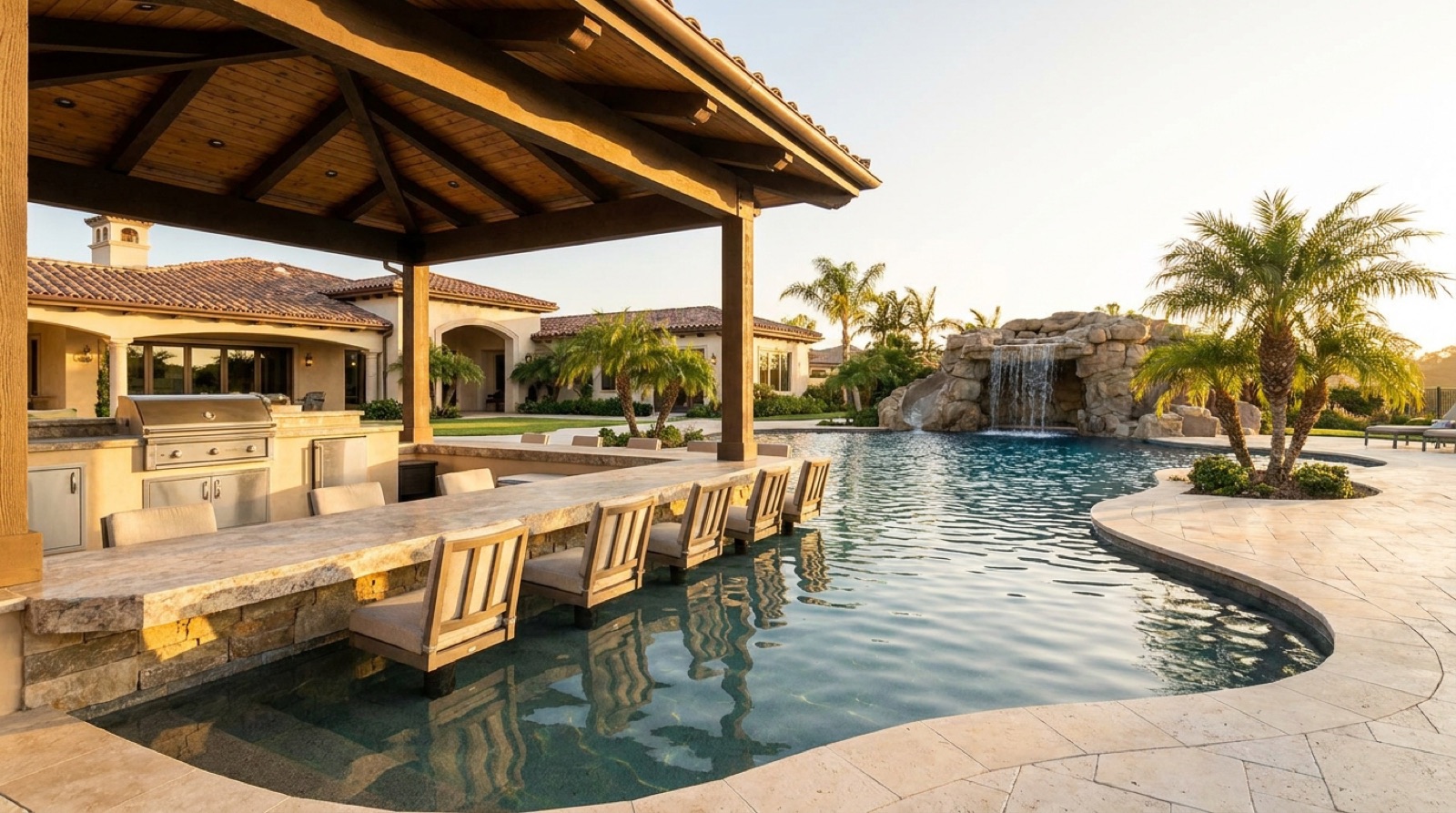
In-pool seating — stools formed into the pool shell at bar depth, finished in the pool’s plaster or tile so they read as sculpture under water. Placement matters: the swim-up side faces the view or the yard, never a wall.
The counter — a cantilevered slab of honed stone or cast concrete bridging water and land, sized so the swimmer and the person on dry land sit at the same conversational height. The counter is the detail guests photograph; the waterproofed structure holding it up is the detail that matters.
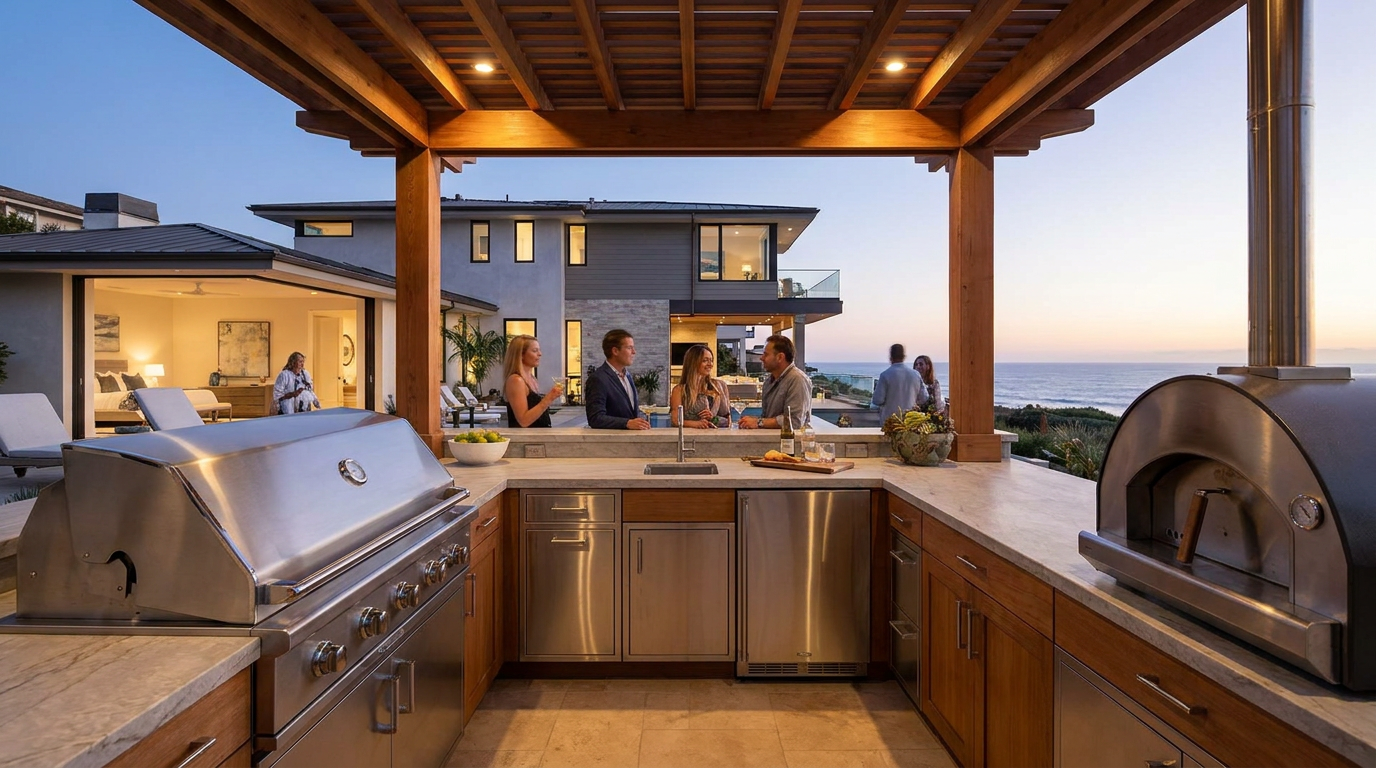
The dry side — a shaded bar with its own counter depth, refrigeration, and often a beverage center and sink, which is where the feature stops being a pool detail and becomes an outdoor kitchen program. The bar pavilion above it — roof or louvered structure — makes the swim-up bar usable at 2 PM in August, which is the entire point.
The grotto, done with restraint
The grotto — a stone cave tucked behind a waterfall at the pool’s far end — is the feature kids remember for the rest of their lives and adults use more than they admit. The estate version is built with restraint: natural or precision-veneered stone that matches the property’s palette rather than a theme-park boulder pile, a bench seat inside, subtle lighting, and a waterfall engineered as a clean curtain of water rather than a noisy splash.
Structurally, a grotto is a small building — engineered spans, waterproofing, and hydraulics for the falls — which is why it appears in seven-figure projects and rarely elsewhere.
What surrounds the water decides how it reads
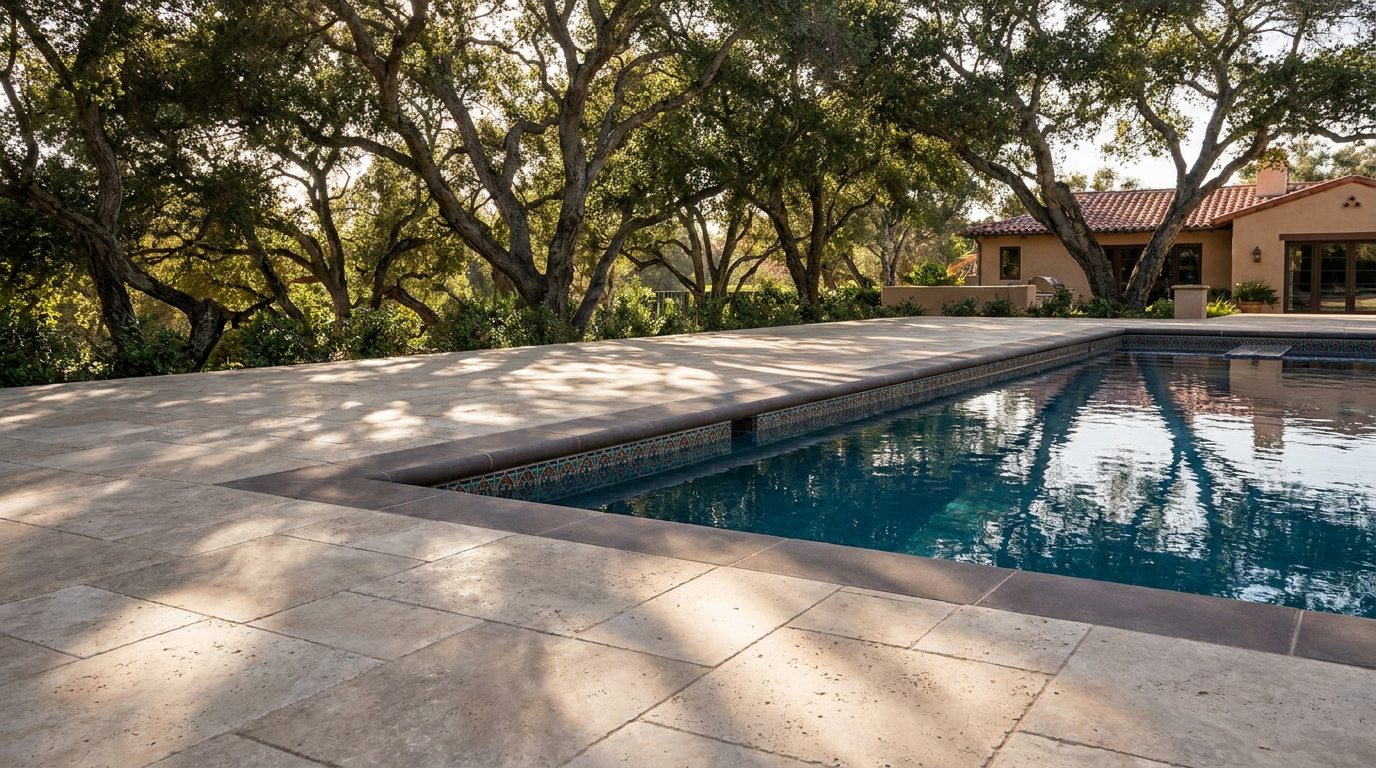
The pool shell is the swimmer’s experience; the deck is everyone else’s. Resort-grade pool surrounds run to honed travertine and porcelain in pale tones that stay barefoot-cool, with the coping detail — square-cut, tight joints — doing more for the pool’s finished look than any feature in the water. That surface discipline is its own craft, covered on our pool decks page and in our pool coping guide.
Features at this scale concentrate in the estate markets — Rancho Santa Fe, La Jolla, Fairbanks Ranch — where the lot can hold a pool long enough to give the bar and the grotto their own territory. The design rule that governs all of it: every element belongs to one composition. The bar’s stone is the terrace’s stone; the grotto’s rock is the retaining wall’s rock; nothing arrives from a catalog unrelated to the property.
Licensed and insured general contractor, operating under Mike’s Class B license — CSLB #1139785.