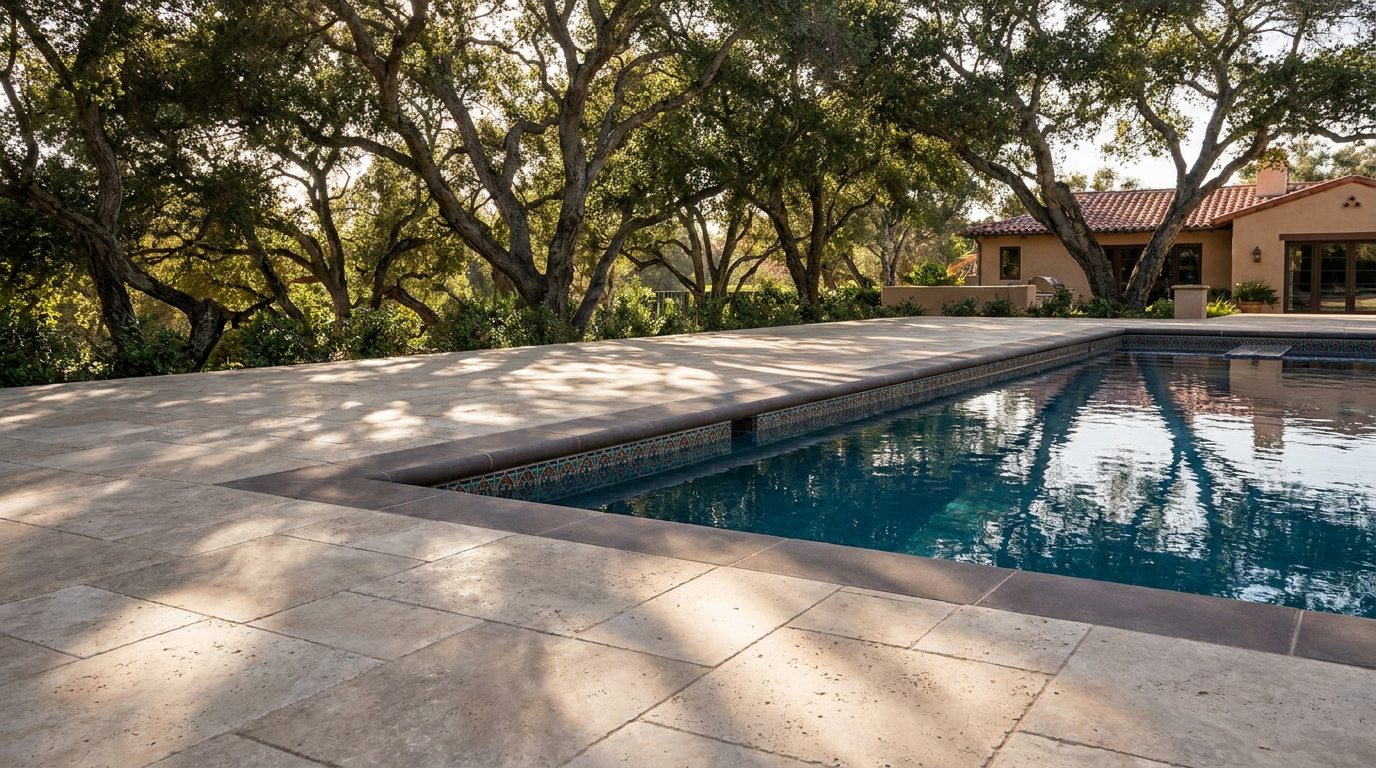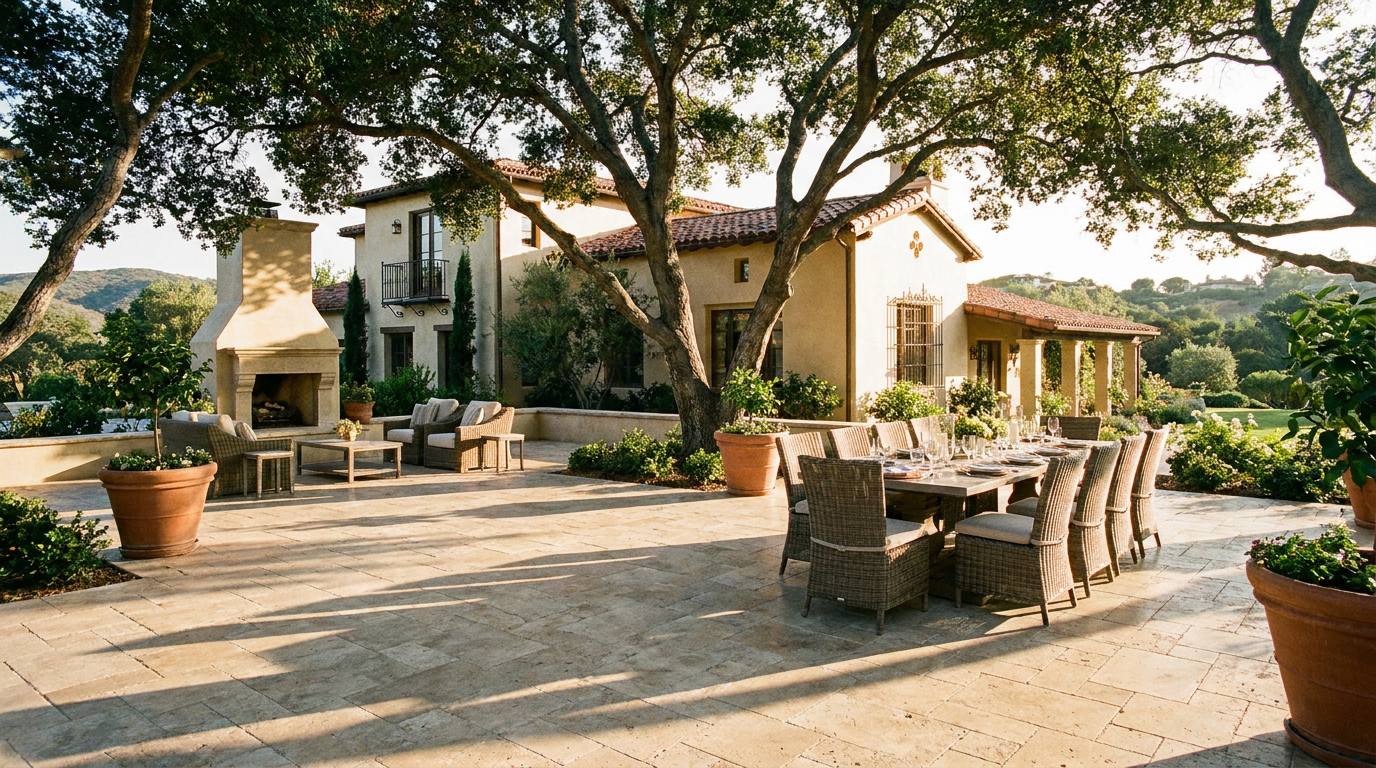
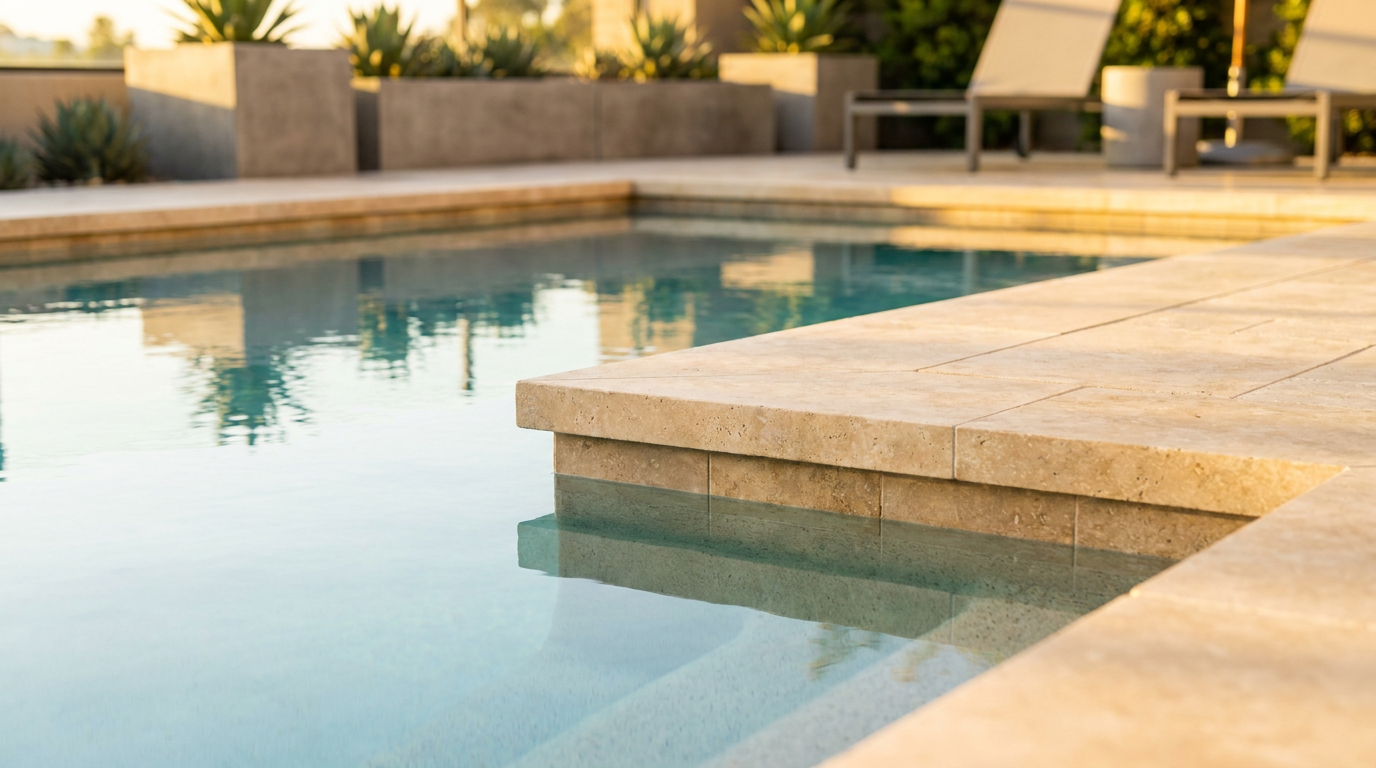
Pool coping is the cap stone or edge material that bridges the pool shell and the surrounding deck. It takes more abuse than any other material around the pool — daily wet-dry cycling, chemical exposure from pool water, UV, foot traffic, and the thermal stress of San Diego’s climate. It is also, along with the waterline tile, the most visible material detail on a finished pool.
Getting coping right matters more than most homeowners realize going in. Here is an honest look at the main options and how each one performs in San Diego.
What Coping Actually Does
Before the materials comparison, it is worth understanding what coping is doing structurally. The coping cap:
- Provides a finished, slip-resistant edge at the waterline
- Protects the top of the pool shell from water infiltration
- Creates a visual and physical transition between pool and deck
- Provides a cantilever or flush edge that the deck material terminates against
The coping and the deck material are related decisions — they need to work together visually and to detail correctly at the joint. That is part of why material selection should happen as part of the full pool deck design, not as a separate afterthought.
Concrete Cantilever Coping
Overview: Poured-in-place concrete formed to overhang the pool edge, typically 1 to 2 inches. The most common coping on pools built in the 1970s through 1990s in San Diego.
What it does well: Monolithic with the deck in some installations, so there is no joint to manage at the coping-to-deck transition. Low initial cost. Structurally straightforward.
Where it struggles: Concrete is susceptible to cracking with the thermal cycling in San Diego’s climate. A cantilever edge that cracks becomes a water infiltration point at the top of the pool shell — a serious structural concern. The finish is utilitarian. Colors fade. Resurfacing a concrete cantilever edge is possible but creates an inconsistency with the original pour if the color match is not exact.
San Diego-specific performance: Fair over time. The thermal cycling between cool mornings and warm afternoons puts stress on monolithic concrete that individual-unit materials do not face. Older cantilever coping that is cracked should be evaluated — in many pool remodels, replacing a failed cantilever coping is a triggering reason to redo the entire surround.
Installed cost: $20–$35 per linear foot installed, depending on forming complexity.
Travertine Coping
Overview: Natural travertine cut as coping units — typically 12”x24” or 16”x24” in an “L” or bullnose profile, set at the pool edge with the nosing overhanging the water.
What it does well: Travertine coping is one of the most widely specified premium options in San Diego for good reasons. It stays cooler than dark stone or concrete under full sun — a meaningful advantage for a material your bare feet cross constantly. The natural color variation (cream, walnut, gold tones) works with San Diego’s warm Mediterranean palette. Filled and honed finishes have a refined, resort-quality appearance.
Where it struggles: Requires a pool-rated sealer — travertine is porous, and pool water chemicals (chlorine, salt in a saltwater system) stain untreated stone over time. Sealer must be reapplied every two to three years. Darker tones of travertine can show calcium and efflorescence deposits that need periodic cleaning.
San Diego-specific performance: Excellent, with proper maintenance. Travertine coping has decades of track record in San Diego’s climate. It is a standard material at La Jolla, Rancho Santa Fe, and Del Mar pools in the $500K+ renovation tier. The sealing discipline is the price of admission — homeowners who skip resealing will see staining.
Installed cost: $35–$65 per linear foot installed, depending on profile, size, and finish.
Bullnose Tile Coping
Overview: Glazed or unglazed ceramic or porcelain tile with a finished, rounded bullnose edge, set in a coping profile at the pool edge. Typically 6”x6” or 6”x12” units.
What it does well: Durable surface. Non-porous — does not require sealing. Integrates naturally with waterline tile in a coordinated design. Relatively easy to replace individual damaged tiles.
Where it struggles: Glazed tile at the pool edge can be slippery when wet — slip resistance (COF rating) must be specified carefully. Grout joints at the waterline are a maintenance point; they can stain, crack, or grow algae. The visual scale of 6” tile coping reads as dated in some contemporary pool designs.
San Diego-specific performance: Good when properly specified. The critical variables are COF rating (not all bullnose tile is appropriate for a pool edge), grout specification (epoxy grout at the waterline performs significantly better than cement grout), and installation quality. Improperly set tile will shift and crack at the grout joint.
Installed cost: $25–$50 per linear foot installed.
Natural Stone Coping (Bluestone, Limestone, Granite)
Overview: Sawn natural stone in a coping profile — bluestone, limestone, granite, and sandstone are the most common. Cut to a standard nosing profile with a smooth or thermal-finished top surface.
What it does well: Genuine natural stone has a material quality ceiling that manufactured options do not reach. Bluestone coping in particular has a clean, architectural quality that reads distinctly high-end. Granite is extremely durable and chemical-resistant. Good slip resistance with a thermal or brushed finish.
Where it struggles: Premium pricing. Natural stone is heavy — installation requires careful substrate preparation. Some limestone varieties are soft enough to chip at high-traffic pool edges. Bluestone can develop mineral deposits (efflorescence) if sealer is not maintained.
San Diego-specific performance: Very good for the right project. Natural stone coping is most common in full-scale pool and outdoor remodels where the rest of the space has a consistent high-end material story. It is not the material to mix with a budget pool shell — the level of investment needs to make sense across the whole project.
Installed cost: $45–$85 per linear foot installed, depending on stone species, thickness, and profile.
Brick Coping
Overview: Clay brick cut and set as a coping cap, typically used in traditional, Mediterranean, or cottage-style properties.
What it does well: Strong aesthetic fit for the right property type. Genuine clay brick has excellent longevity. Comfortable surface temperature in full sun compared to dark stone or concrete.
Where it struggles: Not compatible with every pool design — brick reads as a period detail. Grout joints at the pool edge require maintenance. Poorly fired or soft brick spalls over time in wet environments.
San Diego-specific performance: Limited application. Brick coping is well-suited to a Spanish Mediterranean or craftsman-style home where the coping integrates with the broader landscape character. We see it occasionally in Coronado, Mission Hills, and older La Jolla neighborhoods. For most contemporary or transitional pool projects, it is not the right fit.
Installed cost: $30–$55 per linear foot installed.
What We Recommend for San Diego Pool Coping
The coping decision should be made alongside the deck material and waterline tile — not independently. These three materials are always in frame together.
For most San Diego pools with a Mediterranean, coastal, or transitional design: natural travertine coping, coordinated with a travertine or paver deck and a glass or porcelain waterline tile. This combination has the strongest track record in San Diego’s climate and the widest aesthetic range.
For contemporary or modern pools where the architecture calls for it: natural bluestone or limestone coping, with large-format porcelain decking. The material investment goes up, but the design coherence is worth it at the right project scale.
What we advise against in most new installations: poured concrete cantilever where cracking is a long-term concern, or glazed ceramic bullnose tile without rigorous COF and grout specification.
If you are remodeling an existing pool — replacing failed or dated coping as part of a broader surround refresh — the coping choice will drive the rest of the deck decisions. It is the right place to start.
If you want to talk through what makes sense for your pool and property — thirty minutes, no cost, no pitch — that is how we start.
Related: Pool Decks & Poolside Hardscape · Patios & Hardscape · Full Backyard Remodels · Projects in La Jolla · Projects in Del Mar · Travertine at Arizona Tile · Belgard coping and pool products