The part of the fire pit nobody sees
A fire feature is judged in the first three seconds after ignition. Either the flame rises tall, bright, and full — the kind of fire people instinctively pull chairs toward — or it hovers in a thin blue ring an inch above the media, and the most expensive stone surround in the world cannot rescue it.
The difference is almost entirely the burner. And the burner we build most of our fire features around is the Warming Trends CROSSFIRE brass jet system.
Watch what the flame actually does
The manufacturer’s demonstration shows the difference better than any paragraph:
Why this burner and not the $80 ring
The jet design produces more flame on less gas. A standard drilled-pipe burner ring releases gas gently, producing a low, lazy flame that needs high volume to look like anything. The CROSSFIRE’s venturi jets mix air and gas at each port, producing a flame that is taller, brighter, and fuller at roughly half the fuel consumption. Over years of regular use on a natural gas line, the efficiency difference is real money — and on the night it is lit, the visual difference is the whole point.
Brass, not stainless. Most burner rings are stainless steel, which survives a few years of thermal cycling and coastal air before ports corrode and the flame pattern goes ragged. The CROSSFIRE body is solid brass — the same reasoning as marine hardware. Warming Trends backs the brass with a lifetime warranty, which tells you what they expect it to do.
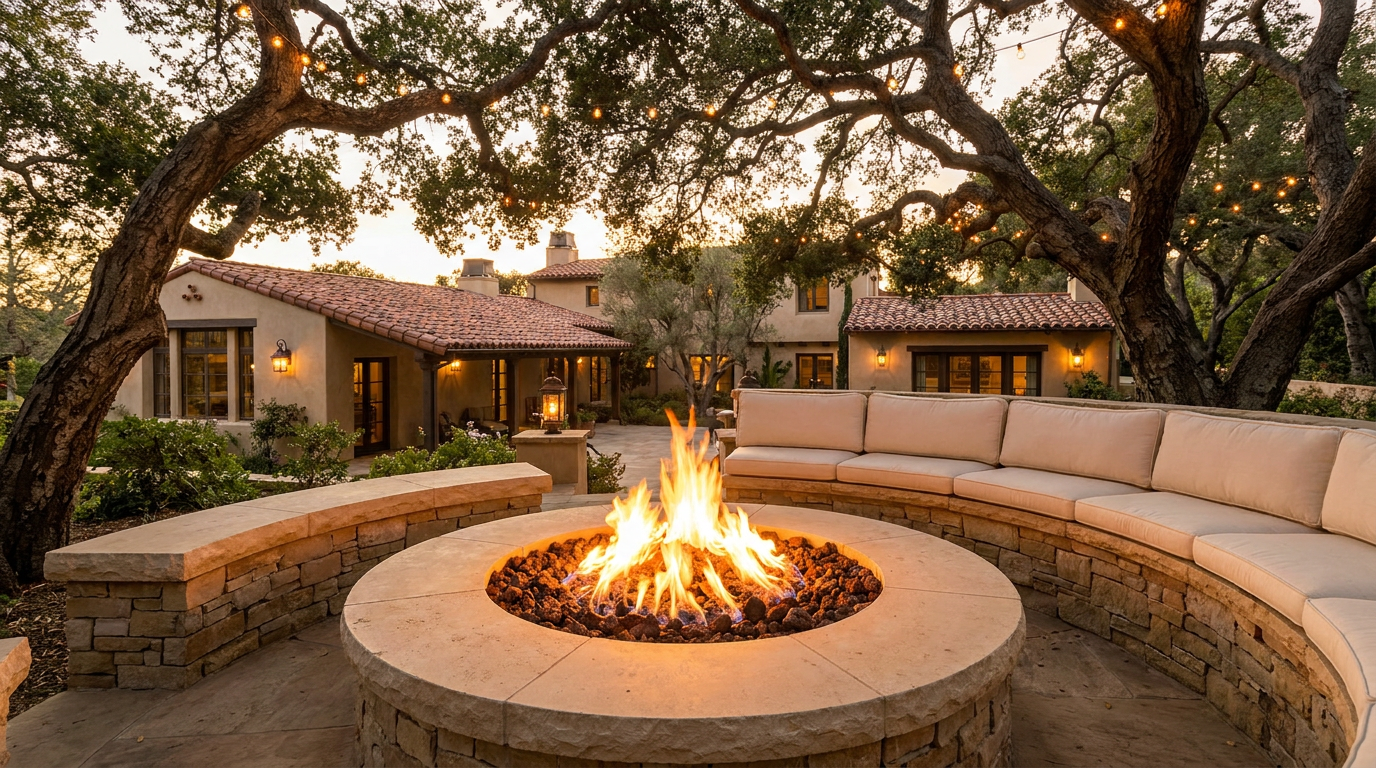
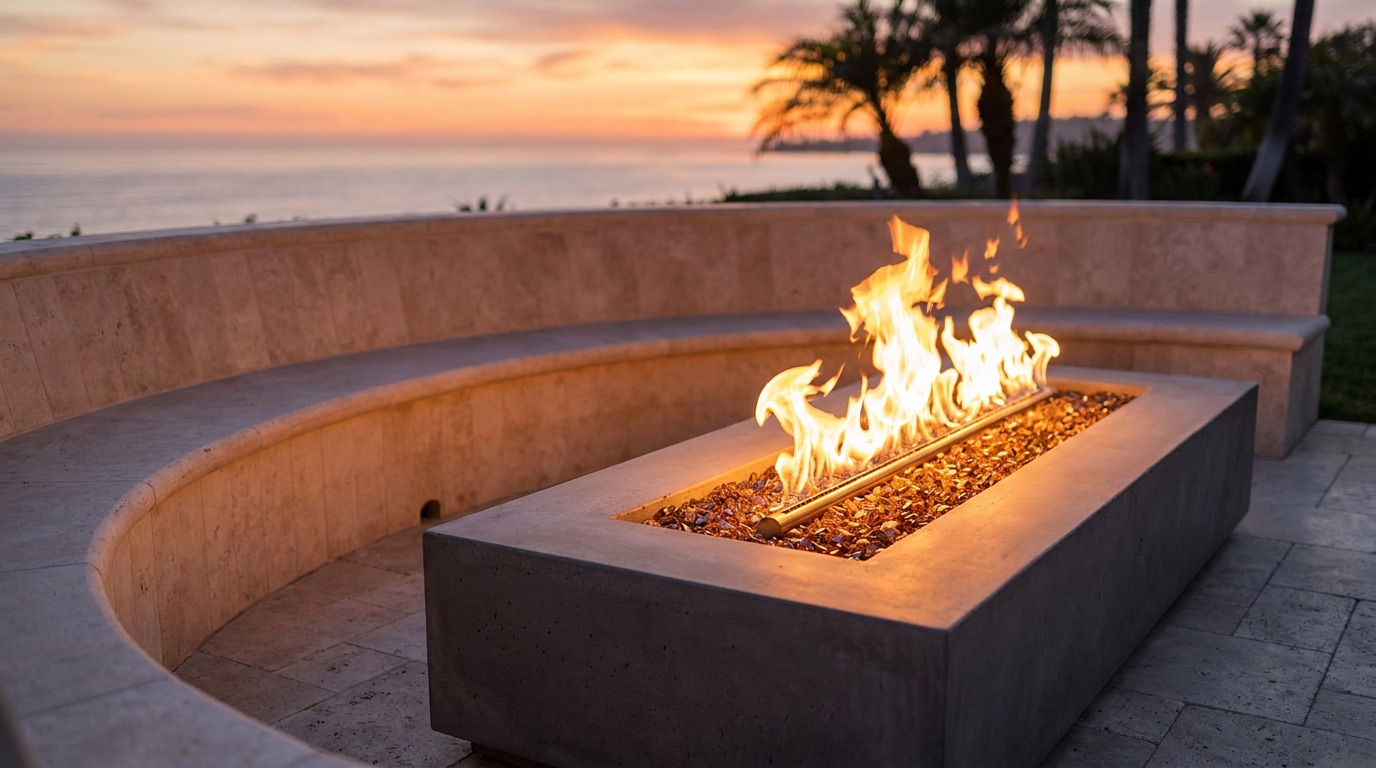
Format flexibility. Round, square, linear, H-pattern, and the long Centipede runs — the burner conforms to the design rather than the design conforming to the burner. When we set a 6-foot linear flame into a limestone seat wall in Del Mar, or a round burner into a sunken lounge in Mount Helix, it is the same jet technology sized to the feature.
How we build around it
The burner is a component; the fire feature is a construction project. Our standard practice:
- Natural gas, plumbed and permitted. A dedicated gas run sized for the burner’s BTU demand — undersized lines are the most common cause of weak flames in otherwise good installations.
- A properly vented enclosure. Gas fire features in enclosed masonry need cross-ventilation. This is a code item and a safety item, and it is the detail DIY builds miss most.
- Key valve or electronic ignition depending on the project — a simple key valve for the classic experience, electronic ignition with flame sensing where the client wants app or switch control.
- Media that belongs to the design — tumbled fire glass in cool tones for contemporary features, lava rock or ceramic logs where the architecture leans traditional.
For the full picture of what fire features cost and involve in this county, our fire pits and fireplaces page covers scope and investment ranges.
We have no sponsorship arrangement with Warming Trends. We spec what performs; when that changes, so will the recommendation.
Licensed and insured general contractor, operating under Mike’s Class B license — CSLB #1139785.