An evening in Del Mar worth extending
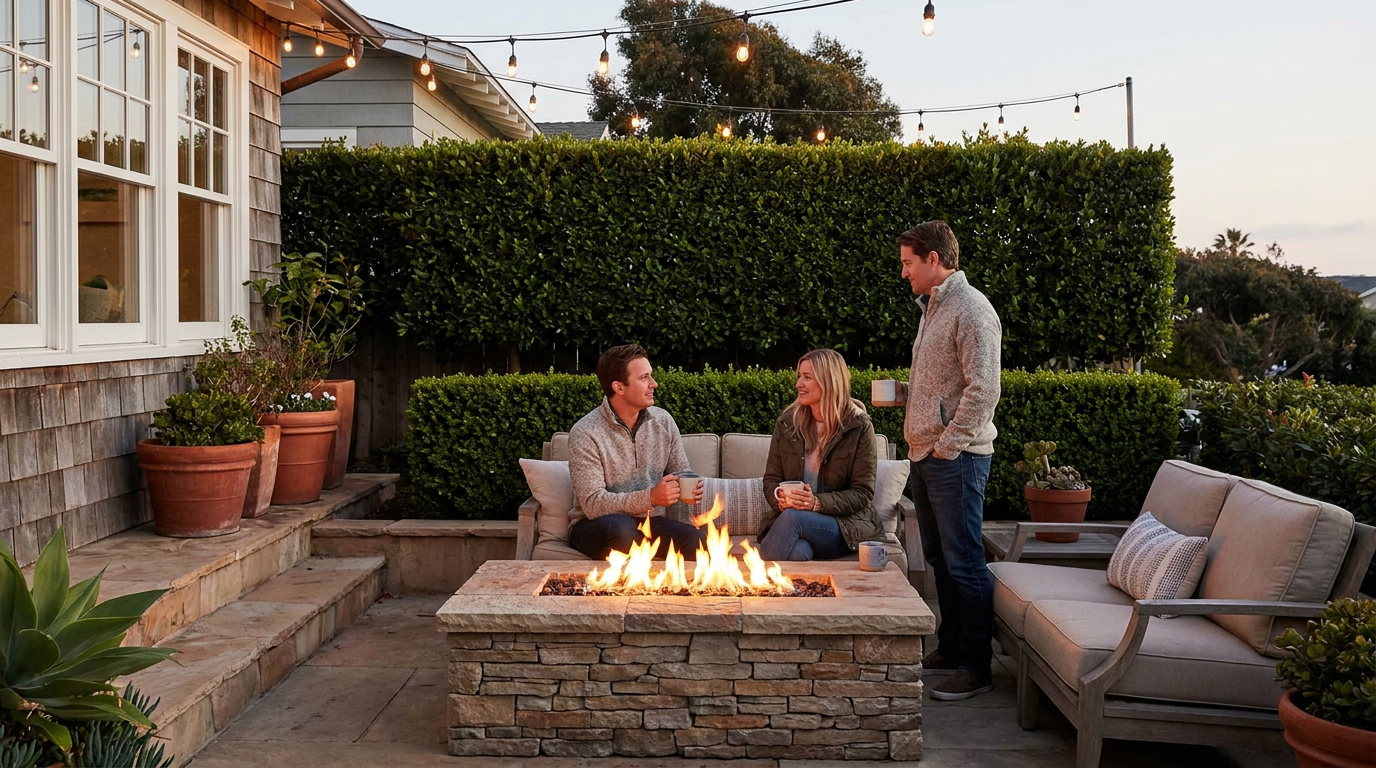
A Del Mar evening in July has its own rhythm. The horse track a mile north goes quiet after the last race. The marine layer holds at the cliff edge. The air cools fast after sunset in a way that makes the fire feel purposeful rather than decorative. The neighbors across the hedge are doing the same thing.
A fire pit on a Del Mar Village lot is not a statement. It is a room. It is the reason the group stays outside when the temperature drops at nine o’clock. Done correctly, at the right scale and in the right material, it reads as though it belonged to the property before the current owners arrived. Done incorrectly — too large, wrong stone, wrong siting — it announces itself every time someone sits down.
Scale is the design brief in the Village
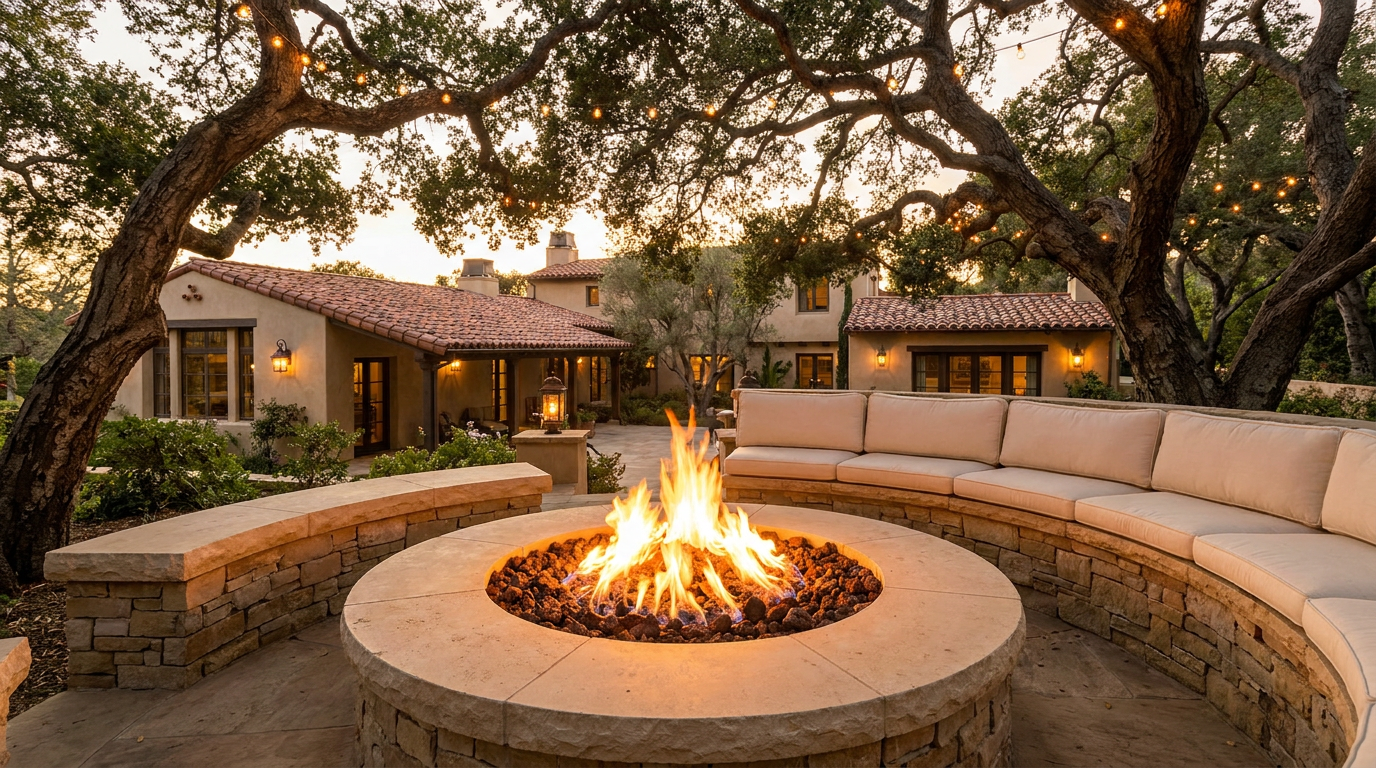
Del Mar Village lots run 5,000 to 10,000 square feet. A fire pit that might read proportionate on a Rancho Santa Fe estate will dominate a Village yard. The right fire feature for most Village lots is a compact circular or linear gas fire pit set into the primary patio, with a surrounding seat wall in the same material as the patio edge, and seating for six to eight rather than twelve.
The seating wall height matters. At 18 inches it is a perch. At 22 to 24 inches it is a seat with back clearance from a standard table height. The feature should be usable, not architectural in the display sense. Del Mar residents use their outdoor rooms; they do not exhibit them.
Gas is the correct specification for a Village lot fire feature. Wood combustion in a tight residential setting means ash management, smoke that affects neighbors, and a fire that takes twenty minutes to produce. Gas ignites from the terrace control, stays at a consistent height, and extinguishes when you go inside. In the Village’s close-set character, gas is also the more considerate specification.
DRB review and what it means for your fire feature
The Del Mar Design Review Board reviews exterior features visible from the public right-of-way. A fire pit in the rear yard of a property with a solid hedge line is typically not the DRB’s concern. One on a front terrace or a side yard exposed to the street may be. We scope the permit and review path as part of the first conversation — we do not present a proposal that requires you to discover the review process yourself.
On parcels in the Coastal Zone — most of the village west of I-5 and all of the Beach Colony — the California Coastal Commission may require a Coastal Development Permit for structures above the coastal setback. We run that process as scope when the parcel requires it.
Materials for salt air and the Beach Colony
The Beach Colony sits one to several blocks from the sand, and the salt load there is not an average coastal exposure — it is full ocean-weather material selection. Marine-grade stainless burner components. Dense stone or sealed porcelain for the surround. Stainless or powder-coated aluminum hardware at every fastener. Mortar joints that are filled and sealed rather than open.
In the Del Mar Heights and the upper Village, salt air is present but moderated by the distance from the waterfront. Standard coastal-grade material selection applies — sealed travertine or dense porcelain at the surround, stainless burner, polymer-modified mortar at the joints. The same approach we use for a La Jolla property’s secondary patio.
What a Del Mar fire feature costs
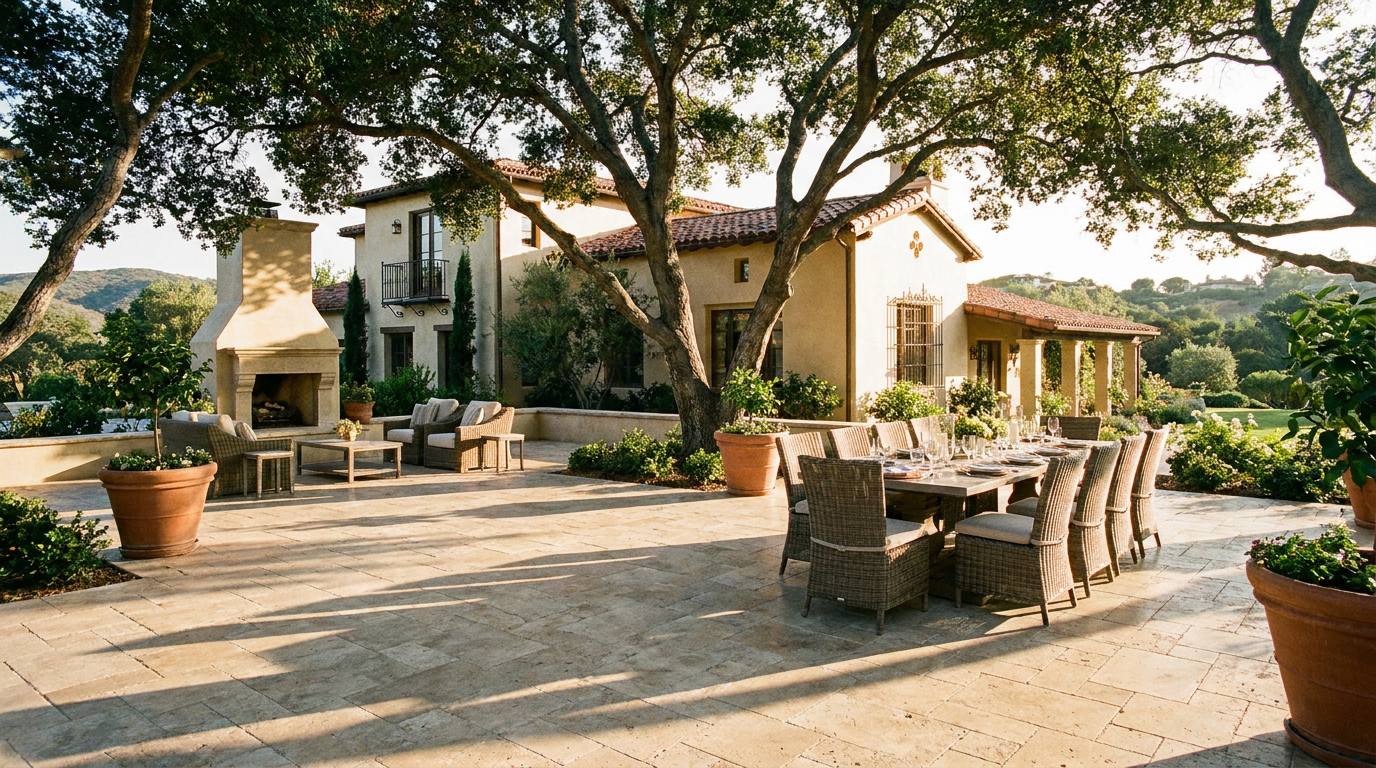
A well-built gas fire pit with seat wall and integrated patio connection in Del Mar runs between $20,000 and $45,000 for most Village and Heights scopes. Beach Colony work at the high-finish standard carries a higher material and permitting cost. A full outdoor fireplace with chimney and architectural masonry is a larger investment and a different design conversation.
We bring samples to the property before any material is ordered. A stone that reads correct in the showroom may not read correct next to your stucco at 7 PM in December. We test the material where it will live before we commit.
For the broader remodel cost picture in Del Mar, see our Del Mar remodel cost guide.
Licensed and insured general contractor, operating under Mike’s Class B license — CSLB #1139785.