Del Mar is 1.8 square miles. That is not very much ground to hold three meaningfully different real estate markets with three different lot profiles, three different relationships to the California Coastal Commission, and three different cost tiers for outdoor remodeling work. But it does. Del Mar Village, Del Mar Heights, and the Beach Colony are not interchangeable as planning contexts, and a budget built around one of them does not transfer cleanly to another.
The cost breakdown below follows the geography.
Del Mar Village: $75,000–$200,000
Del Mar Village sits west of Camino del Mar, bounded by the bluff on one side and Crest Canyon on the other. Lots are small — five to eight thousand square feet is common — and many of the homes carry the village’s mid-century cottage vernacular intact. The design challenge in the Village is restraint, not scope.
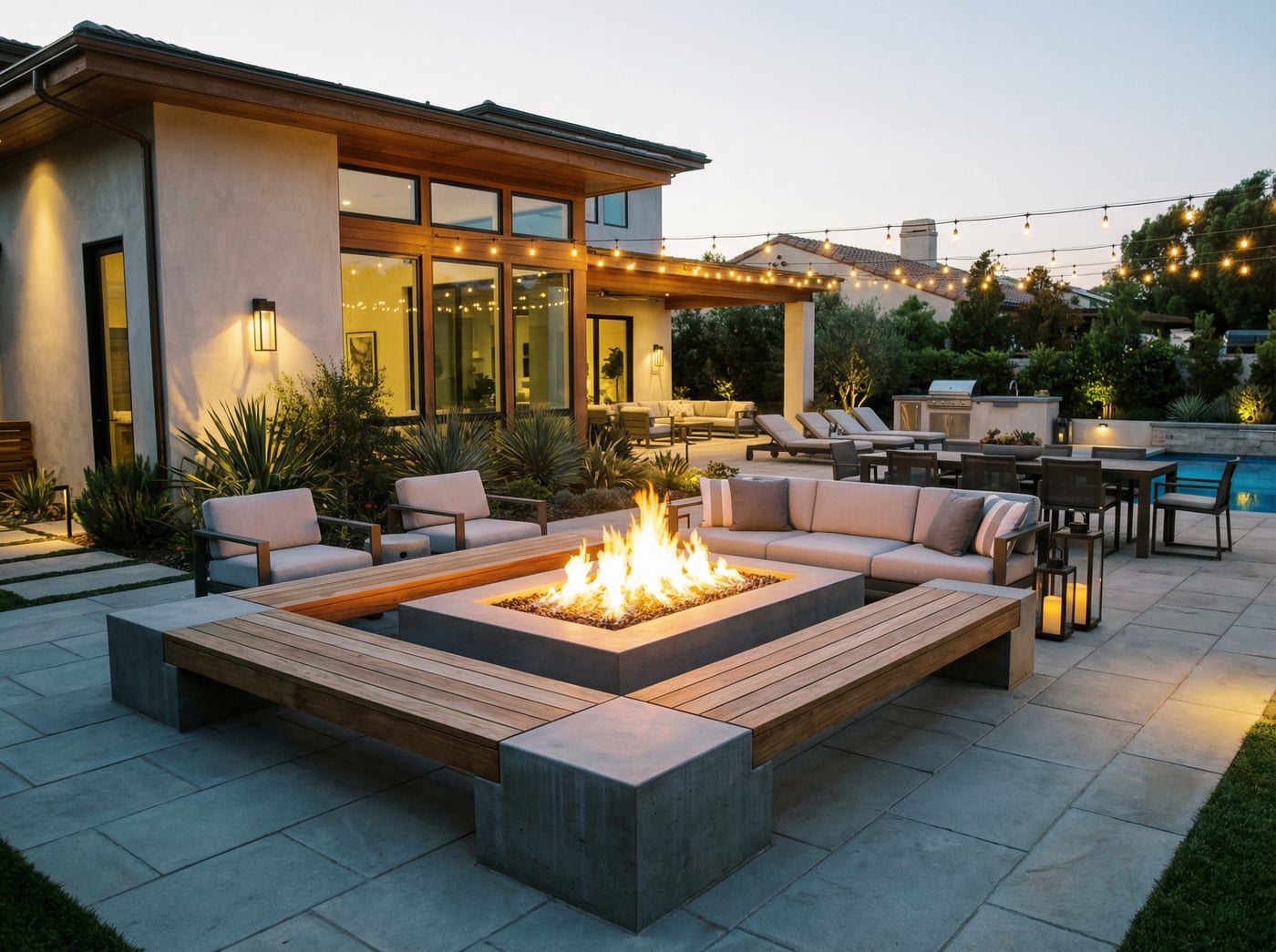
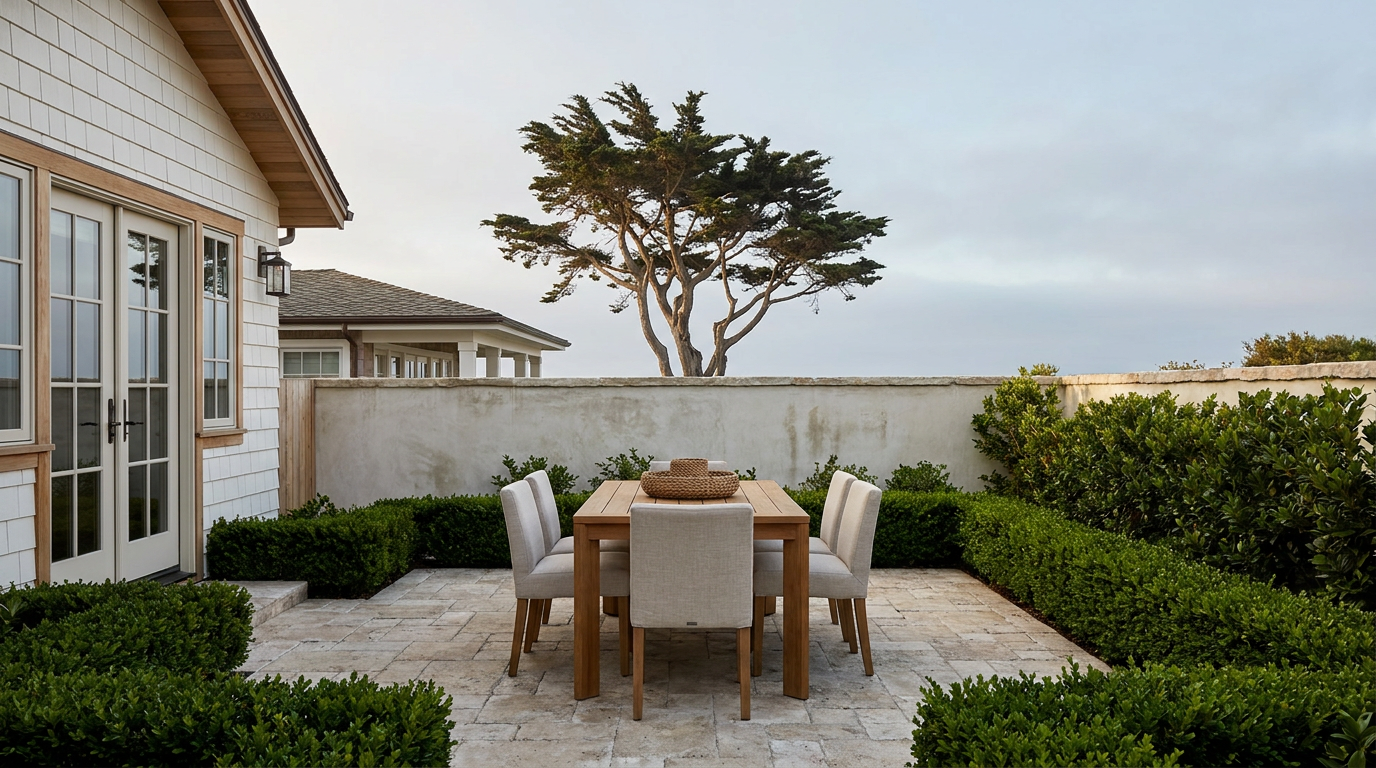
On a 6,000-square-foot lot, the backyard can support one well-composed outdoor room. Not two rooms. Not a kitchen and a lounge and a lawn and a planting bed. One room, designed with enough discipline that it reads as deliberate rather than crowded. The most common programs in Del Mar Village are a primary patio sized for a dining table for six, a planted edge that creates privacy without dominating the space, a fire feature or a small built-in seat wall, and lighting. That is usually the correct answer for the lot.
The cost driver in the Village that does not appear elsewhere at this price point is the Design Review Board. Del Mar has its own city government and its own DRB process, and exterior work visible from the public right-of-way goes through review. The review is iterative — drawings in, comments back, drawings revised, hearing scheduled — and it adds design cost and calendar time that are not present on a comparable project in an unincorporated County area. The DRB is not a reason to avoid the work. It is a reason to plan the calendar honestly and to work with a firm that does not find the DRB a surprise mid-project.
Material cost in the Village is also shaped by salt-air spec. The Beach Colony has more dramatic salt exposure, but even a property on Stratford Court or Fifteenth Street is close enough to the water that standard galvanized hardware and untreated concrete will not perform the same way they perform in Poway. Marine-grade fasteners, sealed surfaces, and lighting systems specified for coastal humidity are not optional upgrades in Del Mar — they are the baseline.
Del Mar Heights: $100,000–$300,000
Del Mar Heights runs east of Interstate 5 along the mesa. Lots here are larger — a quarter to a half acre is common — and many are view parcels, with the ocean to the west over the valley or the lagoon and hills to the east. The view and the grade are what define Heights projects.
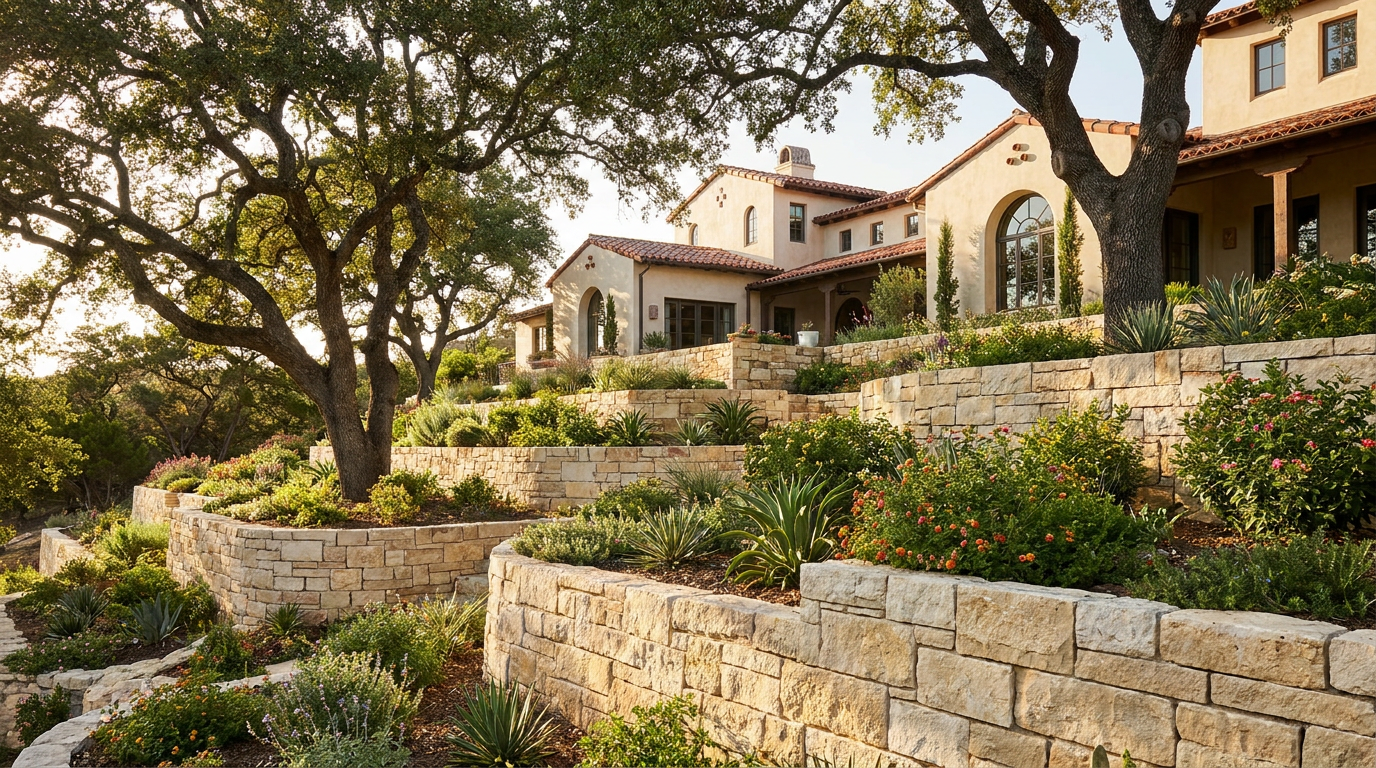
Retaining walls and terracing are the core structural conversation on Heights view lots. A property with a significant slope toward the view is, at its most interesting, a project about creating a sequence of usable terraces that step down toward the sight line. A retaining wall that becomes a seat wall. A terrace at the top for dining. A lower terrace for a fire feature or a lawn that frames the view from the house. The spatial logic of a well-designed Heights backyard is about capturing the view from the right positions — from the kitchen slider, from the primary dining seat, from the fire feature at night.
The soil on the Heights is predominantly clay — it holds water, it shrinks in dry months, and it exerts lateral pressure against retaining walls in ways that a sandy bluff-side soil does not. A retaining system designed for Heights clay requires different drainage behind the wall, different footing depth, and different engineering review than a decorative garden wall in the Village would require. The drainage question — where does the water go behind the wall, and how does it exit the system — is a design question before it is a construction question, and it needs to be answered before the first block is set.
Drainage from the Heights properties also carries a downstream consequence that the Village does not. Water that runs off a Heights view lot drains toward the valley and eventually the lagoon. The city is aware of this, and grading and drainage permits on Heights parcels are reviewed accordingly. A design that routes water correctly is not just a functional decision — it is part of what gets approved.
Del Mar Beach Colony: $175,000–$500,000+
The Beach Colony is the ultra-premium coastal strip along the ocean’s edge — some lots on the sand, most within a block of it, and a price per square foot that is among the highest in the county. The permit path here is the most involved in Del Mar, and the finish level the neighborhood expects is uncompromising.
Most Beach Colony parcels are inside California Coastal Commission jurisdiction, which means a Coastal Development Permit on top of the DRB process for any hardscape, grading, or structure that falls within the coastal setback. The CCC adds months to the permit window and requires drawings and project narrative prepared to the Commission’s standard. A firm that does not run CCC submittals in their own scope — who asks you to manage that process, or dismisses the timeline as shorter than it is — is not the right firm for Beach Colony work.
The material specification in the Beach Colony is marine-grade everywhere. Standard stainless is 304 — it holds up inland and in most suburban environments. At the Beach Colony, the salt load and moisture demand 316 stainless at every hardware point. Standard galvanized fails. Soft stone absorbs salt and begins to deteriorate in ways that are subtle at first and visible quickly. Concrete finishes need to be sealed for coastal exposure with a product actually rated for it, not the standard sealer from a general supply house.
At this finish level and with dual-jurisdiction permitting, a Beach Colony remodel that fully addresses the outdoor footprint will typically land between $175,000 and $500,000 or above, depending on scope, site access, and the degree of structural complexity.
What Every Del Mar Project Has in Common
Regardless of sub-neighborhood, every Del Mar outdoor project is designed with the DRB visibility standard in mind. Exterior work visible from the public right-of-way is in scope for review, which means the backyard experience and the street view of the work are both part of the design problem. A retaining wall on a Village property, a pergola structure on a Heights view lot, a privacy screen on a Beach Colony parcel — all of these are designed for how they read from the street as much as for how they function for the homeowner.
That design constraint is not a limitation. It is what keeps Del Mar looking like Del Mar, which is a large part of why a property here is worth what it is worth.
Related: Full Backyard Remodels · Retaining Walls & Seating Walls · Projects in Del Mar · Backyard Remodel Cost in San Diego