The fire and the view
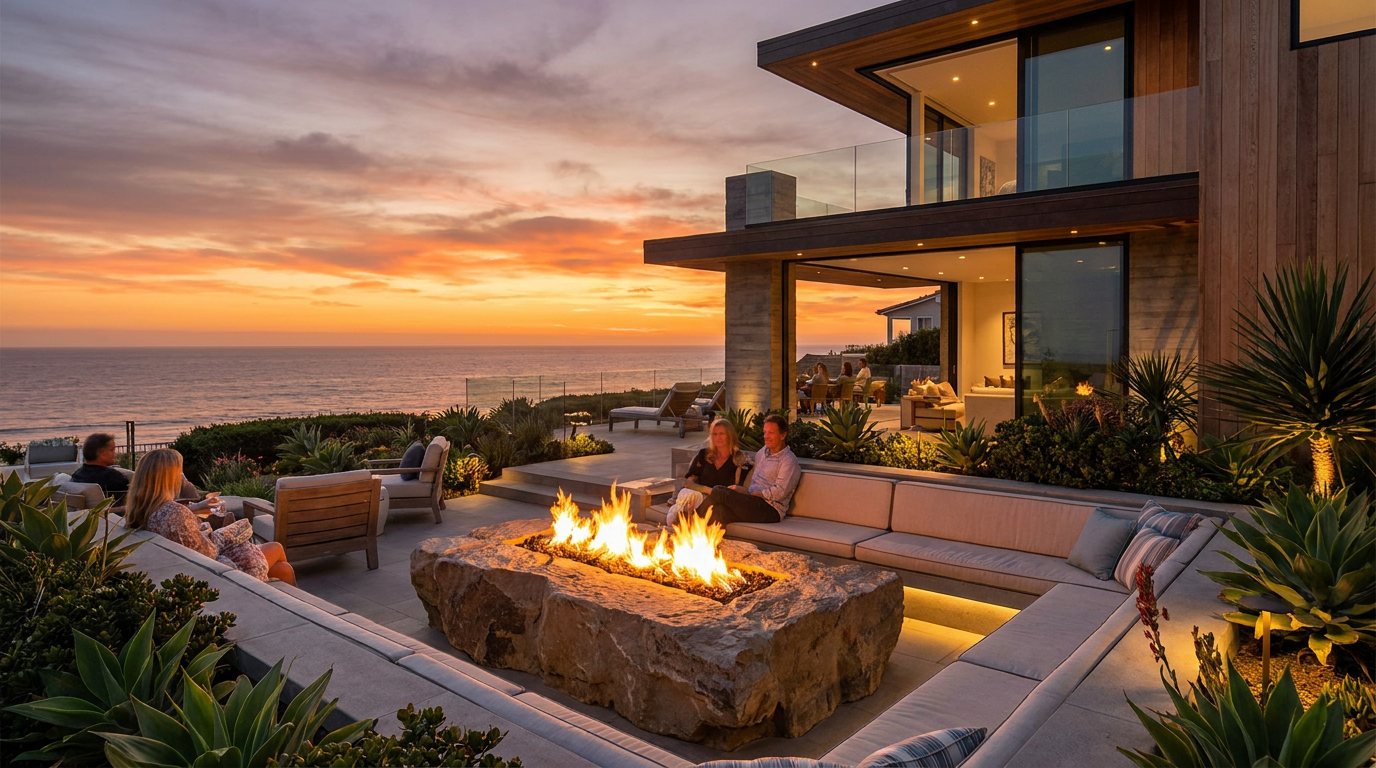
La Jolla is the only coastal market in San Diego County where a fire feature routinely has to answer two questions at the same time: where does the wind come from, and where is the view. In most San Diego neighborhoods those are separate design conversations. In La Jolla, on a bluff terrace or a Muirlands view lot, getting either one wrong produces a fire you leave early.
The wind in La Jolla shifts. The morning marine layer brings the southwest breeze off the water, which cools fast and blows consistently until mid-morning. By afternoon, the coastal thermal creates a different flow. A fire feature sited for one and not the other spends half the day in its own smoke. We site from the wind data for the parcel, not from a generic orientation preference.
The view axis is the second constraint. A fire feature placed on the wrong axis interrupts or competes with the primary view rather than framing it. The feature should draw the eye toward the horizon, not across it.
Material requirements for salt exposure
Salt air is present at every La Jolla address to varying degrees — heavy in Bird Rock and at the La Jolla Shores edge, present but lighter through the Muirlands, significant again at La Jolla Farms where the bluff is direct ocean exposure. The fire feature is one of the most salt-vulnerable elements on the terrace because it combines metal components, stone or masonry, and the thermal cycling of open flame. Standard materials degrade.
What holds up: stainless steel burners at marine-grade specification. Gas components rated for coastal outdoor environments. Stone veneer or full-stone construction in dense, sealed materials — bluestone, cut limestone, dense travertine. COR-TEN steel for a contemporary fireplace form, where the oxidation patina is the intended finish rather than a failure mode. Proper flashing at every joint where water and salt can penetrate.
What does not hold up: standard galvanized burner components. Low-grade stainless (304 where 316 is the correct coastal spec). Artificial stone veneer with open mortar joints. Cast-iron hardware not rated for salt environments. The failure happens slowly and then all at once — the kind of deterioration that reads “neglected” rather than “aged.”
Bird Rock, the Muirlands, La Jolla Farms
The fire feature conversation changes by sub-neighborhood because the lot size, the architecture, and the permitting path are different.
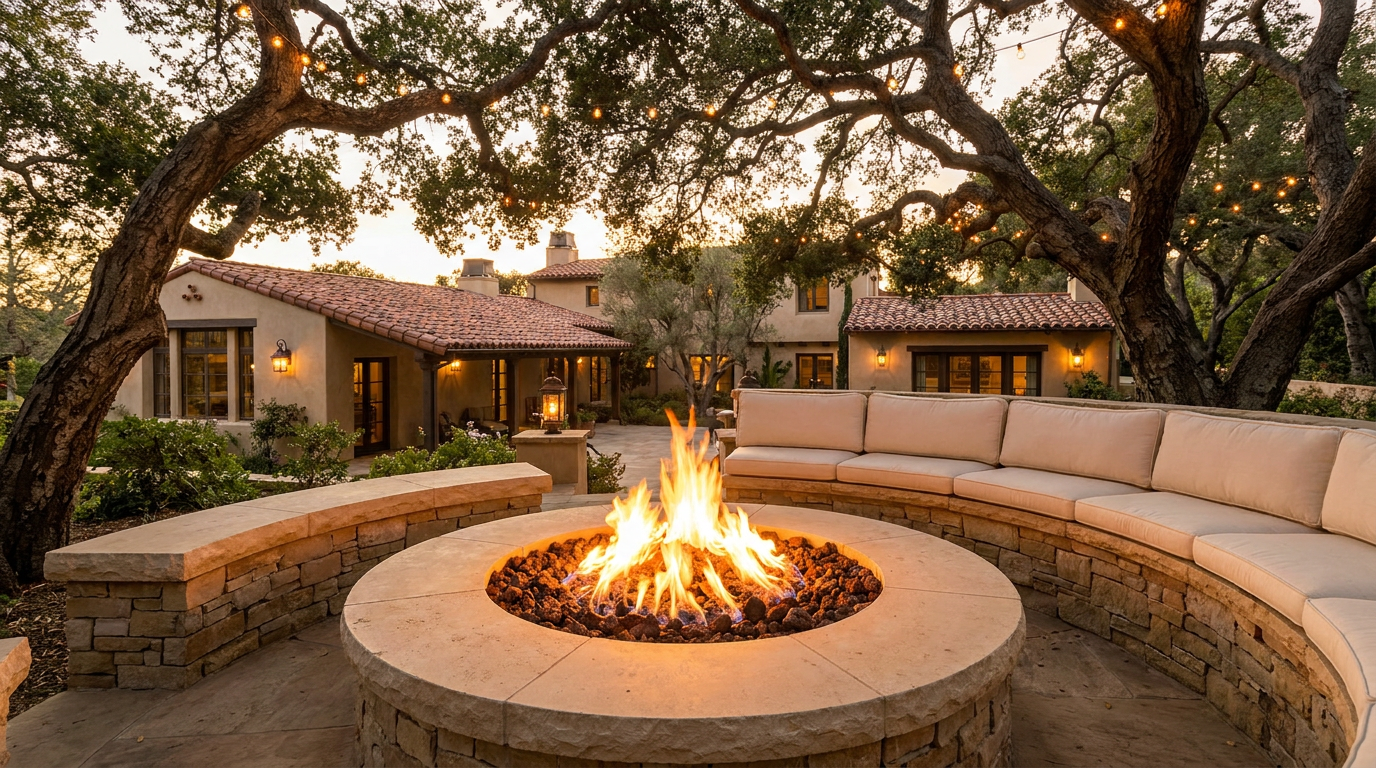
Bird Rock — small lots, contemporary and cottage architecture, close neighbors. The fire feature is usually a compact gas fire pit set into the primary patio, with a surrounding seat wall and a deliberate proportion that does not overwhelm the terrace. Permitting through the City of San Diego Development Services Department is the standard path. Coastal Commission jurisdiction applies to parcels inside the coastal zone.
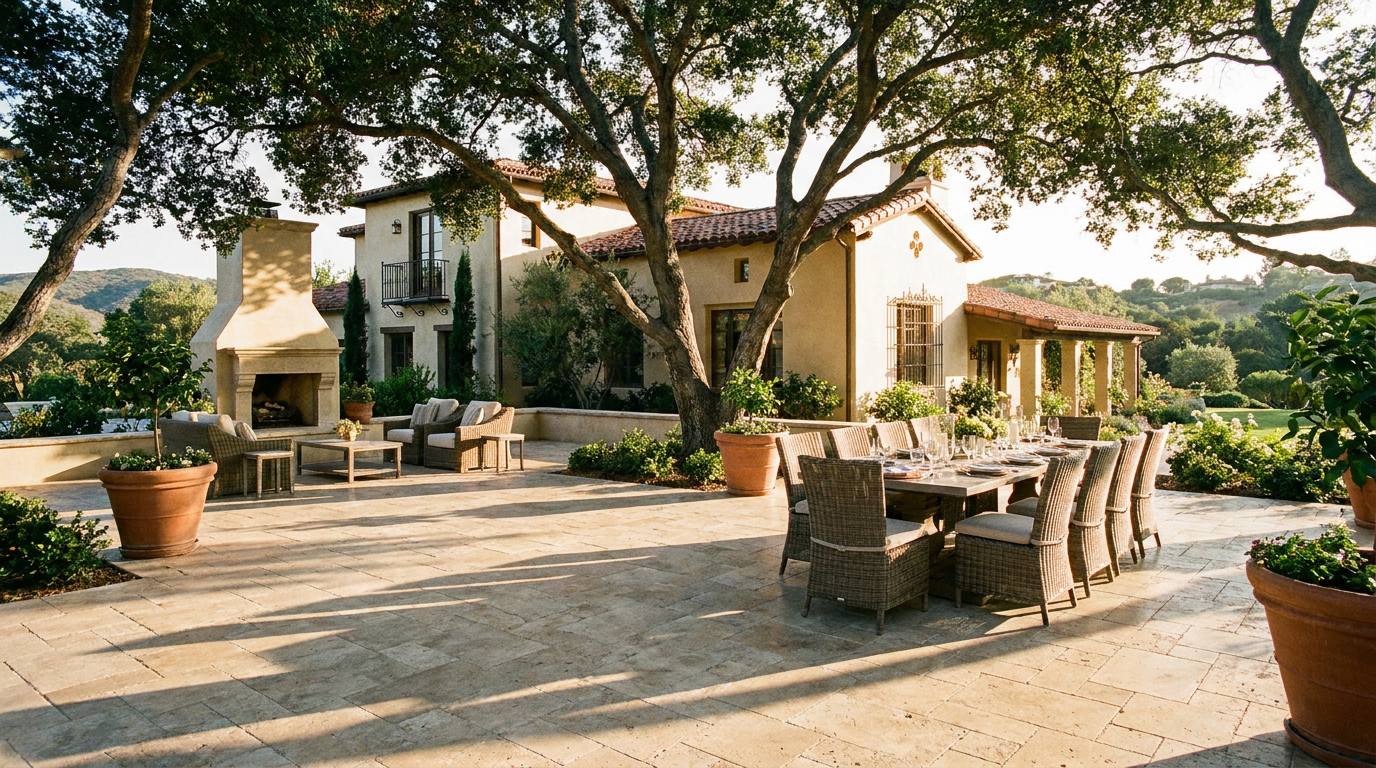
The Muirlands — larger estate lots, architectural diversity from Spanish Revival to contemporary. The feature can be larger and more formal — a full outdoor fireplace anchoring the entertaining terrace, or a sunken fire pit set into the lawn. Material language follows the house. A Spanish Revival property reads masonry and plaster. A contemporary reads linear fire in COR-TEN or clean stone.
La Jolla Farms — bluff-edge exposure, one to several acres, full ocean weather. Every material here is the marine-grade specification. The fire feature is often the evening anchor of an estate terrace that cost several hundred thousand dollars to build. It should read that way. We engineer the gas system, the stone selection, and the drainage behind the feature for what the bluff actually sends at it.
Permits in La Jolla
Fire features require building permits in most San Diego jurisdictions. For La Jolla properties inside CCC jurisdiction — which covers most of the coastal parcels west of the canyon — a Coastal Development Permit may layer on top of the city permit. We handle both as scope. We do not build fire features without pulling what the jurisdiction requires.
What drives the cost
A La Jolla fire feature ranges from roughly $20,000 for a straightforward gas fire pit with stone surround and seat wall, to $60,000 and above for a full outdoor fireplace with chimney, architectural stone masonry, integrated seating, and marine-grade gas system. The site condition — proximity to the bluff, access constraints, and the permit path — is as large a cost driver as the feature itself. We quote after we walk the property, not before.
Licensed and insured general contractor, operating under Mike’s Class B license — CSLB #1139785.