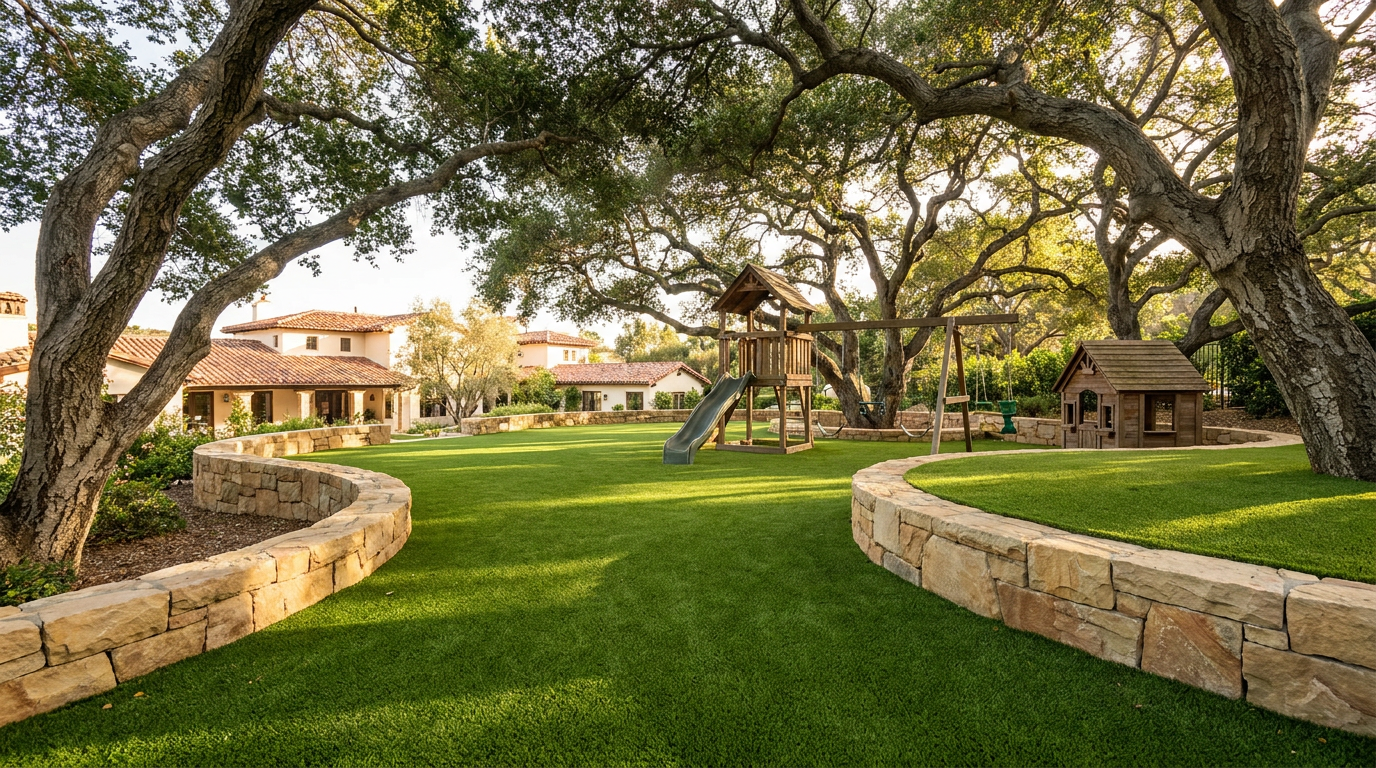
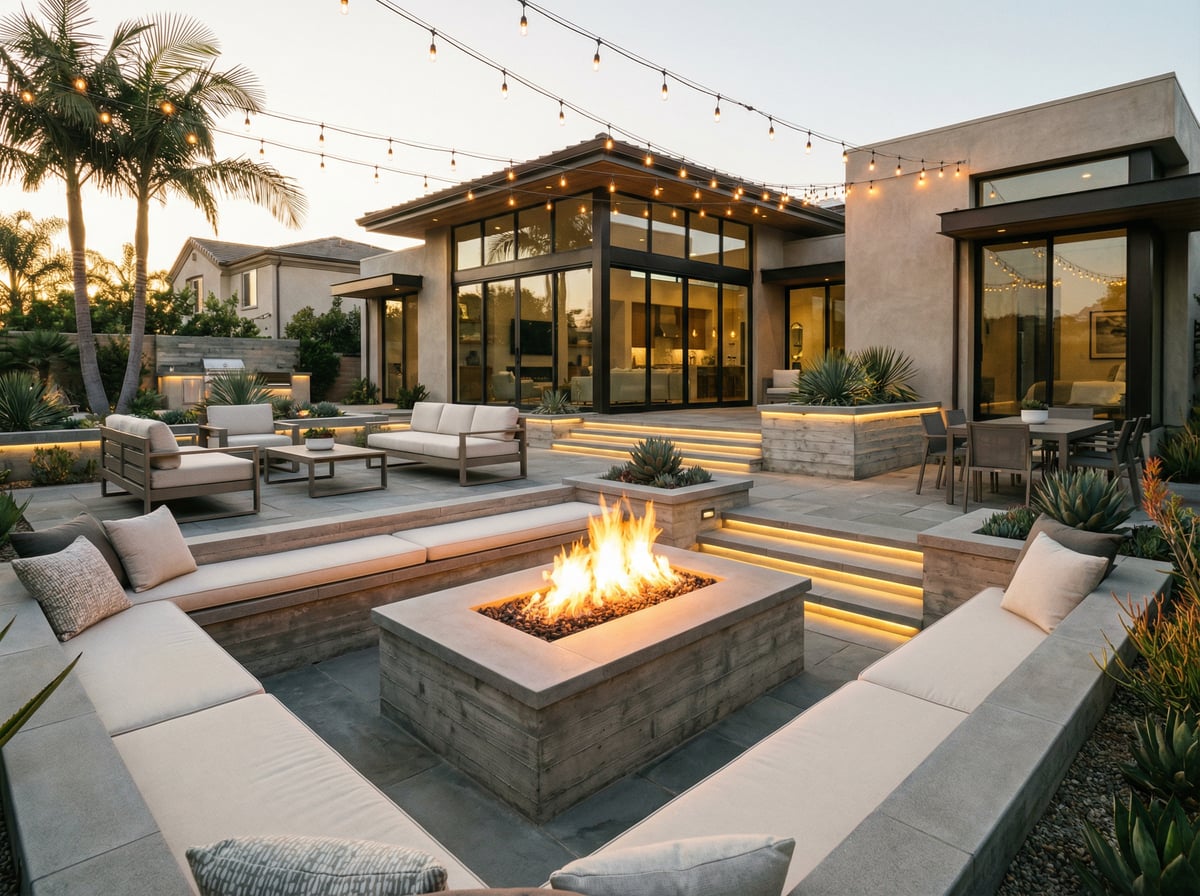
San Diego is one of the most hospitable climates in the country for both grass and artificial turf, which makes the choice more genuinely open than it is in other markets. The answer is not obvious — and it depends on how the space is used, who is using it, how much maintenance the homeowner wants to own, and what the property’s water restrictions look like.
Here is an honest comparison.
The Cost Question: What Each Actually Costs
Natural Grass
Sod installation: $2–$5 per square foot installed, depending on grass species, prep work, and irrigation. A 500 sq ft lawn runs $1,000–$2,500 in material and labor.
Seeding: Less expensive upfront, but requires time, water, and consistent maintenance before the lawn establishes.
Ongoing annual costs: Water, fertilizer, aeration, dethatching, weed control, pest control, mowing. For a 500–1,000 sq ft San Diego lawn, expect $500–$1,500 per year in water costs alone during dry summers, plus maintenance time or a lawn service.
Artificial Turf
Installation: $15–$30+ per square foot installed for a quality project. The wide range reflects material quality, base preparation, infill, and labor. A 500 sq ft turf installation runs $7,500–$15,000 properly done. Our own turf projects start at $15,000 because anything smaller cannot be done to our base preparation standard.
Ongoing costs: Near zero. Occasional rinsing for pet waste or organic debris. No water, no fertilizer, no mowing. Very occasional infill top-up after several years of use.
Break-even: On a water-intensive San Diego lawn, artificial turf typically reaches cost parity in five to eight years when water costs and maintenance are included. After that, the turf is net positive.
Heat: The Real San Diego Variable
This is where the comparison gets honest in a way that some turf installers skip over. Artificial turf in direct San Diego sun gets significantly hotter than natural grass. On a 90-degree summer day, turf surface temperatures can reach 130–160°F — hot enough to be uncomfortable for bare feet and potentially hazardous for small children and pets.
The mitigation options:
- Shade structure: A pergola, shade sail, or tree canopy over the turf area significantly reduces surface temperature. If you are planning turf in a sun-exposed area, integrate shade planning from the start.
- Infill selection: Some infills (cork, crumb rubber alternatives) hold less heat than standard silica sand/rubber blends. There is meaningful variation here.
- Turf pile height and color: Lighter colors and shorter pile can reduce heat slightly.
If the space will be primarily used during peak afternoon summer hours by children or pets, heat is a real consideration — not a dealbreaker, but one that should inform the shade and infill design.
Maintenance: What You Are Actually Signing Up For
Natural grass requires consistent work: mowing (weekly during growing season), irrigation management, fertilizing (two to four times per year), weed control (ongoing), aeration (annual), dethatching (as needed), and pest management. If you enjoy lawn work, this is not a burden. If you do not, it adds up.
Artificial turf requires very little: occasional rinsing, leaf blowing, and for pet owners, more regular rinsing and periodic enzymatic odor treatment. Turf does not grow, so “maintenance” is closer to “cleaning” — a fundamentally different time commitment.
For homeowners who travel frequently, have limited mobility, or simply do not want a weekend lawn care commitment, the maintenance delta alone often justifies artificial turf.
Pets and Children
Pets: Artificial turf works well for dogs when installed with proper drainage and infill. The key is drainage — a poorly installed turf system without adequate drainage holds odors. Our turf installations include proper base permeability, so waste drains rather than pools. That is not universal in the market.
Children: Both work well. The heat consideration matters more for turf in sunny, unshaded areas (see above). Turf is softer for falls than bare concrete or decomposed granite, but natural grass with good cushion is comparable.
Aesthetics: Honest About the Visual Difference
Modern artificial turf is significantly better than the plastic-looking products of ten years ago. High-quality residential turf has natural color variation, soft pile, and realistic blade structure. From a standing distance, the difference from natural grass is minimal.
Up close — especially after installation and before the pile has settled and been brushed — it reads as artificial. It will always read that way to someone looking for it. A homeowner who wants the most natural-looking yard possible should know this going in.
The cases where turf consistently looks best:
- Shaded or partially shaded areas where natural grass struggles
- High-use play areas where natural grass would be worn bare
- Properties with dogs that would otherwise destroy a grass lawn
- Slopes or grades where maintaining grass is difficult
- Side yards and narrow passages with limited irrigation coverage
The cases where natural grass often wins aesthetically:
- Large, open, well-irrigated lawns in full view
- Properties with an established estate-lawn look that the homeowner values
- Environments where the barefoot feel and smell of natural grass is a priority
Water Restrictions and HOA
San Diego County has ongoing water conservation mandates that affect irrigation. Several water agencies have tiered pricing structures that make large grass lawns significantly more expensive to maintain at a well-watered standard.
Check your HOA CC&Rs before committing to either: some HOAs prohibit artificial turf; others now require it (or at least allow it) given water restrictions. HOA approval is separate from any city or county permit requirements.
The Decision Framework
After walking hundreds of San Diego properties, the decision usually comes down to three questions:
1. Who is using it, and how? Dogs, young children, and heavy play favor turf for its durability. A homeowner who entertains occasionally and values natural aesthetics may prefer grass.
2. How much of the yard is in full afternoon sun? Large sun-exposed turf areas need a shade integration plan. If you are not building shade structure over it, consider the heat question seriously.
3. What is the five-year cost picture? On most San Diego properties with water costs, turf is cheaper over five-plus years. If you are planning to sell within three years, the math is less clear.
Neither option is always right. What we will not do is make the recommendation before we understand the property.
If you want to talk through what makes sense for your space — thirty minutes, no cost, by phone or on the property — that is how we start every project.
Related: Artificial Turf Installation in San Diego · Drainage & Grading · Full Backyard Remodels · Projects in Poway · Projects in Rancho Bernardo