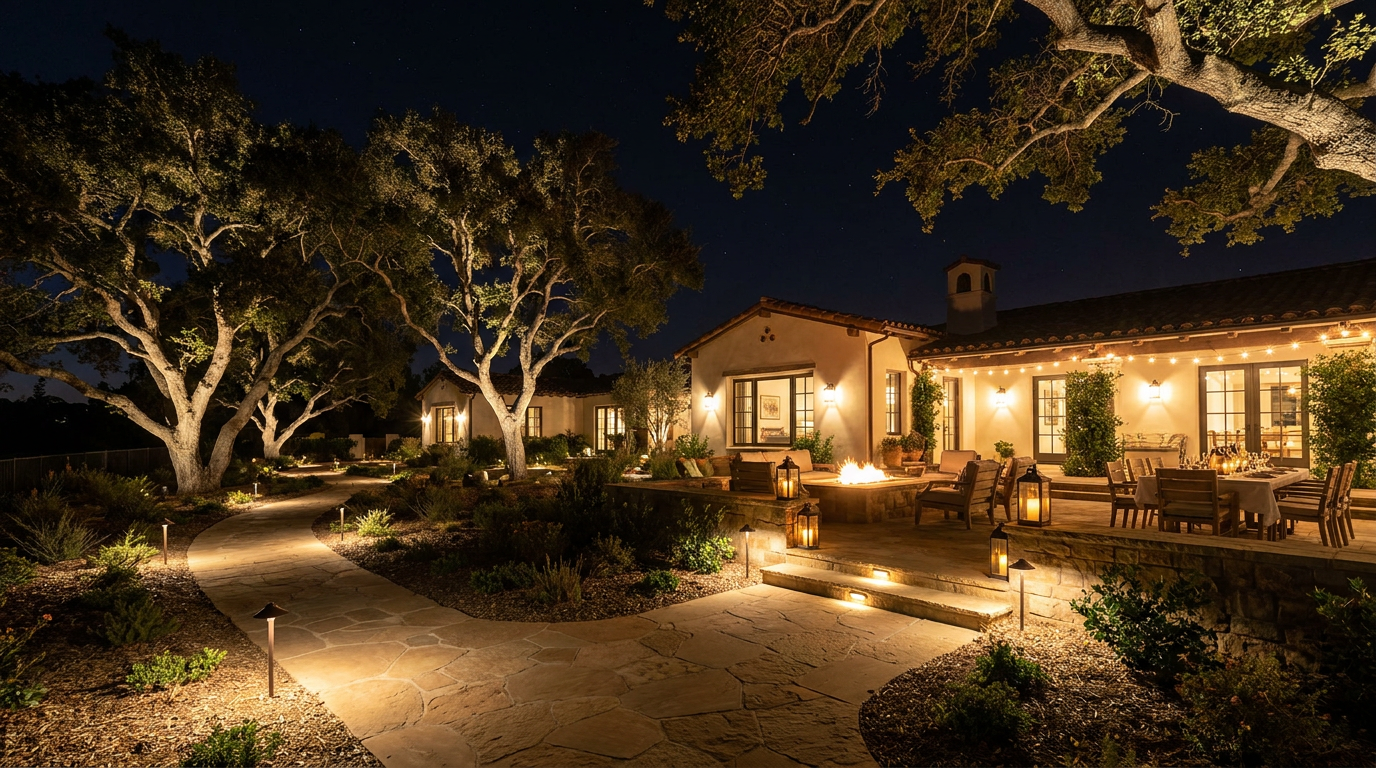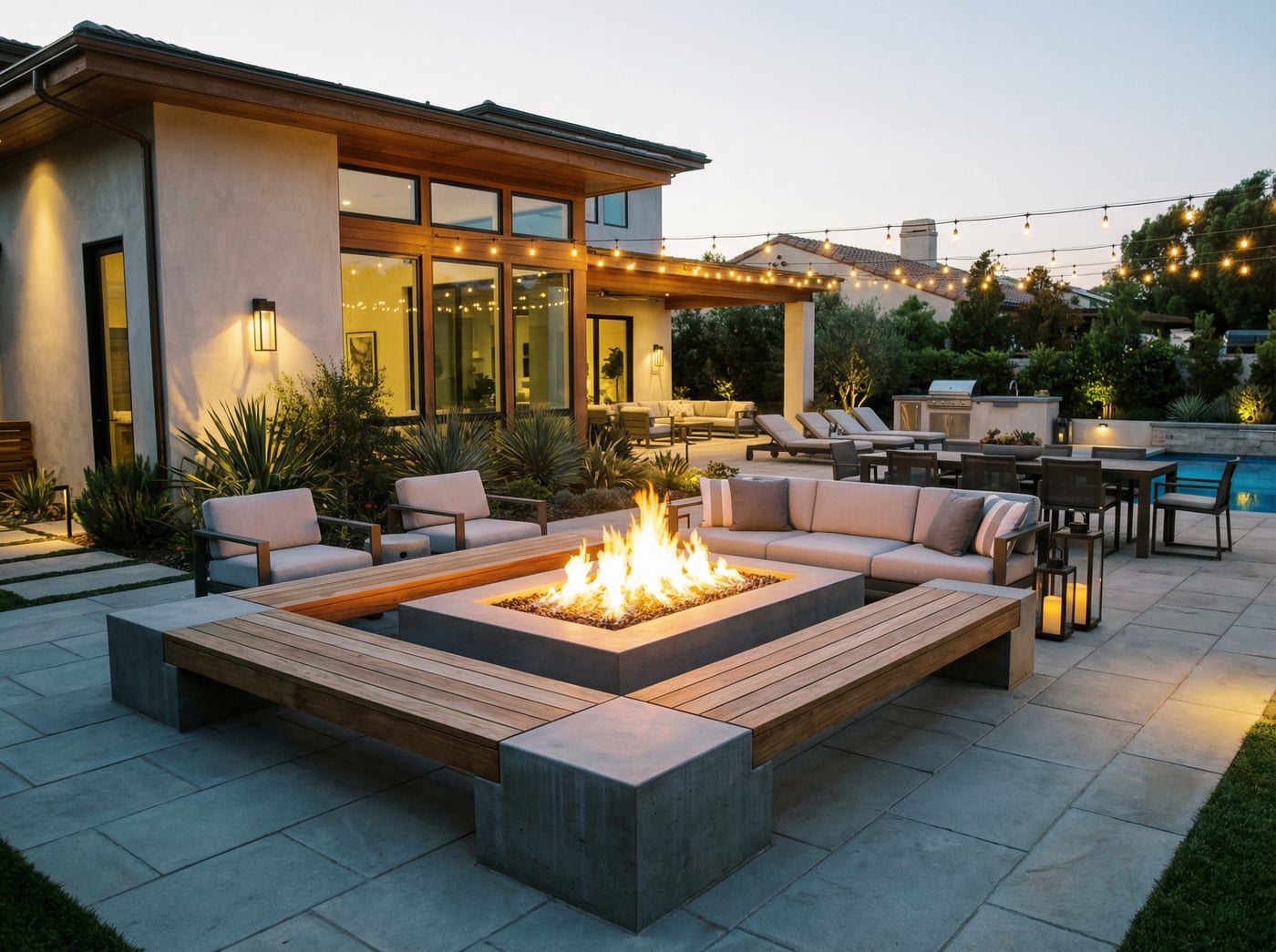
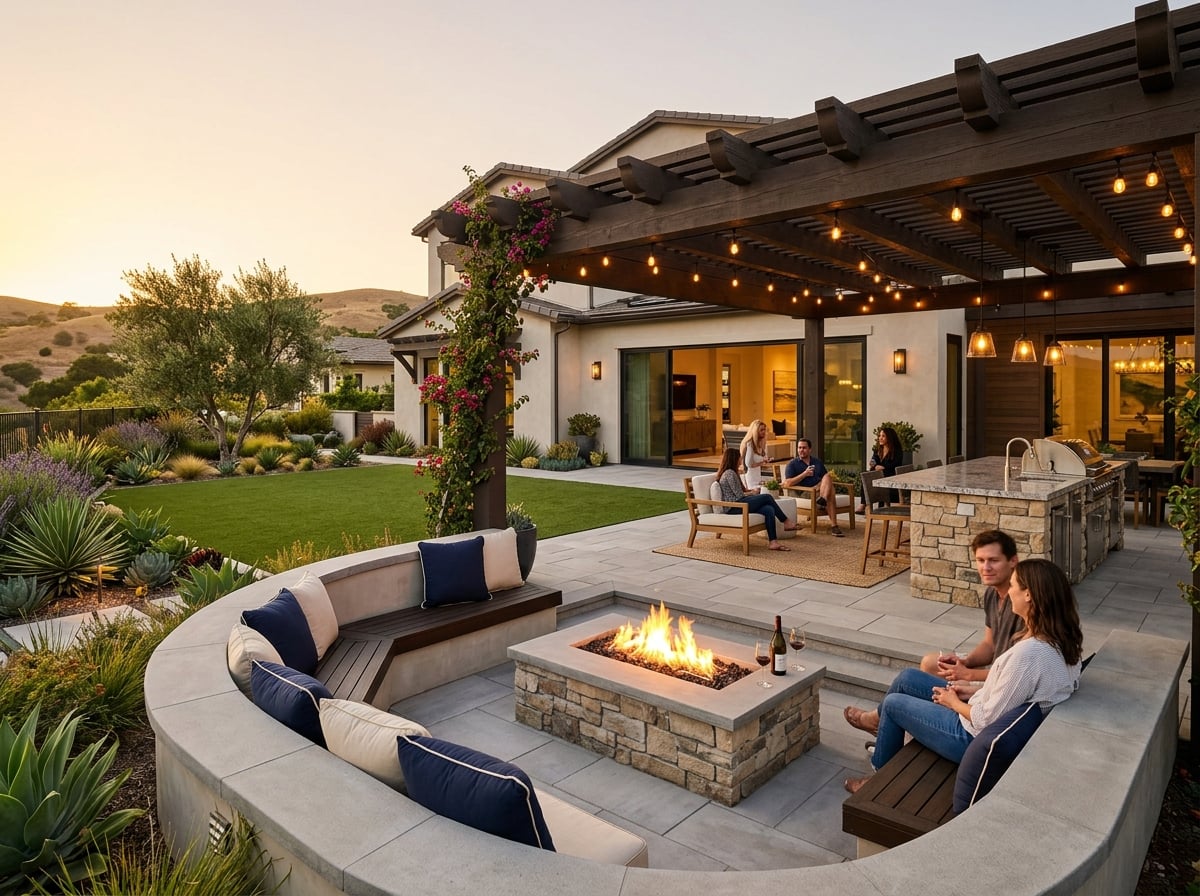
Landscape lighting is one of the most underestimated line items in an outdoor remodel — and one of the most transformative when it is done from the first sketch rather than bolted on at the end. A yard that is beautiful during the day becomes something entirely different at night with proper lighting. And a yard that has lighting figured out as an afterthought has a collection of fixtures rather than a composition.
Here is what it actually costs, and what the differences in price actually reflect.
The Ranges, Stated Plainly
Basic path and accent lighting — a transformer, a run of wire, and path lights or simple spotlights on a few plantings: $3,000–$8,000. This is the entry-level install. It adds visibility and a baseline level of warmth, but it is not architectural lighting.
Mid-range integrated system — transformer, wire runs planned around hardscape, path lights, uplights on specimen trees or architectural elements, step lights, possibly string lights over a seating area: $8,000–$20,000 for a typical San Diego residential backyard.
Full architectural lighting design — lighting designed from the project’s first drawing, with a dedicated transformer (or multiple transformers) sized for the full fixture load, wire runs installed beneath hardscape before the stone is set, fixture selection matched to each surface and element, smart controls, and the overall composition planned by a designer: $20,000–$40,000+.
Our own landscape lighting projects start at $10,000, which reflects the design, material, and labor standard we use. Below that threshold, the transformer sizing and wire management shortcuts that show up in cheaper installs tend to appear.
What Actually Drives the Cost
Whether It Was Designed First
This is the single biggest variable — and it is invisible in a price comparison between two bids.
A lighting system designed from the first project drawing has wire runs buried beneath hardscape. The lighting composition — which elements are lit, from what angle, at what intensity — is planned alongside the plantings, the stone, and the structure. The result is a yard that feels considered after dark, not wired.
A lighting system added after the hardscape is installed is constrained by what is accessible. Wire runs go over the surface or through conduit added after the fact. Fixture locations are determined by what is accessible rather than what looks best. The transformer is sized for what exists, not what was planned.
We design lighting in from the first sketch. If a project is in the design phase, the lighting layout is on the drawing — including transformer location, wire run paths, and fixture selection by zone. This is part of why we will not take landscape lighting as an add-on to another contractor’s finished hardscape without a full assessment first.
Transformer Sizing and Quality
The transformer is the brain of a low-voltage system. An undersized or inexpensive transformer produces visible flicker, uneven voltage across zones, and premature fixture failure. A properly sized, weather-resistant transformer with multi-zone programmable switching is $400–$900 for a residential application. The difference shows up in performance within the first year.
Transformer sizing depends on the total wattage load of the fixture count — which means the transformer spec cannot be done correctly until the fixture count is designed, not estimated.
Fixture Quality
Low-voltage landscape fixtures range from $15 commodity path lights sold at hardware stores to $200–$500 architectural fixtures from brands like Kichler, Unique Lighting, Vista, and FX Luminaire. The price difference reflects durability (die-cast brass vs. plastic housing), light quality (warm white vs. slightly yellow or blue), beam control, and weatherproofing.
Cheap fixtures corrode, fail, and develop color shift within two to three years in San Diego’s outdoor environment. Quality fixtures, properly maintained, last ten-plus years.
Fixture Count and Variety
A typical San Diego backyard might include:
- 4–8 path lights along a walkway or driveway
- 4–8 uplights on specimen trees, palms, or architectural elements
- 2–4 directional spots on a wall, fence, or planting bed
- 2–4 step lights in a hardscape staircase
- 1–2 string light runs over a seating area
- 1–2 in-ground fixtures for a fire feature or water feature accent
Each additional zone adds wire run, junction boxes, and fixture cost. A project with 25 fixtures costs more than one with 10 — and the complexity of the design (how they interact, what each does) is the real variable.
Smart Controls
A basic manual timer is $30. A multi-zone smart controller with phone app control, astronomical timer (lights adjust to sunset/sunrise automatically), and zone brightness control runs $150–$500. For a full architectural installation, smart controls are standard — the ability to set different moods (dinner entertaining vs. security vs. off) across zones is part of how the system gets used.
Common Mistakes to Avoid
Undersizing the transformer: The most common installation error. Every added fixture later requires a transformer upgrade or a second transformer.
Running wire over hardscape instead of under: Once wire is buried under pavers and stone, it is invisible and protected. Wire run over the surface or in exposed conduit is a maintenance problem and an aesthetic one.
Fixture placement determined by accessibility, not composition: Uplights on every tree regardless of whether those trees read well at night. Path lights evenly spaced without considering where the eye actually travels. This produces an “installed” look rather than a “designed” look.
Mixing color temperatures: 2700K and 3000K fixtures look similar in a store but noticeably different side by side in a yard. A consistent color temperature throughout the system is one of the details that separates a professional installation from a DIY one.
What You Get at Different Investment Levels
$3,000–$8,000: Basic visibility and some warmth. Path lights, a few spots, a mid-grade transformer. Functional, not transformative.
$8,000–$20,000: A real system. Integrated zones, quality fixtures, proper transformer, step lights, uplighting on the primary architectural elements. The yard reads well after dark.
$20,000–$40,000+: An architectural installation. Designed from the beginning, wired beneath the hardscape, fixture-specific composition for every element on the property. Smart control. A yard that functions as a designed environment after 6pm.
A Note on Timing
If you are planning any hardscape project — a patio, a pool deck, a retaining wall, a driveway — the right time to design the lighting is before that hardscape is installed, not after. Wire runs that go beneath pavers cost a fraction of what post-install conduit runs cost. Fixture mounting points that are set in the stone pour cannot be moved after the fact.
The thirty-minute first conversation is the right place to start — whether you are in the planning stage of a full remodel or specifically focused on the lighting layer of an existing space.
Related: Landscape Lighting in San Diego · Patios & Hardscape · Full Backyard Remodels · Pool Decks · Projects in La Jolla · Projects in Rancho Santa Fe