The floodlight fallacy
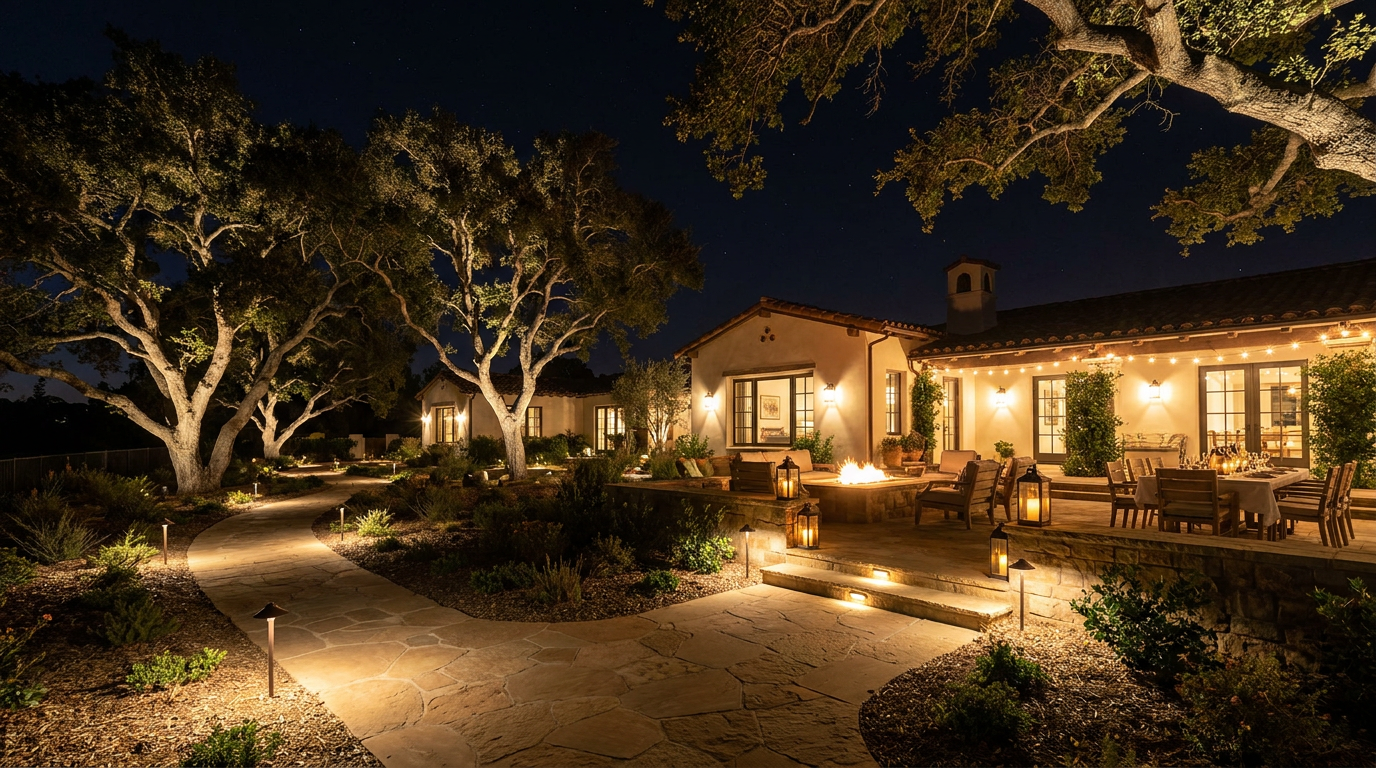
The instinct is understandable: security equals brightness, so bolt a motion floodlight to the garage and call the property protected. But walk any true estate neighborhood at night and you’ll notice the expensive homes don’t have floodlights. They have something better — no dark places.
A blinding floodlight actually helps an intruder: it creates hard black shadows everywhere it doesn’t reach, ruins the night vision of anyone looking out a window, and announces exactly where the camera is. Even, calm, well-placed light does the opposite — it removes the hiding places, keeps the whole property readable from inside the house, and does it without ever glaring at anyone.
Security as a design layer
Real security lighting is the same system as the beautiful lighting, extended to the places beauty forgets:
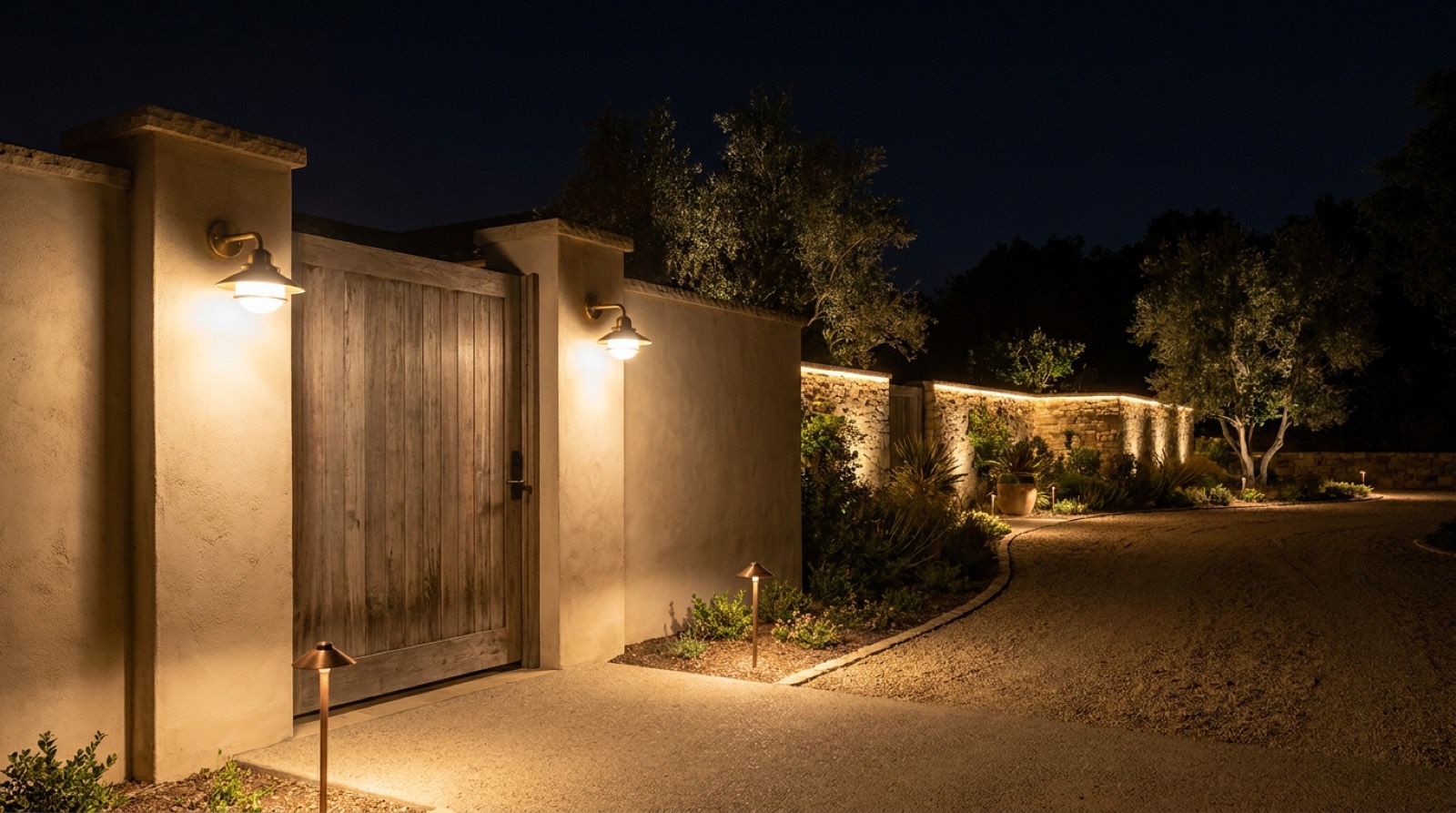
The side yards and service runs. The dark corridor along the fence is the most useful route on the property to the wrong person. A few shielded, low-output fixtures — wall grazing, a downlight at the gate — make it a lit hallway instead. This is the least glamorous lighting on the property and the most important.
The perimeter and gates. Every entry point — gates, garage approaches, the driveway mouth — gets deliberate, welcoming light. Not a spotlight: a glow that says this property is awake. Deterrence research says the same thing designers do: consistent ambient light beats reactive brightness.
Depth from the windows. Compose the lit scene from inside looking out. If the garden’s focal points glow at night, anyone in the kitchen can read the whole yard at a glance — and the windows themselves stop being black mirrors. The layered composition that makes the garden beautiful is literally what makes it surveyable.
Safety: the liability nobody budgets for
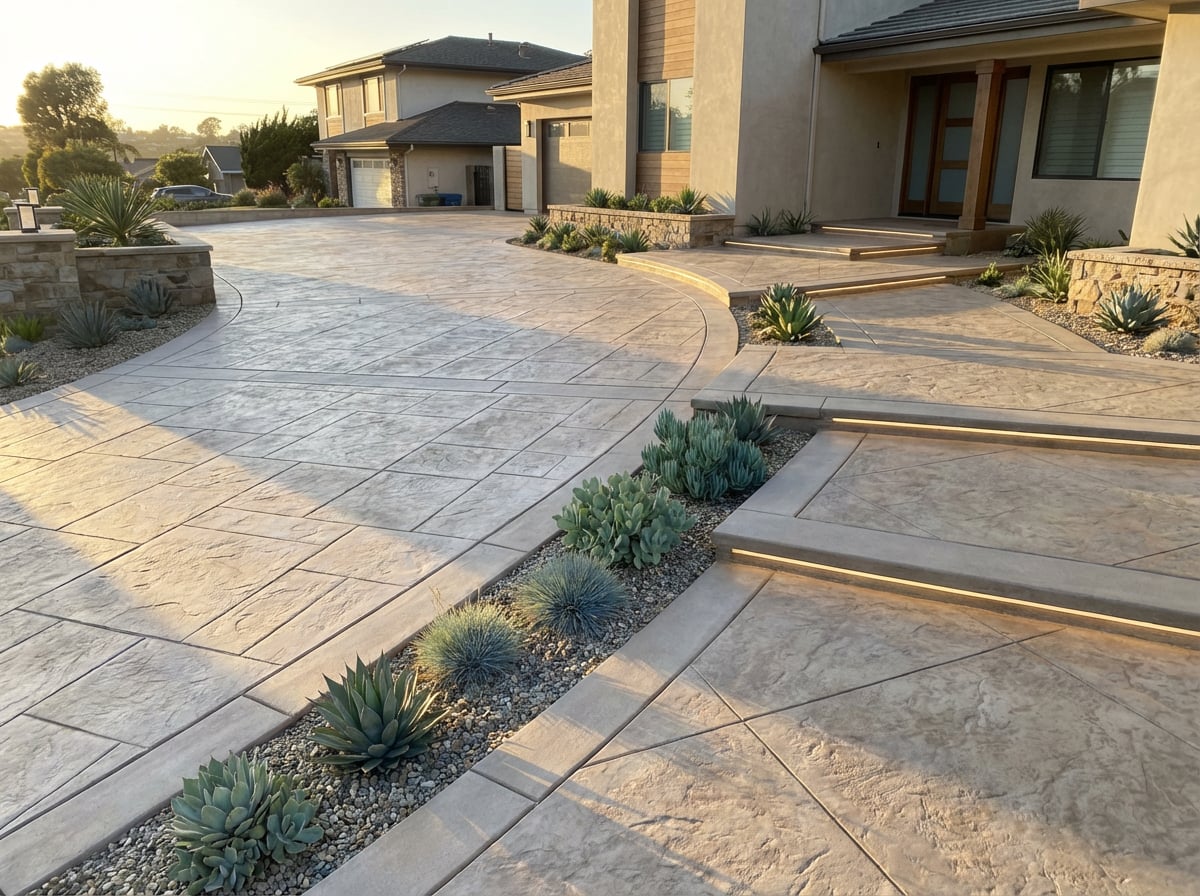
The other half of the brief is friendlier — keeping family and guests upright. Steps, grade changes, pool edges, and path transitions each want dedicated treatment: recessed step lights or under-nose LED at every level change, path pools that overlap so there’s no dark gap mid-stride, and clear light at the pool’s first step and deck edge. Slip-and-trip is the genuinely common nighttime incident on a property, and the fix costs a rounding error inside a lighting design.
The standard: a guest who has never visited can walk from the driveway to the back terrace at 10 PM without ever reaching for a phone flashlight.
The smart layer
Scheduling is what makes security lighting effortless. Astronomic timers track sunset year-round; the system wakes itself. Scenes handle the rhythm: full scene for evenings, a low “sentinel” setting — perimeter, gates, entries at 20% — from midnight to dawn, and an “away” mode that runs the property convincingly lived-in while you’re gone. The smart transformers we spec (Luxor and Kichler’s platforms) run all of it from a phone.
One caution learned the honest way: keep security zones on warm light like everything else. The cold-white “security grade” look is a myth — 2700K light renders faces and colors better on camera than blown-out cool floods, and it doesn’t turn your home into a gas station. And on canyon-edge and hillside lots — Mount Helix, Tierrasanta — where the yard borders open land, shielded low fixtures also keep the light out of the habitat and the night sky, which neighbors and county guidelines both appreciate.
Security, safety, and beauty are not three systems. Done right, they’re one design wearing three jobs.
Licensed and insured general contractor, operating under Mike’s Class B license — CSLB #1139785.