The chef’s kiss
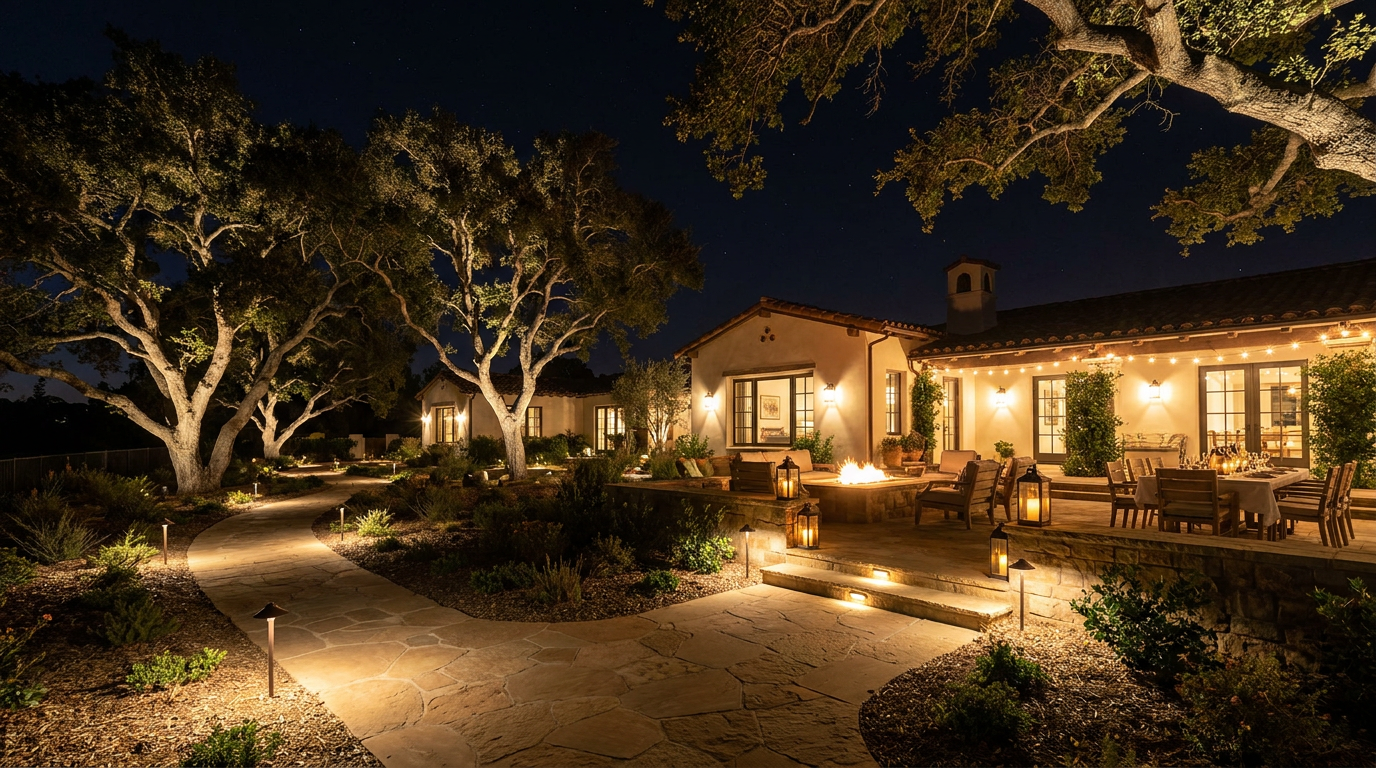
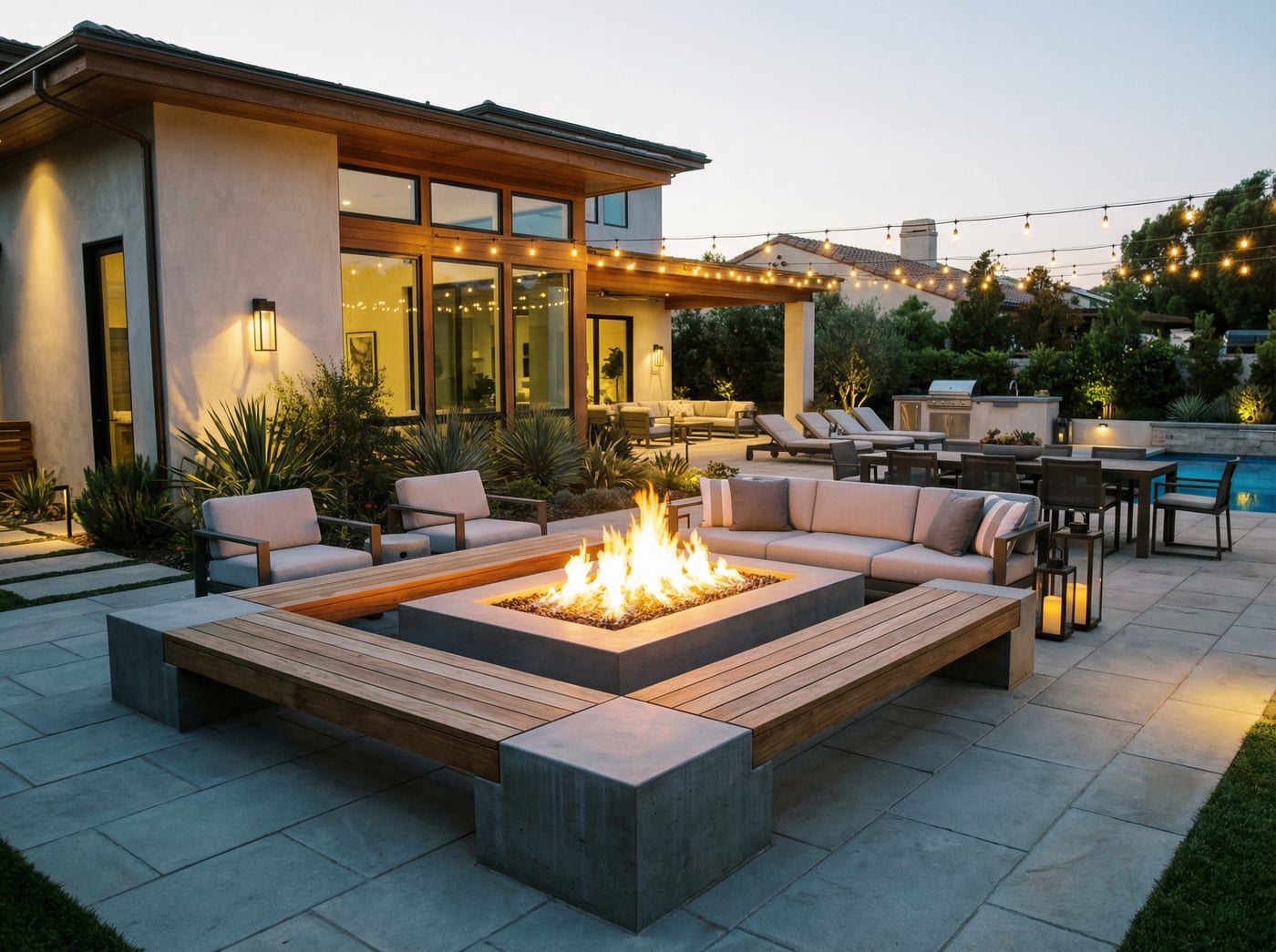
There is a moment on every project we light: the sun goes down on a yard the client has already seen a hundred times, the system comes on for the first time, and the property becomes a different place. The olive they walked past daily becomes sculpture. The wall they never noticed develops texture. The garden acquires depth, mystery, a second life. Landscape lighting is the finishing move — the thing that takes a beautiful remodel and makes the home fully alive after dark, which in San Diego is half of every day you own it.
That transformation is not brightness. It is composition. Here is the palette.
The five techniques
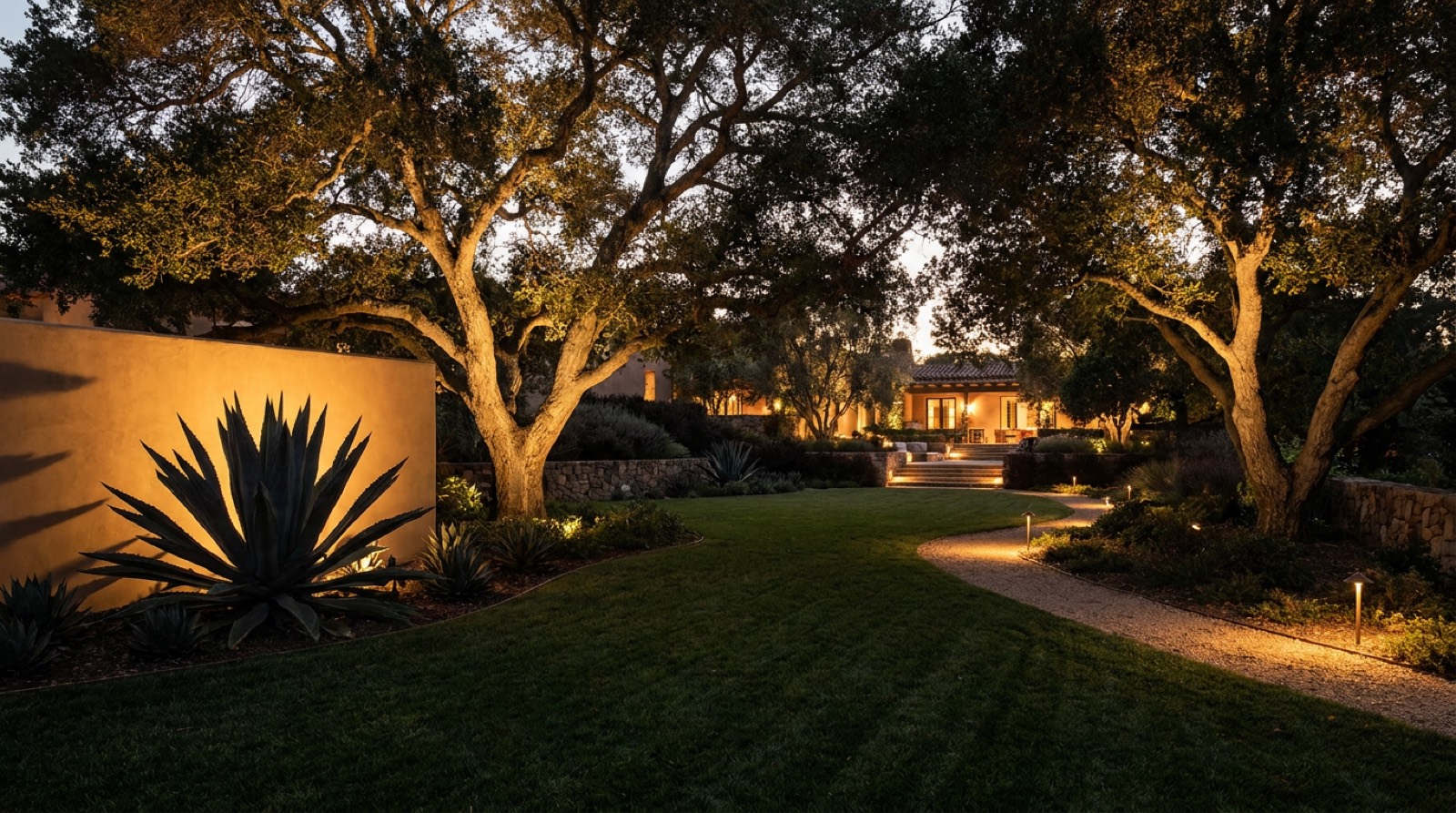
Uplighting — the workhorse. A fixture at the base of a tree or column, aimed up. It reverses nature (sunlight comes from above), which is exactly why it reads as drama: canopies become chandeliers, trunks become columns. The craft is restraint — light the three trees that deserve it, not all eleven.
Moonlighting — the poet. Fixtures mounted high in a mature tree, aimed down through the branches, casting soft dappled shadow patterns on lawn and stone the way a full moon would. It is the most natural-feeling effect in the repertoire and the one that makes guests stop mid-sentence. It needs a tree with real height — on the oak estates of Rancho Santa Fe, moonlighting is the signature move.
Grazing — the texture-revealer. A fixture placed close to a wall, beam skimming the surface, so every ridge of stacked stone or hand-troweled stucco throws a tiny shadow. Flat by day, sculptural by night. This is how a material you paid for twice gets seen twice.
Silhouetting — the shape-maker. Light the wall behind a sculptural plant and leave the plant itself dark: a black agave against a glowing plane. Pure graphic composition — the technique that photographs best.
Shadowing — silhouetting’s inverse. Light the plant from the front, close and low, and throw its enlarged shadow onto the wall behind. The breeze moves the branches; the shadow moves with them. It is the only lighting technique with motion in it.
Darkness is the canvas
The single biggest difference between a designed system and a contractor-grade one: what stays dark. Light everything and you have a car lot — flat, glaring, exhausting. The eye needs darkness for contrast, mystery, and rest; the composition needs it the way a painting needs negative space and music needs the rest between notes.
The discipline in practice: choose three to five focal moments per sight line — a tree, a wall, a water feature, the terrace — and let everything between them fall away to black. Depth comes from the dark intervals. A property lit this way feels larger at night than it does at noon, because the eye travels from glow to glow and imagines the space between.
This is also where glare control lives: you should see what the light touches, never the light itself. Shielded fixtures, careful aim, and nothing shining toward an eye, a window, or a neighbor. The best compliment a system can receive is that nobody can find the fixtures.
Composed from where you live
The last piece of the art: lighting is composed from the viewing positions, not from the plan. We design standing where the owners will actually stand — the kitchen window, the dining terrace, the arrival at the front walk — and build each view like a stage set: foreground, middle ground, focal point. The engineering underneath makes it run; the composition is why it moves you.
A layered system is designed into the larger remodel from the first sketch — conduit under the hardscape, fixtures integrated into walls and steps — which is why the best ones look inevitable. The full craft lives on our landscape lighting page.
Licensed and insured general contractor, operating under Mike’s Class B license — CSLB #1139785.