Grade work in a zip code that doesn’t sit flat
La Jolla is not one topography. Bird Rock is low and relatively flat — a coastal bench above the tide pools, with gentle grade and sand-over-rock soils. The Muirlands climbs from there through a series of larger lots, eucalyptus-shaded streets, and grade differentials that produce real retaining needs. Hidden Valley tucks into the canyon side with drainage requirements that flat parcels never encounter. La Jolla Farms sits at the bluff edge, where the grade meets the cliff and the retaining work is also geotechnical work. Country Club and The Barber Tract fall between the poles in lot size and grade complexity.
What all of them share is this: when the grade changes, the retaining wall is the design decision that sets the form of everything else. Get the wall right and the terrace above it, the garden below it, and the sight line through it all work. Get it wrong and the rest of the outdoor program is trying to correct for something structural that can’t be cosmetically fixed.
Bluff-adjacent work and the geotechnical layer
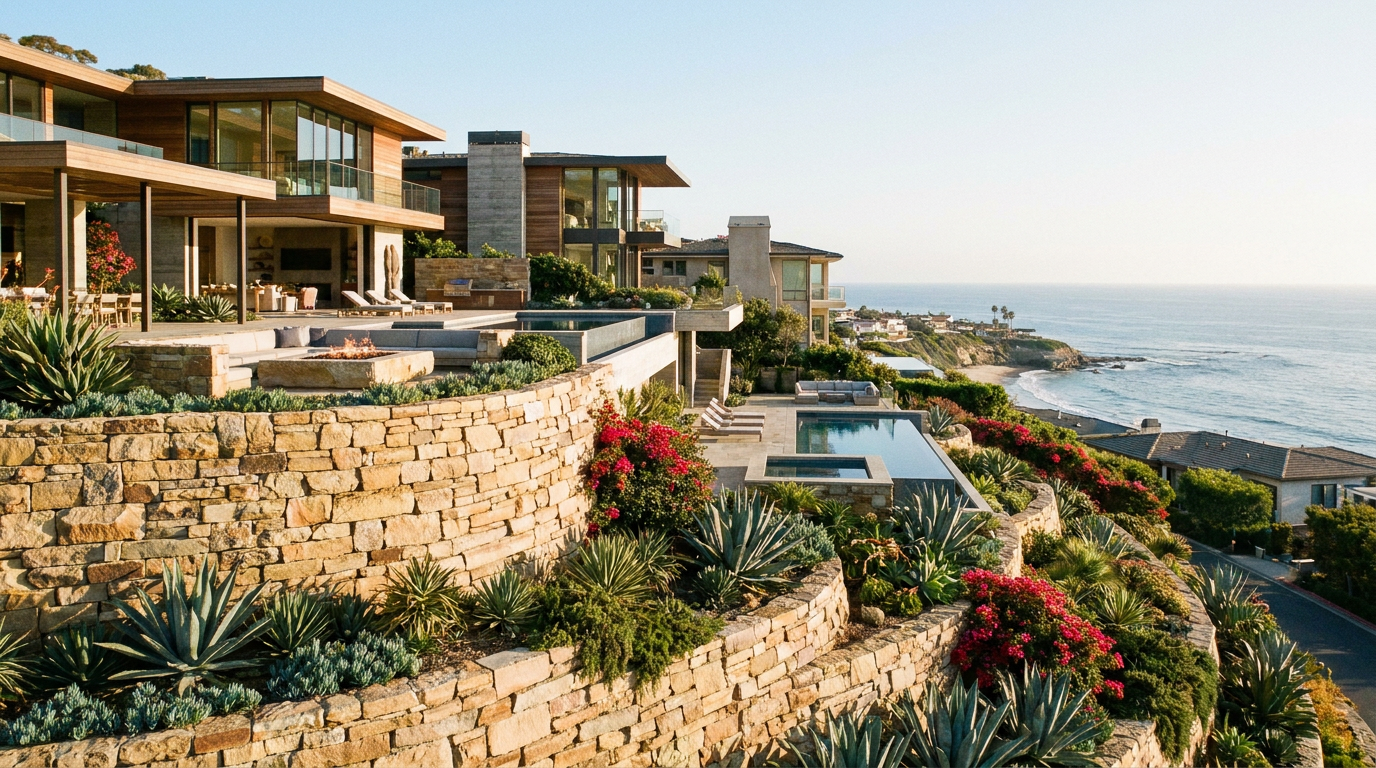
La Jolla Farms and the bluff-side parcels in the Village and Bird Rock are the cases where retaining and grading work is not just structural — it is geotechnical. A retaining wall within a meaningful distance of the bluff edge is not a wall that can be designed without a soils report and sometimes a geotechnical engineer. The bluff is actively eroding. Water moving toward the bluff edge accelerates that process. A wall that redirects drainage incorrectly can accelerate bluff recession in ways that produce catastrophic results.
We work from the soils data and the CCC setback requirements on bluff-adjacent properties. We do not design walls in these locations without the geotechnical grounding, and we do not build walls without permits on coastal parcels.
For most bluff-adjacent retaining scopes, California Coastal Commission permitting applies. A Coastal Development Permit is required for grading, retaining, or any work within the coastal setback. The review adds months and requires drawings and narrative prepared to the Commission’s standard. We run it as scope.
Muirlands and Country Club grade work
The Muirlands is where most of the volume La Jolla retaining work happens — estate lots on sloped ground, architect-signed houses, entertaining programs that require multiple levels of usable outdoor area. A typical Muirlands retaining scope creates a flat main terrace at the house level, manages the grade transition to the lower lawn or pool area, and runs drainage behind every wall so the winter storm does not produce hydrostatic failure by year five.
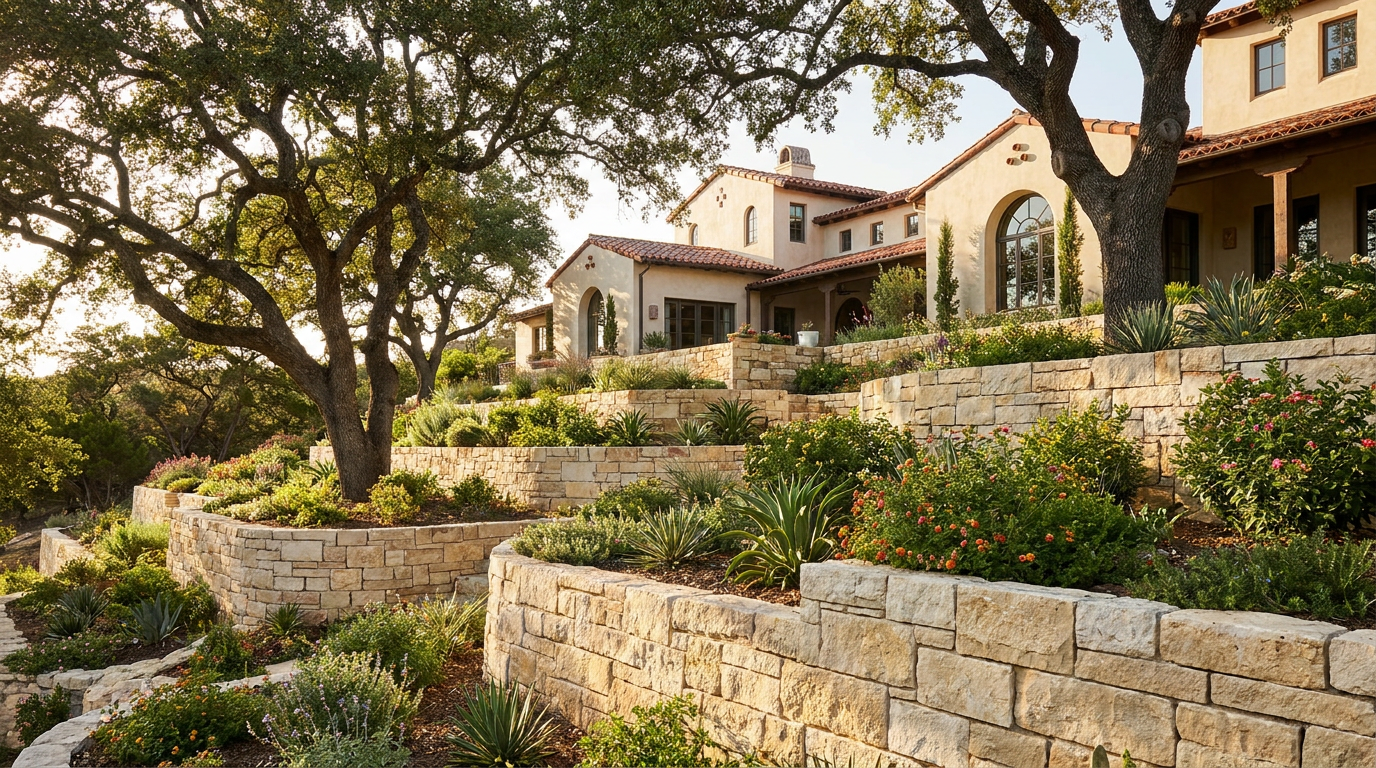
Materials at the Muirlands scale: natural cut stone for the estate-grade installation. Masonry block with a plaster finish for the Spanish Revival or Mediterranean house. Large-format concrete or COR-TEN for the contemporary. The material sets the character of the wall and, by extension, the character of the outdoor room it creates.
Hidden Valley drainage and canyon lots
Hidden Valley sits on the canyon side of La Jolla, with drainage from the canyon above and the slope below creating a two-direction water-management problem. Retaining here is often accompanied by drainage work that precedes it — French drains, catch basins, slope stabilization with planted terrace systems — because a wall without drainage behind it fails on a Hidden Valley slope.
The soil in Hidden Valley tends toward a heavier clay loam than the sandier coastal parcels. Clay soil expands when wet and contracts when dry. A retaining wall footing that performs correctly in clay conditions is engineered differently than one designed for sandy or decomposed granite subsoil. We soil-test and design accordingly.
Material selection for La Jolla conditions
Natural cut stone (bluestone, limestone, quartzite) — the highest-finish option and the most architecturally permanent. Reads correctly on Muirlands estate lots and on La Jolla Farms properties where the investment level justifies it.
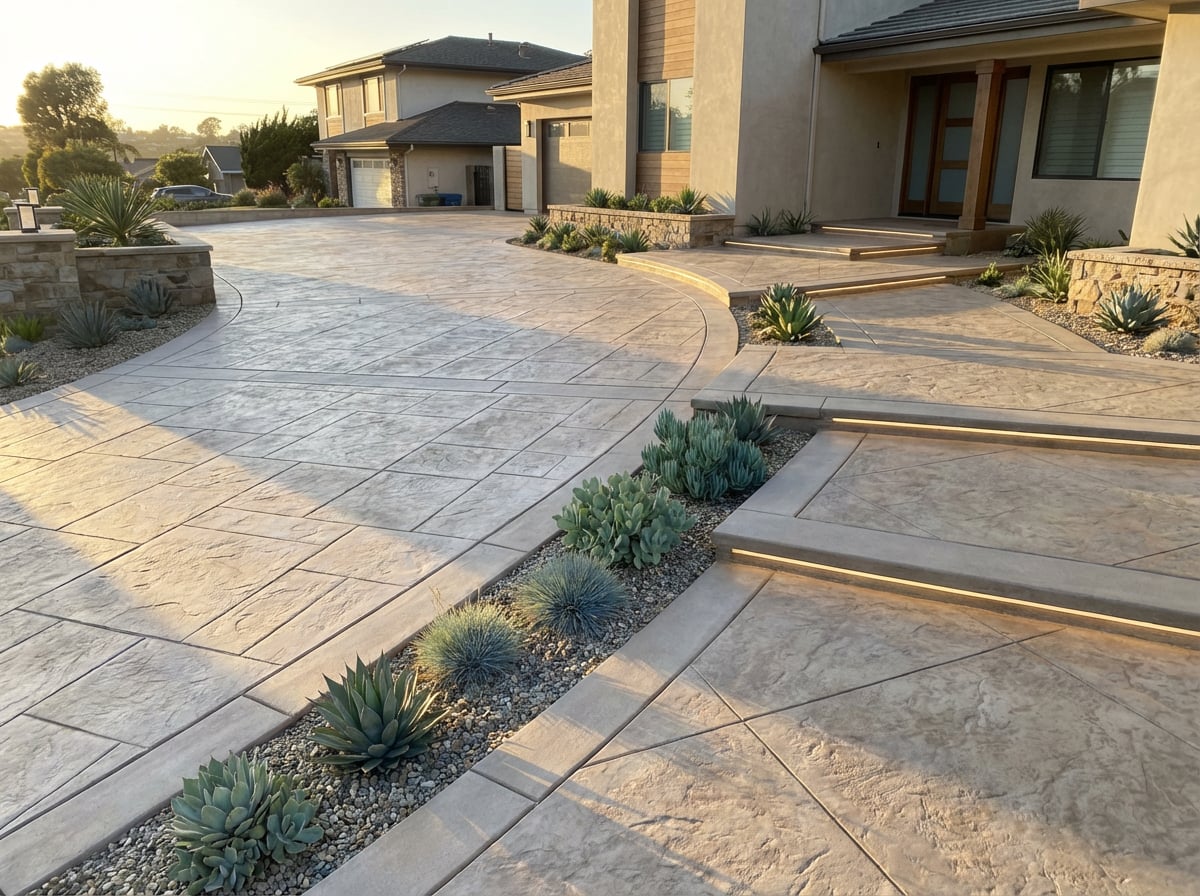
Poured concrete with formed or stamped face — the structural workhorse on taller walls. A concrete wall finished with a stone veneer reads as stone from the terrace. A board-formed concrete wall reads correctly on a contemporary property.
COR-TEN steel — appropriate on contemporary and modern properties where the oxidized patina is the intended aesthetic. Marine-grade sufficient for La Jolla exposure when the specification accounts for the coastal environment.
Natural boulders — occasionally the right answer for a large, informal grade transition on a La Jolla Farms property where the scale of the landscape can absorb the visual weight of boulders and the naturalistic character suits the program.
Licensed and insured general contractor, operating under Mike’s Class B license — CSLB #1139785.