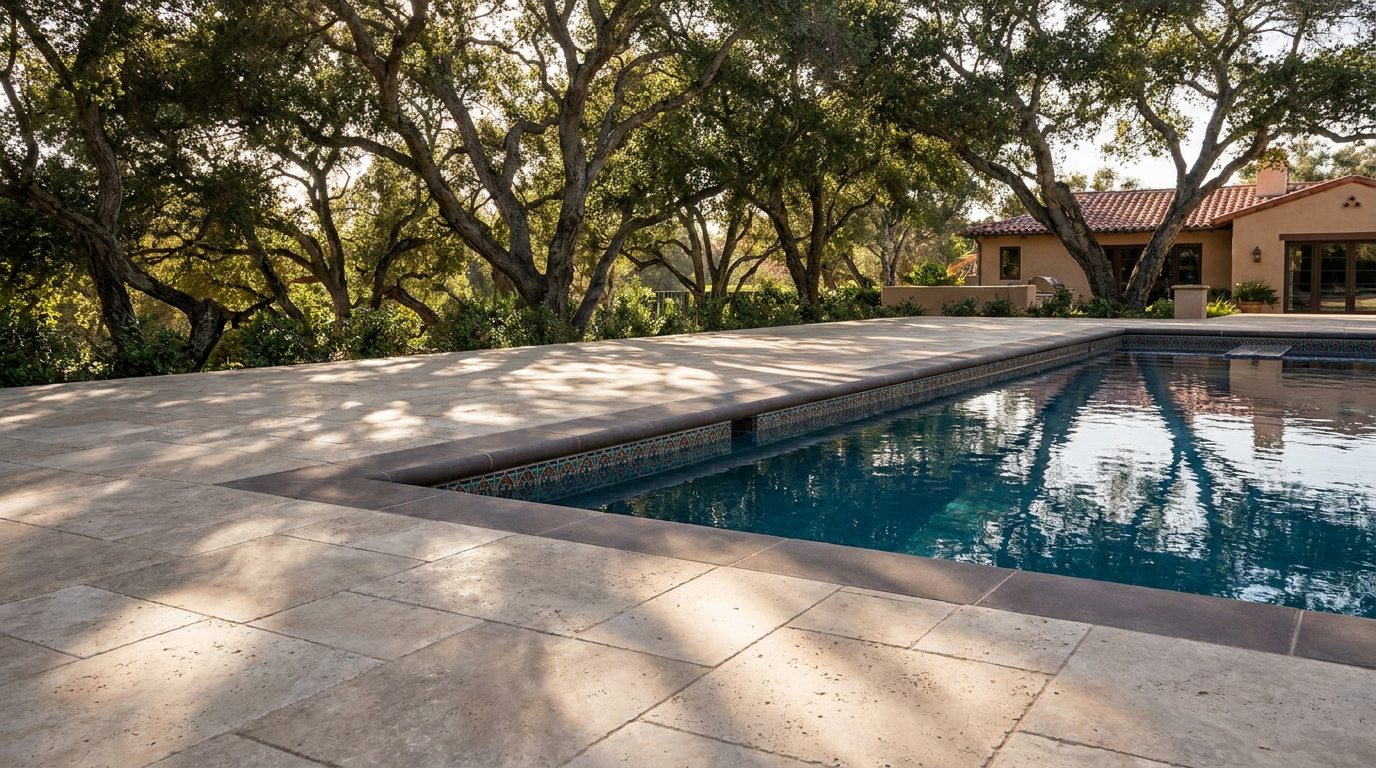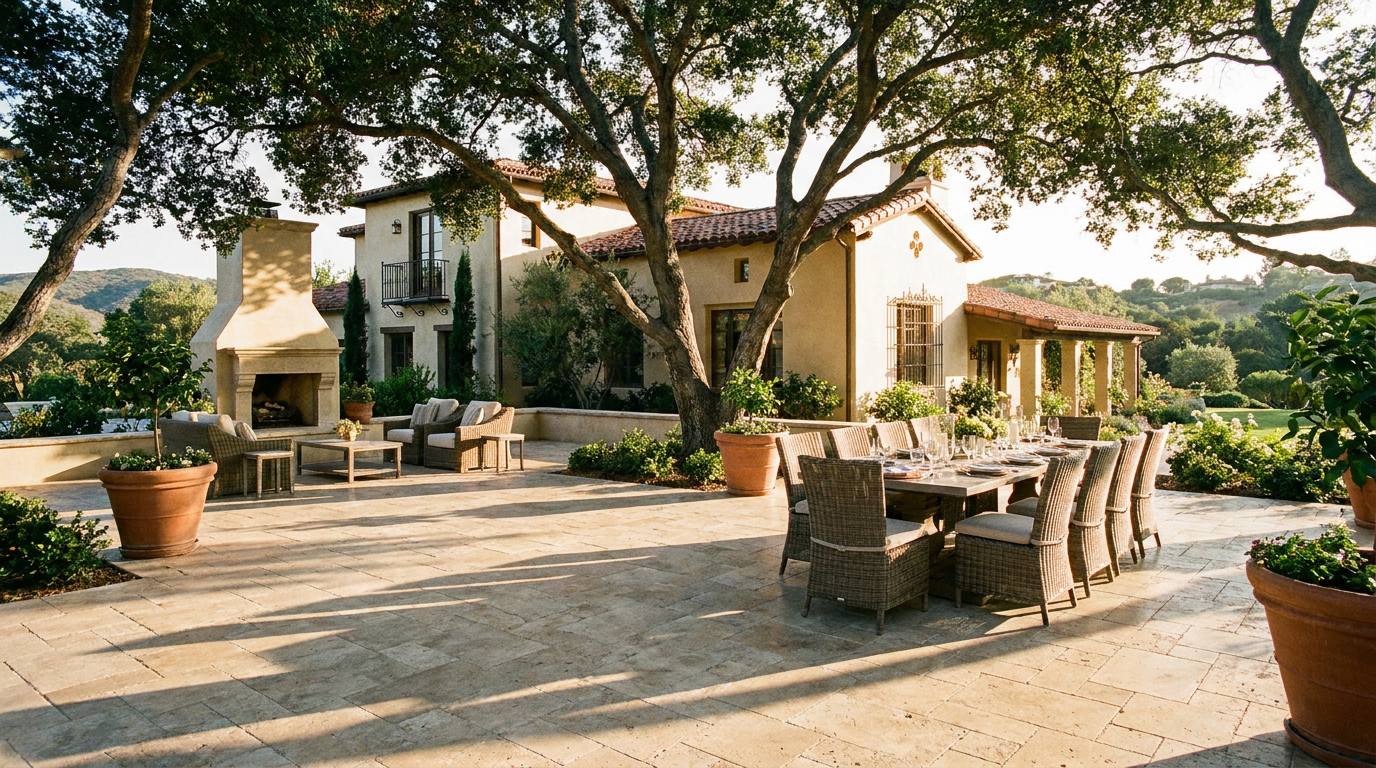
Pool tile does two things simultaneously: it protects the pool shell at the waterline from the chemical and physical stress of the water-air interface, and it defines the visual character of the finished pool more than almost any other single material decision.
The waterline tile band is the detail your eye goes to first on a finished pool. It is also the most chemically stressed tile location in the entire installation — subject to pool chemicals, evaporation deposits, UV, thermal cycling, and freeze-thaw stress in the small number of San Diego locations that see near-freezing nights.
Here is an honest comparison of the main options and what each one looks like over time.
Glass Tile
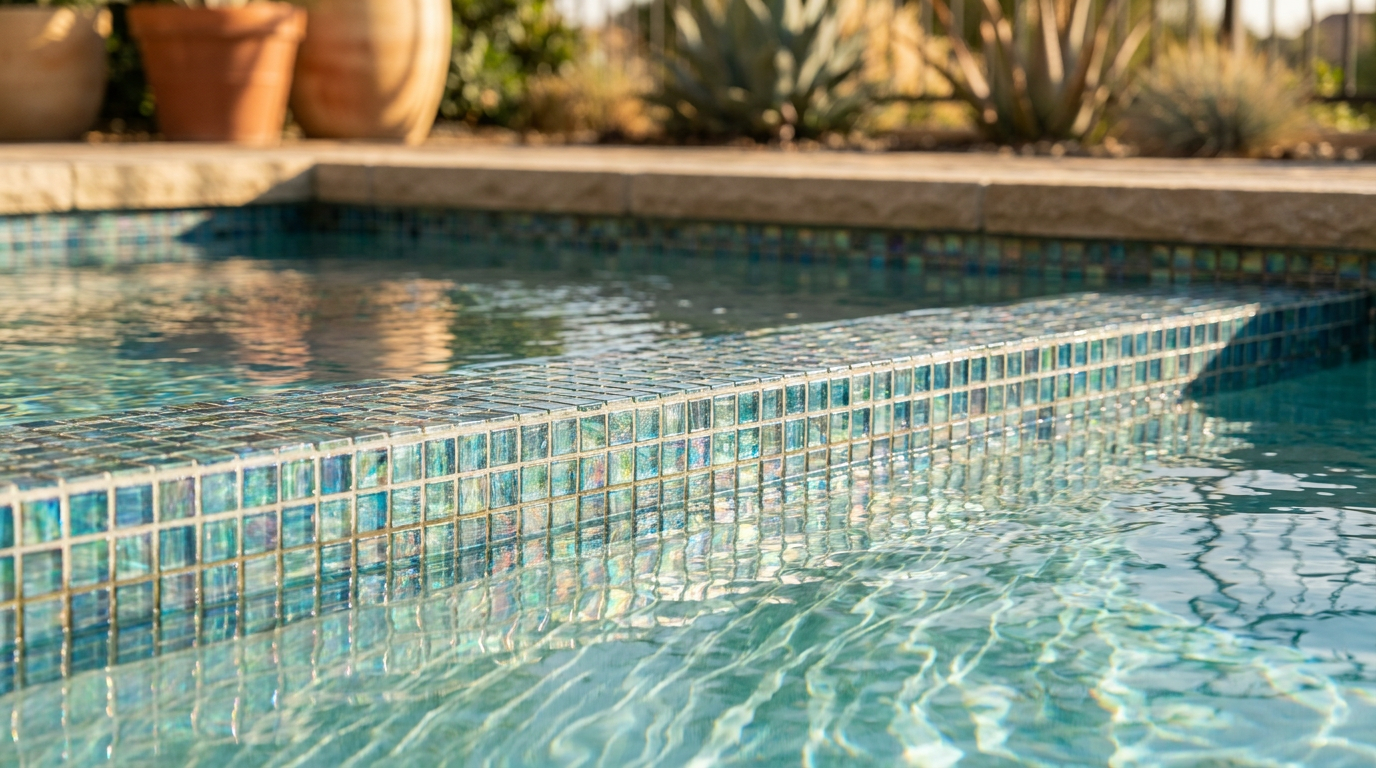
Overview: Vitreous glass mosaic tile, typically 1”x1” or 2”x2” units in sheets, is the most commonly specified waterline tile on high-end San Diego pools. Available in solid colors (blues, greens, whites, grays, bronze), iridescent finishes, and blended multi-color palettes.
What it does well: Glass tile is visually striking — the way light refracts through the glass and off the pool water gives a depth and luminosity that ceramic or porcelain cannot match. It is non-porous, which makes it extremely resistant to pool chemical absorption and staining. The surface does not etch. Calcium deposits that form on the surface can be cleaned without damaging the tile material. Color is permanently fused into the glass, so it does not fade.
Where it struggles: Glass tile is more expensive than ceramic or porcelain alternatives. Installation requires higher skill — glass tile cuts differently from ceramic, bond coat selection and coverage must be precise (glass is non-porous, which means the bond coat must be fully bedded; voids behind glass tile cause failure), and the installation sequence is less forgiving of base inconsistency. A bad glass tile installation fails faster and more visibly than a bad ceramic installation.
Long-term performance: Glass tile installed correctly with the right bond coat and epoxy grout is the most durable and lowest-maintenance waterline tile option. Well-installed glass tile pools from the 1990s still have their original tile in good condition. The weak point is always the installation quality, not the material itself.
Cost: $35–$80 per square foot installed, depending on tile quality and installation complexity.
Natural Stone Tile (Travertine, Slate, Marble)
Overview: Natural stone cut into mosaic or standard tile sizes and set at the waterline or as accent tile within the pool.
What it does well: Natural stone has an intrinsic material quality that manufactured options do not replicate — the variation, the warmth, the tactile quality. Travertine waterline tile, in particular, coordinates naturally with travertine coping and deck, creating a cohesive material story across the full pool and surround.
Where it struggles: This is the most important honest note on natural stone pool tile: not all natural stone is appropriate for direct pool water contact. Pool water is chemically active — pH adjustment, chlorine or salt, and algaecides interact with porous stone. Marble, in particular, is calcium carbonate — it etches in acidic conditions. Travertine is also calcium carbonate and faces similar risks. Natural stone at the waterline requires rigorous sealing with a penetrating stone sealer rated for wet and chemical exposure, and that sealer must be maintained.
Slate can delaminate in prolonged water contact in some installations. The safest natural stone choices for actual waterline contact in San Diego pools are typically dense limestone and certain granites — stone with low porosity and chemical stability.
Long-term performance: Variable — significantly dependent on stone species selection, sealer maintenance, and pool chemistry management. Natural stone used primarily as accent tile above the waterline (rather than at the actual water contact zone) performs better long-term than stone set directly in the chemical exposure zone.
Cost: $30–$75 per square foot installed, depending on stone species, size, and finish.
Porcelain Mosaic Tile
Overview: Through-body porcelain in mosaic format (1”x1”, 2”x2”, or 2”x4” units), available in a wide range of colors and textures, including stone-look and glass-look surface finishes.
What it does well: Through-body porcelain is non-porous — water absorption is effectively zero, which makes it highly resistant to pool chemistry. The color goes through the full tile body, so chips or surface wear do not expose a different-colored core. Lower cost than glass tile. Wider availability and more installation contractors familiar with the material.
Where it struggles: Does not have the visual depth of glass tile. Stone-look porcelain mosaic can look convincing in some lighting conditions and unconvincing in others — the visual difference between a photographic stone surface print and real stone is evident at close range. Some porcelain mosaics have a plastic quality in certain colors that reads as low-end regardless of the project around it.
Long-term performance: Excellent when correctly specified and installed. The key variables are the COF (coefficient of friction) rating for submerged and wet surfaces, the bond coat specification, and grout choice (epoxy grout at the waterline dramatically outperforms cement grout in stain resistance and pool chemical compatibility).
Cost: $15–$40 per square foot installed.
Ceramic Tile
Overview: Traditional kiln-fired ceramic in standard 4”x4”, 6”x6”, or mosaic format. The least expensive waterline tile option.
What it does well: Low initial cost. Wide availability. Easy to source replacement tiles if a section needs repair. The standard 4”x4” blue tile in a scalloped or bullnose profile has a certain classic pool aesthetic.
Where it struggles: Ceramic tile has higher porosity than glass or porcelain, which makes it more susceptible to staining from pool chemicals and calcium deposits. Glazed ceramic at the waterline can show crazing (fine surface cracking in the glaze) over time from thermal cycling. The grout joints are the most vulnerable point — standard cement grout at the waterline stains, discolors, and can develop algae in the joint.
Long-term performance: Fair. Ceramic waterline tile typically looks good for the first few years and begins to show staining, grout deterioration, and potential glaze crazing in the 5–10 year range, depending on pool chemistry management and climate.
Cost: $10–$25 per square foot installed.
Choosing the Right Tile for Your Pool
The decision depends on two things: how long you want the installation to hold before it needs attention, and what the material story is across the rest of the pool and surrounding hardscape.
For a high-end pool remodel or new pool where the materials need to be cohesive: glass tile or premium porcelain mosaic at the waterline, coordinated with the coping material and deck. This is the combination that defines the pools that look consistently good in photographs ten years after installation.
For travertine coping and deck: travertine accent tile can work well above the waterline or as a cap detail, with glass or porcelain mosaic at the actual waterline contact zone.
What we advise against: standard ceramic tile with cement grout on a high-investment pool remodel. The initial savings disappear in maintenance costs and a replacement cycle within ten years.
The tile decision should happen in design, alongside the coping and deck material selection — not as a separate procurement after the rest of the materials are decided. These three materials are always in frame together on a finished pool, and they need to work as a set.
If you want to talk through the material selection for your pool project — coping, tile, deck as a coordinated set — thirty minutes is usually enough to get to a clear direction.
Related: Pool Decks & Poolside Hardscape · Patios & Hardscape · Full Backyard Remodels · Projects in Del Mar · Projects in Encinitas · Bedrosians tile collections · Arizona Tile natural stone