A spa — whether attached to the pool, standalone, or somewhere in between — is one of the most used features in a finished San Diego backyard. San Diego’s mild evenings make a heated spa usable nearly year-round, and a well-integrated spa becomes a natural gathering point that gets more use than almost any other outdoor element.
The decision is more nuanced than most homeowners expect going in. Attached spa, detached spa, and spool each have different implications for construction complexity, cost, heating, and how the feature sits within the outdoor space.
Attached Spa (Spillover Spa)
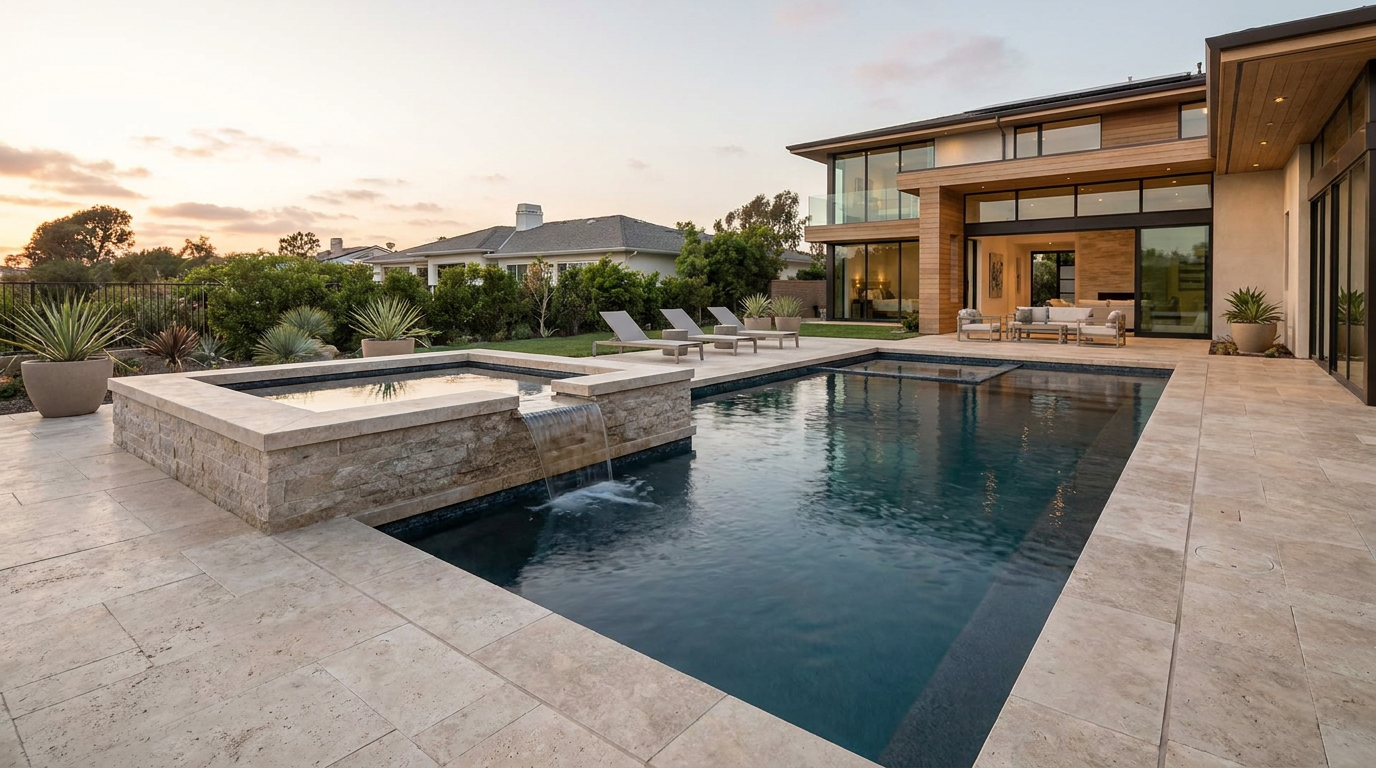
Overview: A spa built as part of the pool shell, elevated above the pool water level, with water cascading from the spa down into the pool. The most common configuration in San Diego residential construction.
What it does well: Shares filtration equipment with the pool, which simplifies the mechanical setup and reduces equipment cost. The spillover creates a visual water feature — the cascade from spa to pool is a significant aesthetic element, audible and visible from the seating areas around the pool. Most pool builders in San Diego can build an attached spillover spa — it is a standard configuration.
The elevation of the spa above pool level also provides a practical benefit: the spa is out of the water surface visually, and the view from the spa looks out over the pool rather than into a wall.
Construction: The spa is built as a raised shell structure integrated with the pool’s bond beam. The height of the spillover — typically 12 to 24 inches above pool water level — affects the look and the sound of the cascade. A higher spillover is more dramatic and louder; a lower spillover is quieter and more subtle.
Heating: Shared heater with the pool in most installations. Separate valving allows the spa to be heated independently without heating the full pool volume. This is the key energy-efficiency advantage of the attached spa configuration — you heat a 600-gallon spa body rather than a 20,000-gallon pool to reach spa temperature.
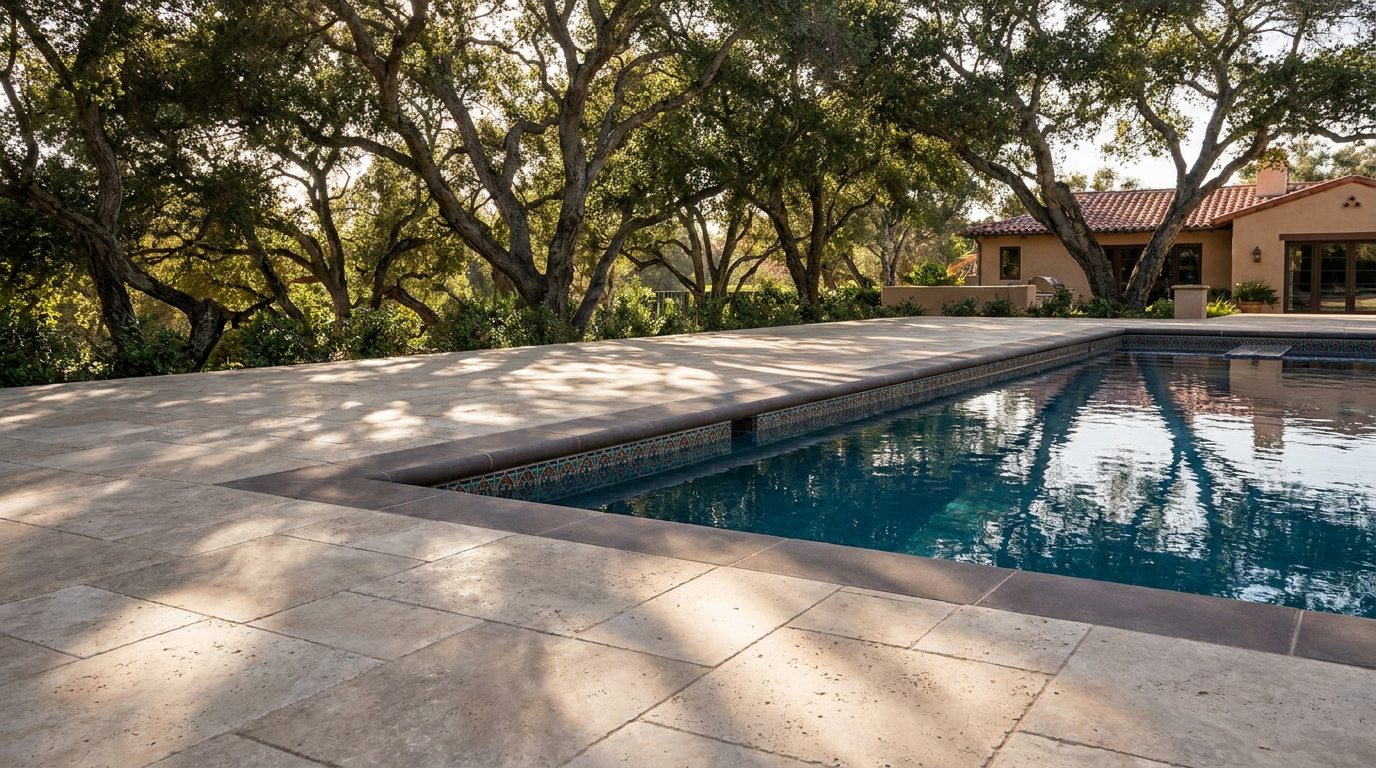
Surround implications for the hardscape: The raised spa structure creates a hardscape opportunity and challenge simultaneously. The spa surround needs to be detailed — the side walls of the raised spa structure are in frame constantly, and they need to be finished in material that is consistent with the rest of the pool and outdoor space. Stone veneer, tile, stacked stone, or smooth plaster on the spa wall are all options; the right choice depends on the overall design language. The steps up to the spa entry also need to be designed and surfaced in the same material palette as the pool deck.
Detached Spa (Freestanding / Independent)
Overview: A spa built as a separate structure from the pool — its own shell, own filtration, own heating. Either custom-built in gunite or a pre-fabricated fiberglass unit.
What it does well: Can be positioned independently of the pool — against a wall, under a pergola, adjacent to an outdoor living area, or at a distance from the pool where a separate gathering space makes more sense. Allows the spa to be used completely independently of the pool system, with no impact on pool water level, chemistry, or filtration when the spa is running.
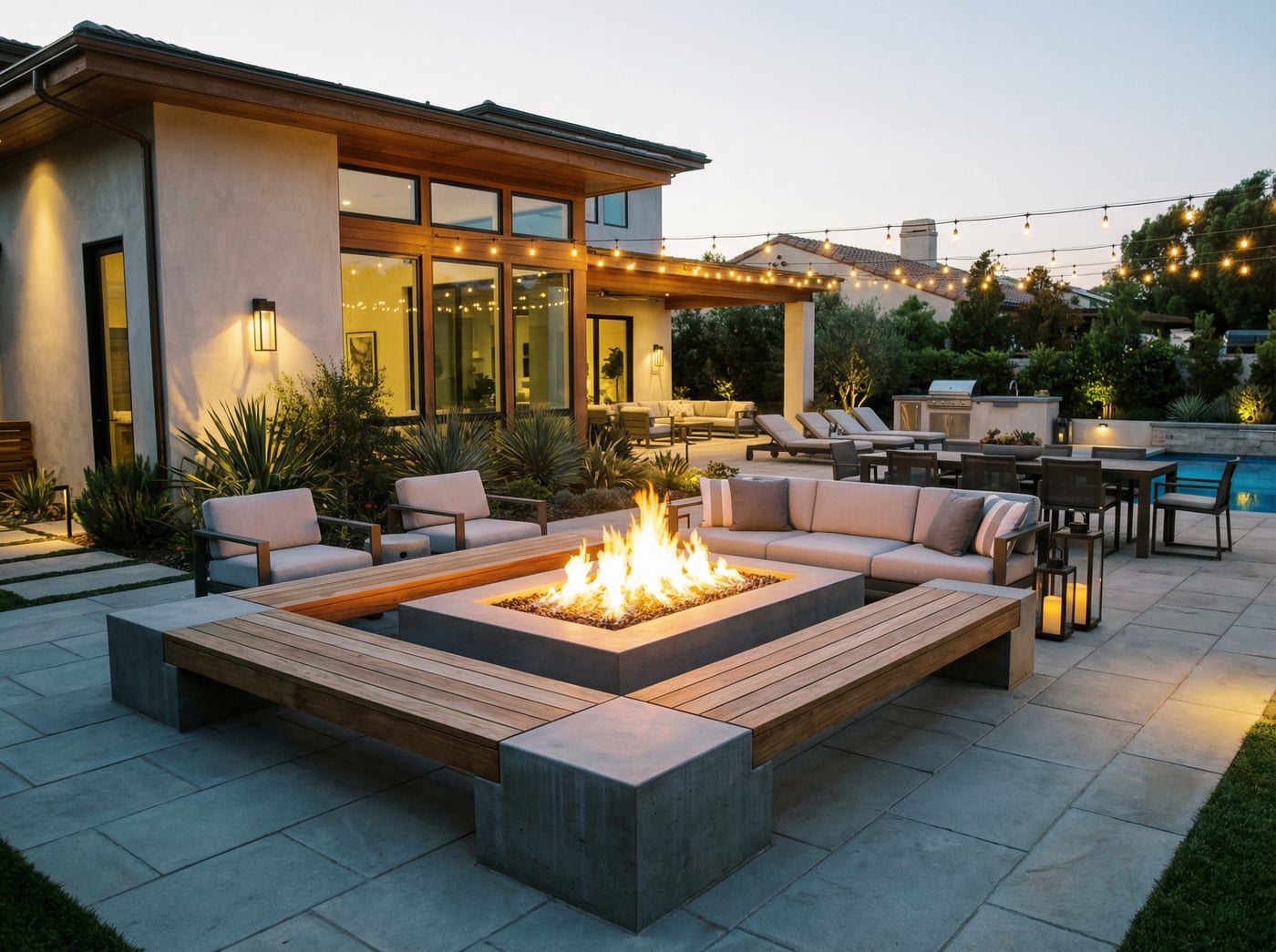
A detached spa under a pergola, adjacent to an outdoor fireplace, and separated from the pool creates a distinct secondary gathering zone in the backyard — which, for entertaining-oriented properties, often gets more use than the pool-adjacent spa.
Construction: A custom gunite detached spa has the same construction sequence as a pool shell — rebar armature, shotcrete, plaster or aggregate interior finish. A prefabricated fiberglass spa insert is set into an excavated area and finished around with hardscape.
Heating: An independent heating system for a detached spa is a higher operating cost than a shared-heater attached spa. A high-efficiency heat pump is typically more cost-effective in San Diego’s mild climate than a gas heater for a frequently used detached spa.
Surround implications: A detached spa gives more design freedom for the surround — it can be integrated into a stone alcove, a raised platform, a pergola structure, or a garden setting. The detachment also means the spa can be at a different elevation than the pool, on a slope, or at a remove from the primary pool area.
Spool (Spa/Pool Hybrid)
Overview: A compact pool of 8–15 feet in diameter or length, sized between a traditional spa and a full pool, that operates as both — cool it like a pool for lap swimming or warm-water use; heat it like a spa for soaking. Sometimes called a cocktail pool.
What it does well: Works on smaller lots or in backyards where a full pool footprint is not practical. Lower construction cost than a full pool. Lower water volume means faster and less expensive heating to spa temperature. The combination function appeals to homeowners who want both pool swimming capability and spa soaking in a single, more compact footprint.
Where it struggles: Realistically, a spool is a compromise. It does not swim like a full pool, and at spa temperatures it does not seat as many people comfortably as a purpose-built spa. For homeowners who genuinely use both a pool and a spa regularly, a spool may underserve both functions over time.
When it’s the right answer: Smaller lots in Mission Hills, Point Loma, or North County coastal communities where a full pool footprint is not achievable. Properties where the primary use is soaking and occasional cooling, not lap swimming or entertaining multiple swimmers simultaneously.
Elevation and Integration
Spa elevation relative to the pool, the deck, and the surrounding outdoor living space is a design decision with real consequences.
Raised spa at pool edge: The classic configuration — spa elevated 18–24 inches above pool water level, positioned at the end or corner of the pool. Clean visual hierarchy, practical spillover, functional step-up.
Spa at deck level: A spa set into the deck at grade level, flush with the surrounding hardscape. More intimate, more integrated with the surrounding space, but no spillover cascade. Works well as a detached unit in a garden or corner of the yard.
Spa on a raised platform: A detached spa elevated on a built stone or concrete platform — creates a more architectural presence in the space and elevates the spa to a view position. More complex to build and to detail, but a strong design move on the right property.
Integration with the outdoor living space: The most important design consideration is not the spa itself but where it sits relative to everything else — the outdoor kitchen, the fire feature, the seating. A well-designed backyard puts the spa in a position where it is naturally part of the flow rather than an afterthought at the far end of the yard.
Construction and Permitting in San Diego
Spa construction — whether attached to a pool or detached — requires permits in San Diego County. The permit covers structural, plumbing, electrical, and gas (if a gas heater is included). Timelines are similar to pool permits: expect 4–8 weeks for plan check, plus any HOA approval process if your property has an HOA.
If you are adding a spa to an existing pool, the existing pool permit history and equipment setup affect the scope. A site walk is the fastest way to understand what is straightforward and what has complications.
If you want to talk through spa options for your backyard — how an attached spillover might work, whether a detached spa makes more sense for your site and how you use the space — thirty minutes on your property is usually enough to get to a clear direction.
Related: Pool Decks & Poolside Hardscape · Full Backyard Remodels · Fire Pits & Fireplaces · Projects in Coronado · Projects in Del Mar · CSLB contractor verification