Most pool remodels do not start with a plan. They start with a problem. A section of coping cracked after the last winter. The waterline tile is lifting in several places. The deck surface has gotten so rough it abrades bare feet. One issue surfaces, the homeowner takes a harder look, and suddenly the scope is larger than anticipated.
That pattern — one trigger, broader discovery — is normal. A pool that is 10 to 15 years old has usually accumulated deferred maintenance across several systems simultaneously. Understanding what a real pool remodel involves helps you plan for what you will actually need, not just the presenting issue.
When to Remodel
There is no single rule, but these are the reliable indicators:
Coping failure. Coping that is cracking, spalling, lifting, or separating from the pool beam is a structural concern, not just a cosmetic one. Cracks in the coping allow water infiltration at the top of the shell — a path to accelerated shell deterioration. This is the highest-priority repair in any pool remodel.
Waterline tile failure. Tile that is lifting, falling off, or heavily stained with calcium scale is both a maintenance issue and a sign that the original installation was insufficient — usually inadequate bond coat, incorrect grout, or tile not rated for pool chemistry. Repairing a few tiles typically does not hold; the underlying installation issue reappears.
Deck surface condition. Pool deck surfaces have finite service lives. Kool Deck surfaces, stamped concrete, and older textured concrete that has become rough, stained, or cracked creates a real safety and comfort issue — bare feet take the abuse daily. A deck that has lost its surface integrity is a remodel trigger.
Resurfacing cycle. Plaster pool surfaces typically last 10–15 years before the surface etches, stains, or becomes rough enough to abrade skin. Pebble Tec and quartz aggregate surfaces last 15–25 years. When the interior surface is at end of life, it makes sense to coordinate exterior work — coping, tile, deck — simultaneously rather than tearing up a new deck to accommodate a shell resurface two years later.
Design obsolescence. Some pools simply no longer match the home they surround. A property that was extensively renovated or a neighborhood where comparable homes have been updated often has a pool that reads as the older, lower-quality part of the outdoor space.
What a Pool Remodel Typically Includes
There is no fixed definition of a pool remodel — the scope depends on what needs attention. But here are the most common components:
Coping Replacement
The coping is removed down to the pool beam and replaced with new material. This involves:
- Demolishing and removing existing coping (concrete cantilever, old tile coping, or stone)
- Prepping the pool beam surface
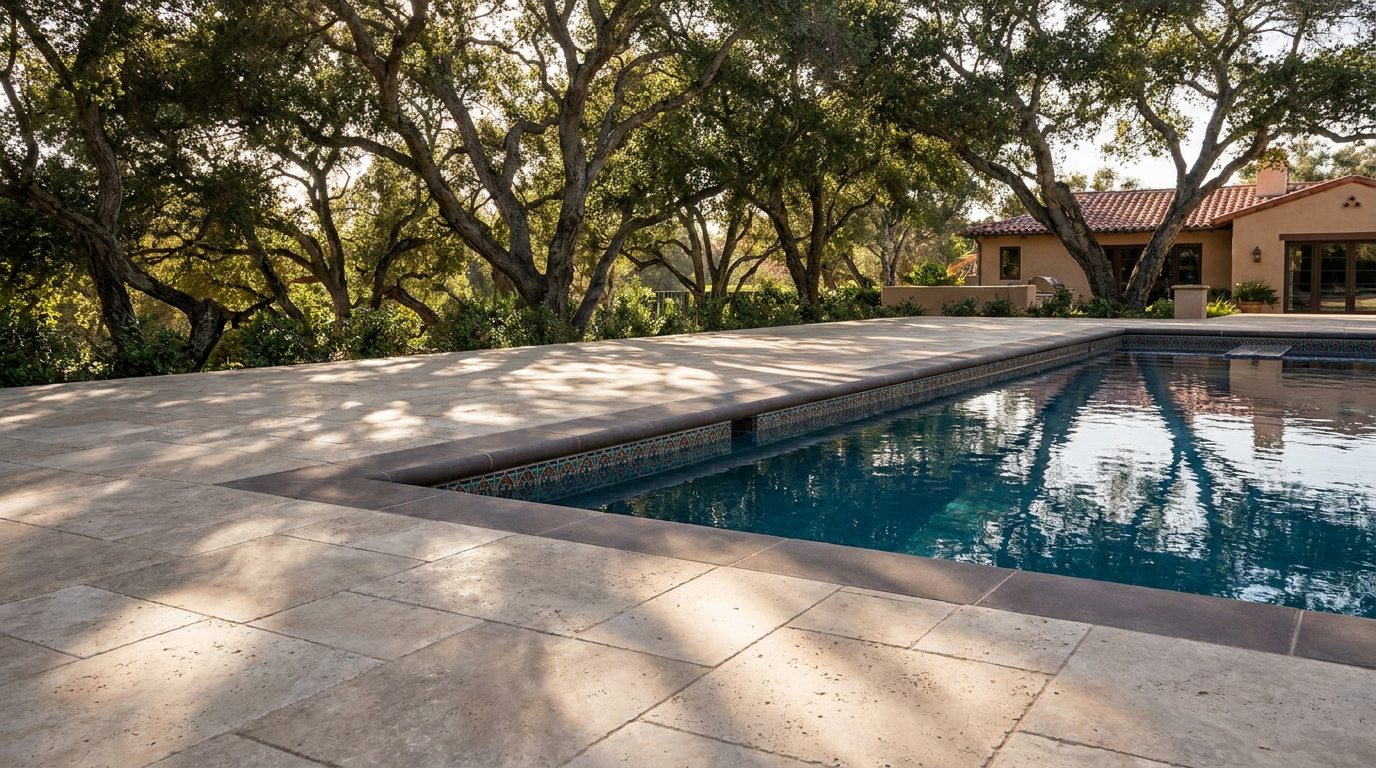
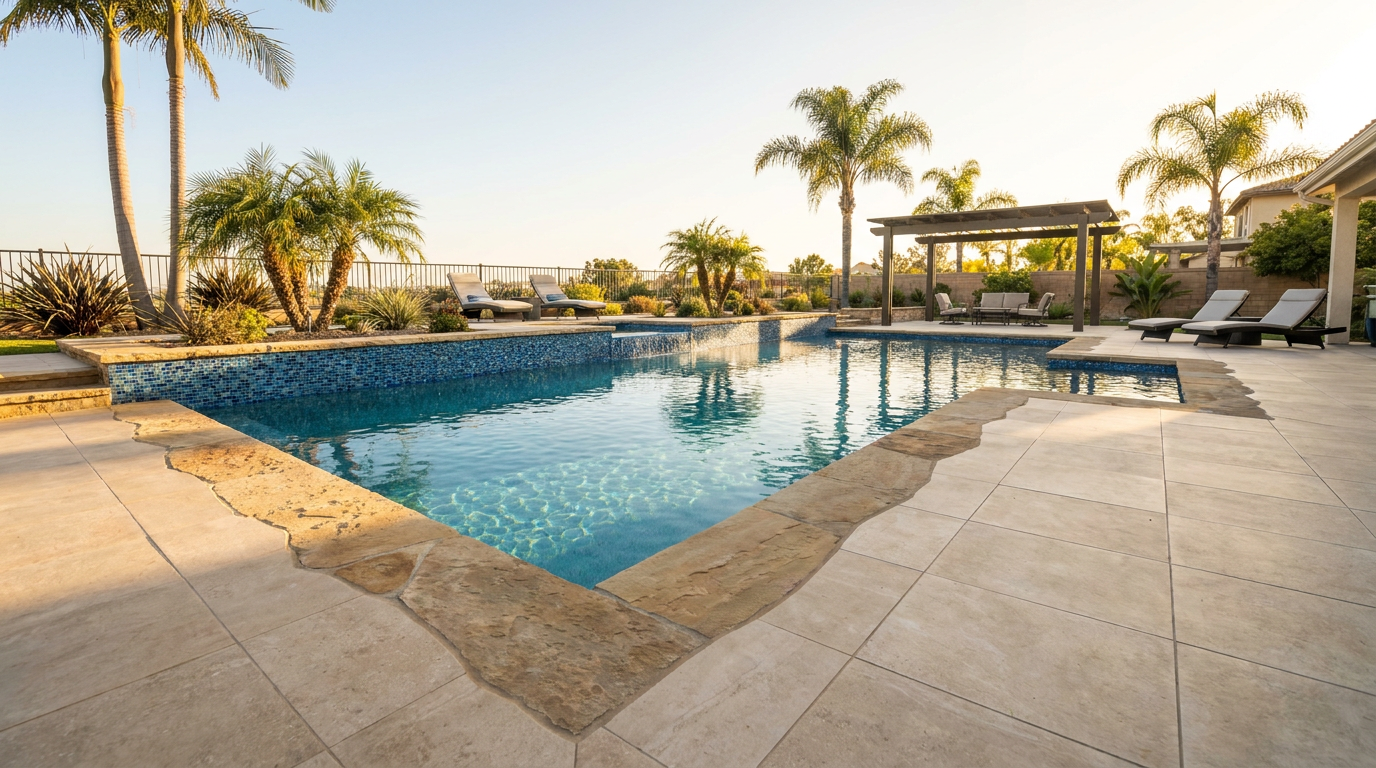
- Installing new coping in the specified material (travertine, natural stone, bullnose tile, etc.)
- Transitioning the new coping detail to the new deck material
Coping replacement and deck replacement are almost always done together — the coping edge sets the height and profile that the deck material terminates against.
Pool Deck Replacement
The surrounding deck is demolished and rebuilt. The scope includes:
- Demo and removal of existing deck material
- Evaluation of the base for damage, settling, or drainage issues
- Base repair or replacement where needed
- Installation of new deck material (travertine, pavers, Kool Deck, large-format porcelain)
- Drainage detailing to slope water away from the pool and house
Deck replacement is the largest surface-area scope item and typically the largest cost component in a pool remodel.
Waterline Tile Replacement
The waterline tile band (the tile at the interior water line of the pool) is removed and replaced. This requires:
- Lowering the pool water level to expose the tile band
- Removing old tile and bond coat
- Preparing the shell surface
- Installing new tile with pool-rated bond coat and epoxy grout
Material choices here range from standard 1”x1” glass mosaic to custom hand-painted ceramic to large-format porcelain. The waterline tile is a significant visual detail and worth specifying carefully.
Water Features
A pool remodel is a natural point to add or upgrade water features — deck jets, bubblers at a tanning ledge, a sheer descent, or a raised spillover spa. Doing this work during a broader remodel avoids tearing up a finished deck later.
Spa and Surrounding Hardscape
Many older pools were built without an attached spa, or with a spa that is functional but not well-integrated with the outdoor living space. A remodel is the right time to evaluate whether a spa addition — attached to the pool structure or detached — makes sense.
Lighting
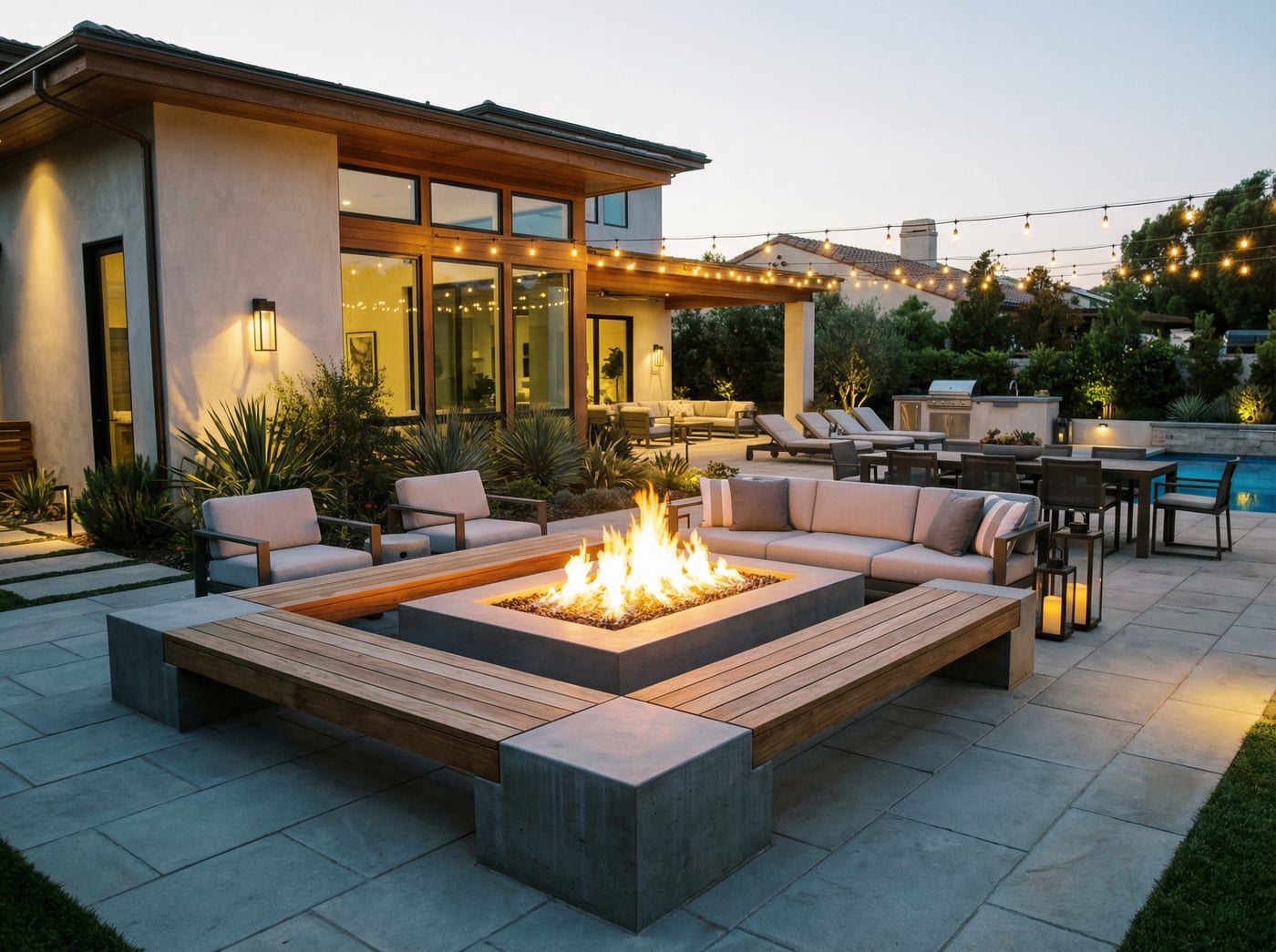
Pool LED lighting retrofits (replacing old incandescent or halogen fixtures with color-changing LED) and new deck and landscape lighting are commonly included in a pool remodel scope. Lighting changes the evening use of the space more than almost any other single upgrade.
What SDLR Handles on a Pool Remodel
SDLR holds a Class B General Contractor license (CSLB #1139785). Our scope on pool remodels covers everything outside the pool shell itself — coping, deck, waterline tile, water features, drainage, spa hardscape, outdoor living elements, and lighting.
For pool resurfacing (replastering or pebble aggregate resurfacing of the interior shell), a C-53 licensed pool contractor is required. We coordinate with C-53 contractors on projects where shell resurfacing is part of the scope, sequencing the interior and exterior work so neither trade has to come back through a finished space.
Timeline for a Pool Remodel
| Scope | Realistic Duration |
|---|---|
| Coping and waterline tile only | 3–5 weeks |
| Coping, tile, and deck replacement | 5–8 weeks |
| Full pool remodel (all of the above + water features, lighting) | 8–14 weeks |
| Full pool remodel + broader outdoor living scope | 12–20 weeks |
These timelines assume the permit is in hand before construction begins. Permits are required for most structural pool work in San Diego; plan for a 4–8 week permitting phase before the construction calendar starts.
The Coordination Point Most People Miss
If your pool remodel involves both shell resurfacing (C-53 scope) and exterior work (coping, deck, tile), the sequence matters. The exterior work must be complete before the interior is resurfaced — you cannot be demoing the deck after a new plaster surface is in the pool. Getting two separate contractors to coordinate that sequence is a management task that falls to someone.
We plan that sequencing explicitly on projects where it applies, and we communicate it clearly before any contract is signed.
If you have a pool that needs attention and are not sure where to start — a conversation costs nothing, and a site walk usually answers most of the scope questions in thirty minutes.
Related: Pool Decks & Poolside Hardscape · Full Backyard Remodels · Outdoor Kitchens & BBQ Islands · Projects in Coronado · Projects in La Jolla · CSLB license verification