Water features are where a pool becomes more than a swimming vessel. The sound of moving water, the visual movement on the surface, the reflection of light through a sheer descent at dusk — these are the details that make a backyard feel like something beyond a residential lot.
San Diego’s outdoor climate makes water features particularly effective. Most evenings are pleasant enough to be outside, and the low ambient noise level in most neighborhoods means a well-placed water feature carries. The right feature in the right location transforms how you experience the space after 5pm.
Here is an honest breakdown of the main pool water features — what each one does, what it requires, and how to match them to the right project.
Deck Jets (Laminar Jets)
Overview: Deck jets are nozzles mounted in the pool deck that shoot a smooth, transparent arc of water into the pool. The water stream is laminar — non-turbulent — which means it appears as a solid glass arc rather than a chaotic splash. Multiple deck jets are typically installed in a symmetrical pattern around the pool edge.
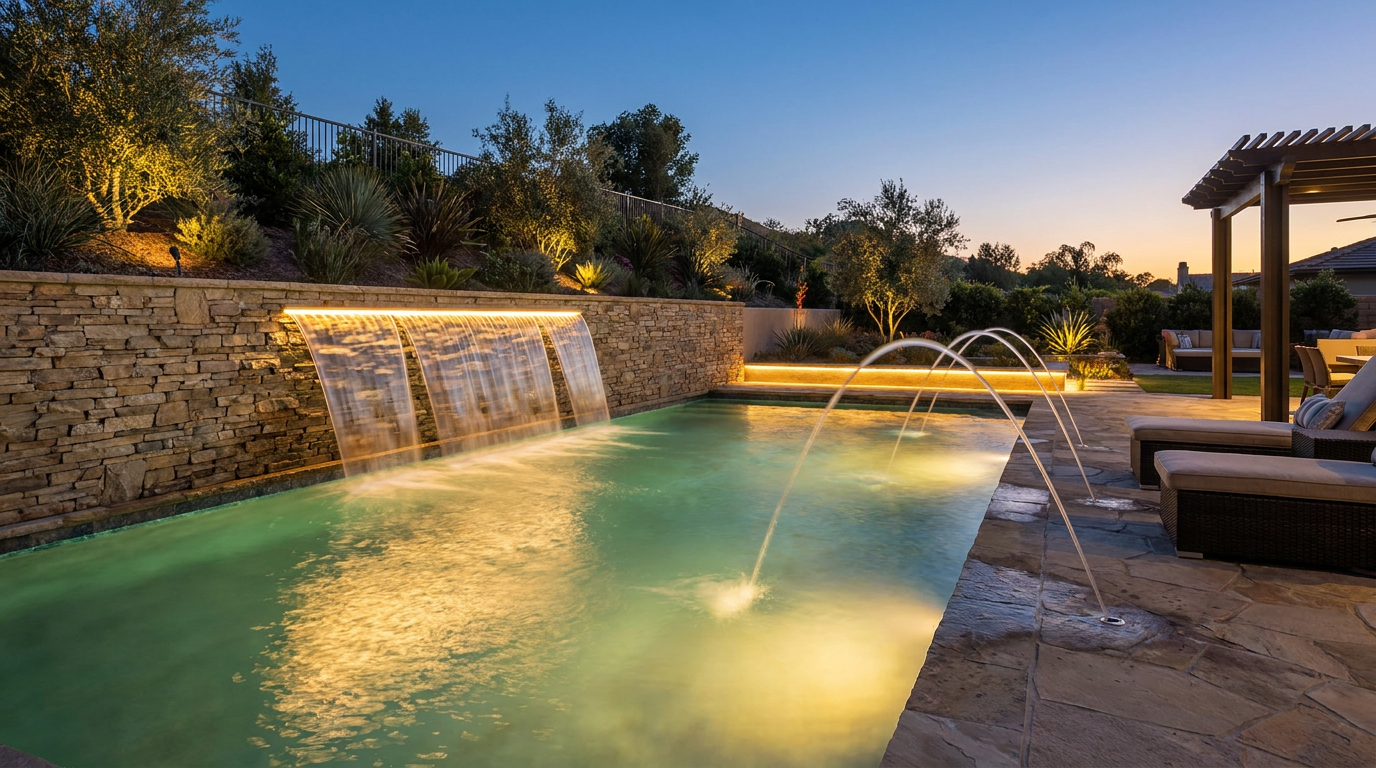
What they do well: The visual effect is exceptional. A properly adjusted deck jet produces a perfectly transparent arc of water that catches light dramatically — especially when fiber optic lighting is run through the water stream (laminar LED jets). At dusk with pool lighting, illuminated deck jets are among the most striking water effects achievable in a residential pool design.
The water effect is also reversible — jets are on when you want the visual effect and off when you do not. No permanent sound if you prefer silence in the evenings.
What they require: Deck jets are plumbed through the pool deck surface — the supply lines run under the deck from the pool equipment pad. They must be planned before the deck is poured or set; retrofitting deck jets into an existing deck is complex and typically requires demolishing the deck surface above the supply line routes. Specify them early.
A pool controller that can operate the deck jets independently of the pool pump (and on a timer or automation system) adds significant convenience. Jets that can only be turned on manually at the equipment pad do not get used consistently.
Sound: Relatively quiet. The arc of water entering the pool creates a gentle, musical splash — not a waterfall sound. Background level only in most installations.
Cost: $800–$2,000 per jet installed, depending on nozzle specification and whether LED lighting is included in the jet.
Bubblers (Tanning Ledge Bubblers)
Overview: Bubblers are nozzles installed in a tanning ledge or shallow step that produce a gentle, upwelling water effect — a column of water that bubbles up from the ledge surface into the shallow water. Typically installed in pairs or groups of three on a tanning ledge.
What they do well: The bubblers create gentle motion and sound in the otherwise still water of a tanning ledge. Children find them delightful. Adults appreciate the subtle sensory texture — the tactile effect of water currents around your legs when you are sitting in the shallow ledge. The sound is quiet and pleasant, not intrusive.
Bubblers are also a design signal: they are a detail that distinguishes a carefully designed pool from a utilitarian one. Guests notice them even if they cannot immediately name what they are.
What they require: Like deck jets, bubblers must be planned before the tanning ledge shell is constructed. Supply lines run through the ledge structure; they cannot be added cleanly after the ledge is built. Specify them in the design phase.
Cost: $500–$1,200 per bubbler installed.
Sheer Descents
Overview: A sheer descent is a water delivery system that produces a thin, flat, transparent “sheet” of water that falls from a raised wall or spillway into the pool below. The falling water sheet is typically 6, 12, 18, or 24 inches wide, and the fall height from the spillway to the pool water surface determines the sound and visual intensity.
What they do well: Sheer descents are one of the most architecturally refined water features. The thin, transparent sheet of falling water — when properly adjusted for pressure — produces a visually clean, nearly silent falling effect. They are particularly effective on contemporary and modern pool designs where clean lines are the visual language. A long bank of sheer descents across a raised bond beam or retaining wall creates a curtain-of-water effect that is difficult to achieve any other way.
At night with pool lighting beneath the falling water, sheer descents become light sculptures — the falling sheet of water catches and refracts light in a way that reads as high-end and considered design.
Sound: At low fall heights (12–18 inches), sheer descents are quiet — a soft, continuous background sound. At higher fall heights (24–36 inches or more), the sound becomes more prominent. Adjustable pressure allows you to vary the flow rate and sound level to some degree.
What they require: A raised wall or spillway structure to mount the sheer descent head — integrated into a raised bond beam, a retaining wall adjacent to the pool, or a dedicated spillway structure. The water is returned to the pool and recirculated through the pool pump system. Placement and the height of the spillway above the pool water line must be part of the design.
Cost: $600–$1,500 per sheer descent head installed, plus the cost of the spillway wall structure it mounts to.
Sheet Waterfalls and Grotto Falls
Overview: Larger, more dramatic waterfall effects — typically a full-width water sheet from a raised rock structure, ledge, or grotto roof into the pool below. Common in more naturalistic pool designs.
What they do well: Create a dramatic focal point and significant ambient sound — a proper waterfall is audible from inside the house. The sound is white-noise, masking background neighborhood noise. Effective at creating a sense of escape or resort atmosphere.
Where they’re best used: Naturalistic and Mediterranean design styles where a rock grotto or raised water feature structure fits the property character. Less common in contemporary and minimalist pool designs where sheer descents are typically the better fit.
Cost: Highly variable with scope — a simple wide rock-face waterfall begins around $5,000–$8,000 installed; a full grotto or raised rock structure significantly more.
Scupper Walls and Raised Pool Walls
Overview: A scupper is a square or rectangular opening in a wall that allows water to pour through in a continuous sheet, falling from the wall face into the pool below. Scupper walls are a common element in Mediterranean and Tuscan-influenced pool designs — a raised pool wall with multiple scuppers evenly spaced is a signature visual element of that design language.
What they do well: The combination of the raised wall, the shadow lines of the scupper openings, and the falling water curtain is a very strong architectural effect. The sound is more prominent than a sheer descent — closer to the sound of a continuous waterfall. Natural stone veneer on the scupper wall (Eldorado Stone or real cut stone) elevates the detail significantly.
Cost: $1,000–$3,000 per scupper installed, plus the raised wall structure.
How to Choose
Water features are not additive — more is not always better. Two or three well-chosen features that work with the design language of the pool and the property create a significantly more refined result than five features competing for attention.
A general framework:
Contemporary and modern pools: Sheer descents and laminar deck jets. Clean geometry, minimal visual mass, maximum visual effect.
Mediterranean and traditional pools: Scupper walls, grotto falls, or naturalistic rock features. The design language supports heavier visual elements.
Family pools with tanning ledges: Bubblers on the tanning ledge. They are the most used feature by children and families and the most underrated by homeowners who have never had them.
All water features must be planned in design — before the pool deck is poured and before the shell is shot. Retrofitting any of these features into an existing pool and deck is possible but significantly more disruptive and expensive than including them from the start.
If you want to talk through which features make sense for your pool, your property, and how you use the space in the evenings — thirty minutes, no cost.
Related: Pool Decks & Poolside Hardscape · Full Backyard Remodels · Outdoor Kitchens & BBQ Islands · Projects in Rancho Santa Fe · Projects in Coronado