The pool deck is the most used and most visually prominent hardscape in any backyard with a pool. Your guests cross it barefoot. It reflects heat onto the people sitting around the pool. It gets wet constantly. It shows every stain. And it anchors the visual quality of the entire outdoor space — a beautiful pool shell with a mediocre deck reads as a mediocre backyard.
San Diego’s specific climate — intense UV, high daytime temperatures in summer, relatively mild humidity, occasional coastal salt air — creates a particular performance test for pool deck materials. A material that performs acceptably in Portland or Charlotte may underperform meaningfully in San Diego’s conditions.
Here is an honest assessment of the four most common pool deck materials in San Diego and what each one delivers long-term.
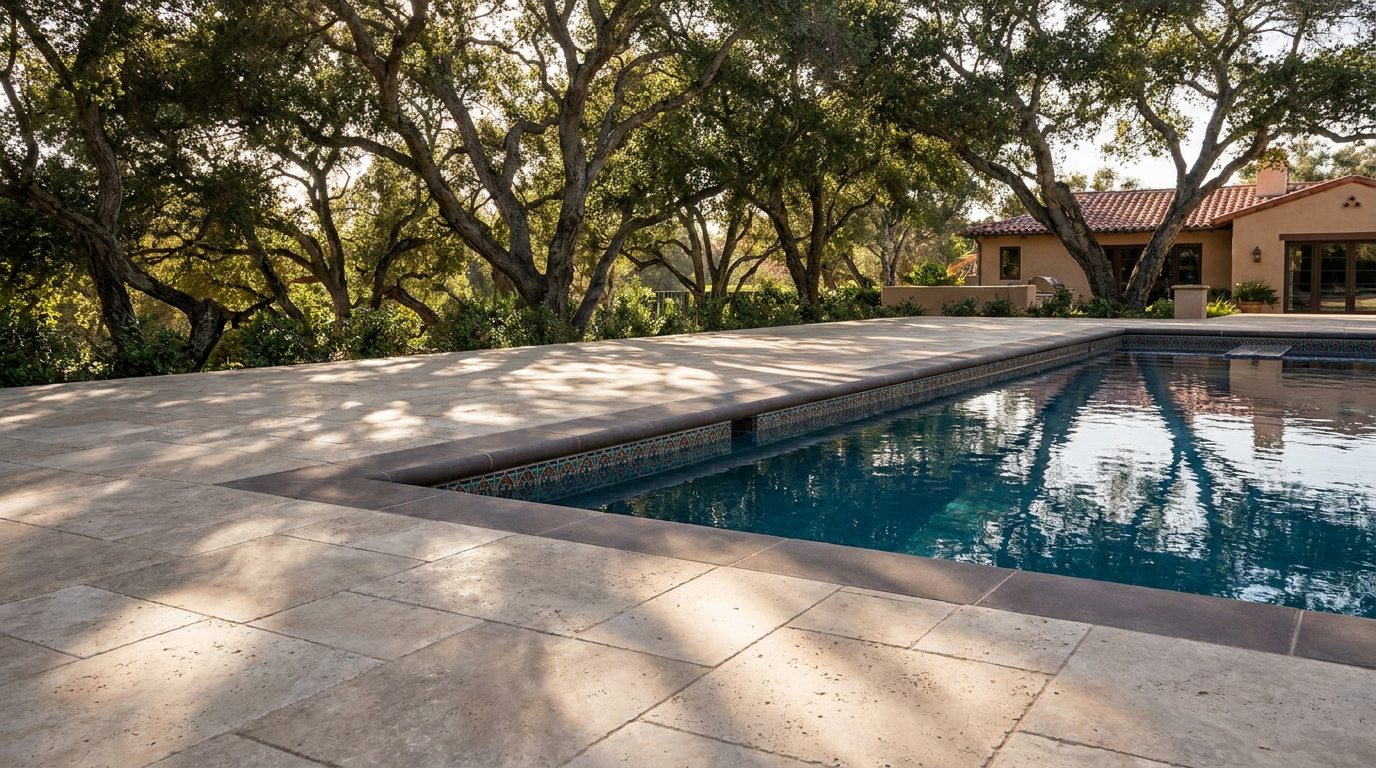
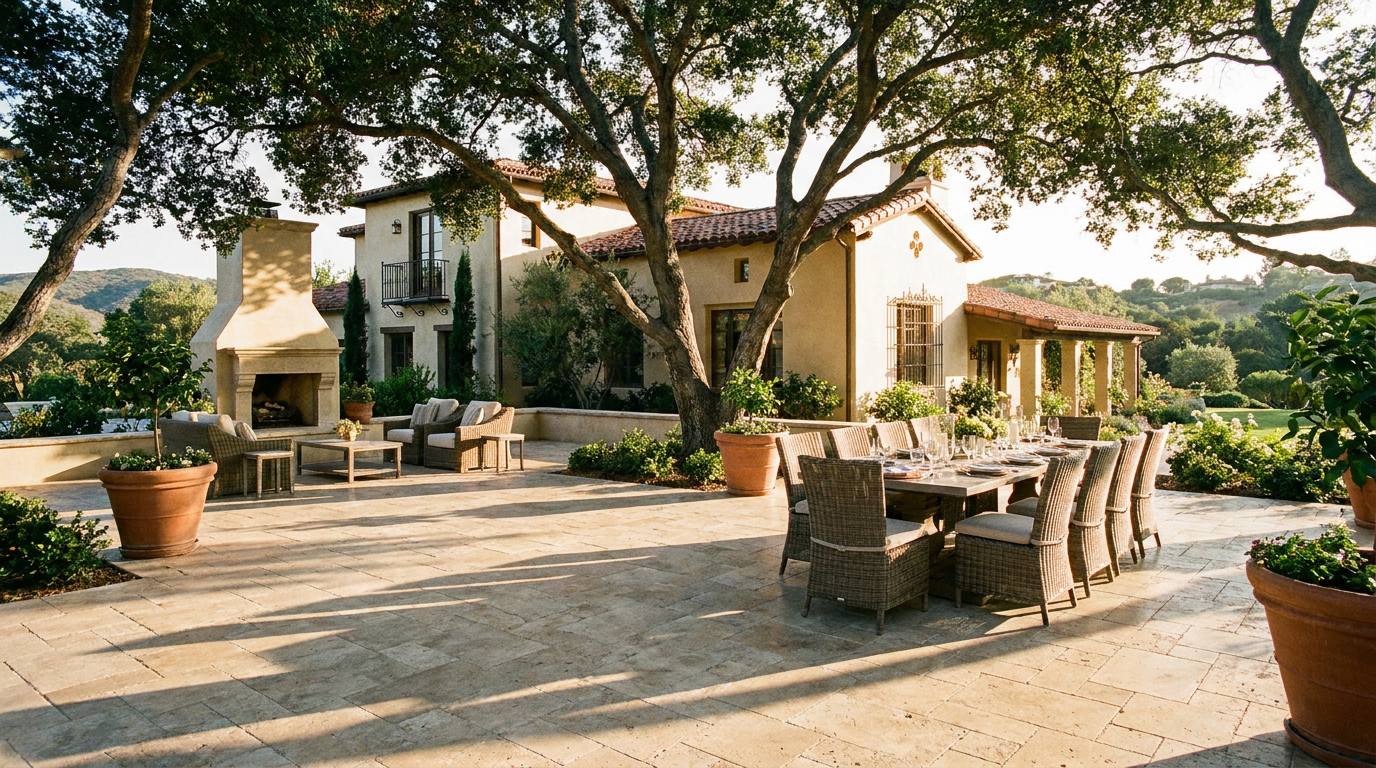
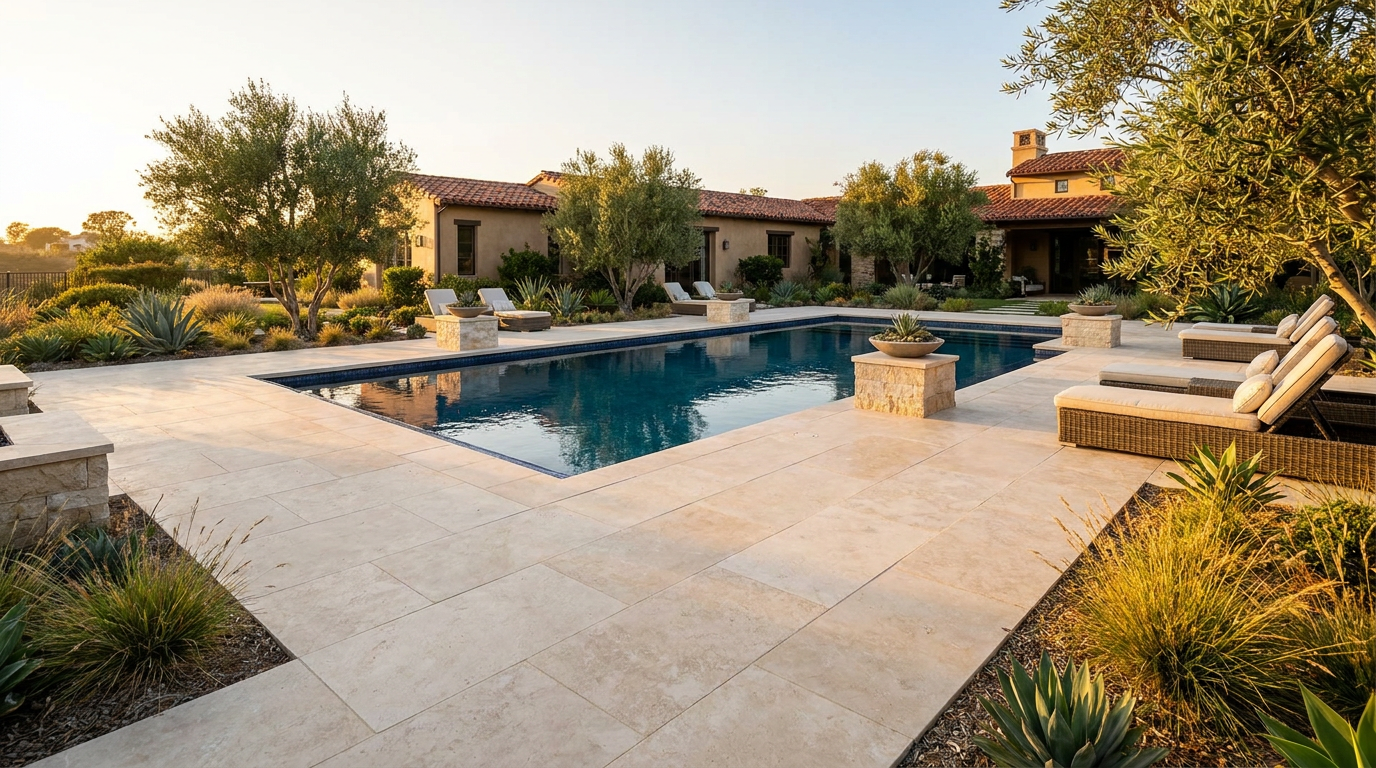
Natural Travertine
Overview: Cut travertine pavers or tiles, typically in a tumbled or honed finish, set around the pool surround. The most widely specified premium pool deck material in San Diego’s higher-end residential market.
What it does well: Surface temperature is the primary functional advantage. Travertine reflects rather than absorbs solar radiation — on a full-sun summer afternoon in San Diego, travertine surface temperatures are meaningfully lower than comparably dark concrete or porcelain. Bare feet on travertine at 2pm in August is tolerable. Bare feet on dark concrete at the same time and temperature is not.
Natural color variation in travertine (cream, walnut, ivory, gold) integrates naturally with San Diego’s Mediterranean and transitional architectural language. The material ages gracefully — minor wear and patina enhance its appearance rather than degrading it. Individual tiles or pavers can be replaced without visible inconsistency, since travertine’s natural variation conceals replacements better than manufactured materials.
Where it struggles: Travertine is porous. Pool water — particularly saltwater pool systems — can stain and etch unsealed travertine. A penetrating sealer rated for pool environments is required, and it must be reapplied on a two to three year cycle. Homeowners who do not maintain the sealer see staining at the pool perimeter within a few seasons.
Filled travertine (holes filled with a complementary material) performs better in pool applications than unfilled travertine, where the natural voids can retain pool water and chemical residue.
San Diego-specific performance: Excellent, with proper sealing maintenance. Travertine pool decks from the 1990s are still in service across La Jolla and Rancho Santa Fe. The material has a long track record in this climate.
Slip resistance: Good in a honed or tumbled finish. Polished travertine is not appropriate for pool deck use — it is slippery when wet.
Installed cost: $25–$50 per square foot installed, depending on tile size, finish (tumbled vs. honed), and base preparation requirements.
Concrete Pavers
Overview: Precast concrete paving units in a range of sizes, textures, and colors. The most broadly used pool deck material across San Diego’s full market range.
What it does well: Individually replaceable — a cracked or stained paver can be swapped without demolishing the surrounding deck. The permeable joint system between pavers allows the deck surface to flex slightly with ground movement, which significantly reduces cracking compared to monolithic concrete. Color range is broad, from commodity gray to premium stone-look finishes.
Premium concrete paver lines (Belgard Urbana, Techo-Bloc Blu 60, Acker-Stone) in natural stone looks have improved substantially over the past decade — at quality levels, they read as premium material at a close inspection distance.
Where it struggles: Color fading is the most common long-term issue with concrete pavers. UV exposure in San Diego’s full-sun conditions bleaches pigment from some paver lines over 5–10 years. Premium pavers with through-body color (not surface-pigmented) hold color significantly better. Without periodic resealing, some colors wash out.
Standard concrete is not as cool as travertine in full sun — the thermal mass and color of the paver affects surface temperature significantly. Lighter-colored concrete pavers approach travertine performance; darker pavers do not.
San Diego-specific performance: Very good for mid-grade and premium paver lines. A Belgard or Techo-Bloc pool deck specified in a light natural stone color, properly sealed, is a low-maintenance and high-performing choice for San Diego conditions.
Slip resistance: Good with a textured surface. Smooth-faced concrete pavers should not be specified for pool deck use.
Installed cost: $15–$35 per square foot installed, depending on paver quality, pattern complexity, and edge detail.
Kool Deck (Acrylic Coating)
Overview: Kool Deck is an acrylic-based textured coating applied over an existing or new concrete slab. The texture and light color reflect solar radiation, reducing surface temperature compared to standard concrete. Originally developed in the Southwest specifically for pool decks.
What it does well: Surface temperature reduction is real and significant. A properly applied Kool Deck surface in a light color runs noticeably cooler than standard gray concrete in full San Diego sun. It is the most cost-effective solution when the primary concern is foot comfort on a hot summer day and the existing concrete base is still structurally sound.
It is also the material most homeowners who grew up with backyard pools in San Diego associate with pool decks — it has decades of track record here and a certain classic, clean aesthetic in its standard creamy white tone.
Where it struggles: Kool Deck is a coating, not a structural material. Its service life is 7–12 years in San Diego conditions before it begins to chip, crack, peel, or stain significantly. Recoating is possible, but each successive coat adds to the surface buildup and adhesion to the original substrate becomes less reliable over time.
The color palette is limited — light tones (white, light gray, sand) work well; any attempt at more complex or saturated colors shows wear more visibly. The material does not age as gracefully as natural stone.
San Diego-specific performance: Good for its intended purpose — a cost-effective, cool-surface pool deck option that performs reliably for its service life. Not the right choice for a long-term investment or for a property where the outdoor design has been elevated in other ways.
Slip resistance: Good in the standard texture. Kool Deck’s textured surface is part of its slip-resistance system.
Installed cost: $5–$12 per square foot applied over an existing concrete slab.
Large-Format Porcelain Tile
Overview: Rectified porcelain in 24”x24” or larger format, installed as pool deck pavers. Increasingly common in contemporary and modern pool designs.
What it does well: Visually sophisticated — large-format porcelain in a stone or concrete look is convincingly premium at the formats and print quality available from current manufacturers (Florim, Arterra, Belgard Porcelain). Near-zero water absorption makes it extremely resistant to staining and pool chemical exposure. No sealing required. Long service life if the substrate is properly prepared.
Where it struggles: Surface temperature is the significant trade-off. Porcelain, particularly in medium and dark tones, absorbs solar radiation more aggressively than travertine. A dark porcelain pool deck in a San Diego July is a serious comfort issue. Stick to light-toned, high-reflectance porcelain for pool deck applications or specify for shaded areas only.
Large-format porcelain requires an exceptionally flat and stable substrate. Any movement or variation in the base transmits through the tiles as cracking, and large tiles crack at the edges and corners. A 24”x24” tile crack is a significant repair, not a minor maintenance item.
Tile that is wet in full sun must be specified for outdoor slip resistance — COF (coefficient of friction) rating for wet conditions is required. Not all large-format porcelain is rated for outdoor pool deck use.
San Diego-specific performance: Good in the right configuration — light tone, high COF, properly prepared substrate. Excellent choice for covered outdoor kitchen and dining areas adjacent to the pool, where the shade mitigates the surface temperature issue.
Installed cost: $30–$60 per square foot installed, depending on tile format, base preparation requirements, and pattern.
What We Recommend for San Diego Pool Decks
The honest answer for most San Diego pool projects:
For a full-sun pool surround where foot comfort in summer matters: Natural travertine in a honed or tumbled finish is the strongest long-term choice. Properly sealed and maintained, it outperforms every other material on the single most important metric for a pool deck.
For a strong material at a lower price point: Premium concrete pavers in a light natural stone color. Belgard or Techo-Bloc lines with through-body color hold their appearance well in San Diego conditions.
For a pool remodel where the existing concrete base is in good structural condition: Kool Deck is a practical choice if the primary goal is surface temperature and cost efficiency. Be realistic about the service life.
For contemporary and modern pools with covered outdoor living areas adjacent: Large-format porcelain makes design sense where shade manages the temperature issue.
What we advise against: dark-colored pool deck material in full-sun San Diego exposures, regardless of the material type. Surface temperature in a full-sun San Diego summer is not a theoretical concern — it is a real comfort issue that affects how often the space gets used.
Material selection should happen alongside coping and waterline tile as a coordinated set. All three materials are in frame simultaneously on a finished pool.
Related: Pool Decks & Poolside Hardscape · Patios & Hardscape · Full Backyard Remodels · Projects in Del Mar · Projects in Rancho Santa Fe · Belgard pool deck products · Arizona Tile travertine