The structure and the view
La Jolla is one of the few markets where the pergola design conversation starts with height restrictions — not setback regulations, but the question of whether the structure will interrupt the view that the property was bought for. In La Jolla Farms, a pergola one foot too tall on the wrong axis blocks the ocean horizon from the primary outdoor seating. In the Muirlands, a structure placed without reading the view corridor closes the afternoon light that makes the terrace what it is at 4 PM.
The structure has to provide shade and belong to the architecture without competing with the reason the property is valuable. That is a tighter design brief than most pergola projects face, and it is why La Jolla pergola work is different from the same work in inland neighborhoods.
Coastal material requirements
A shade structure on a La Jolla property is exposed to salt air for years before it shows. The exposure is continuous, moderate, and cumulative. Cedar and redwood, properly oiled and maintained, hold up across La Jolla — they are the right material in Bird Rock and the Muirlands, where the architecture suits timber and the maintenance program of a homeowner at that price point can include re-oiling every two or three years. At La Jolla Farms on the bluff edge, the exposure is more intense and the maintenance cycle has to match.
Modified wood — thermally modified or acetylated products — performs better than standard cedar at full bluff-edge exposure with minimal maintenance. The visual character is similar to cedar; the durability is substantially better. For the correct application on a La Jolla Farms estate, it is the right specification even at the higher material cost.
Alumawood and aluminum frame systems are low-maintenance and salt-resistant. They read correctly on a Bird Rock contemporary or a La Jolla Shores mid-century where the architecture is informal. On a Muirlands Spanish Revival or a La Jolla Farms estate, the material does not belong to the architectural vocabulary. We do not propose it where the architecture hasn’t already established that register.
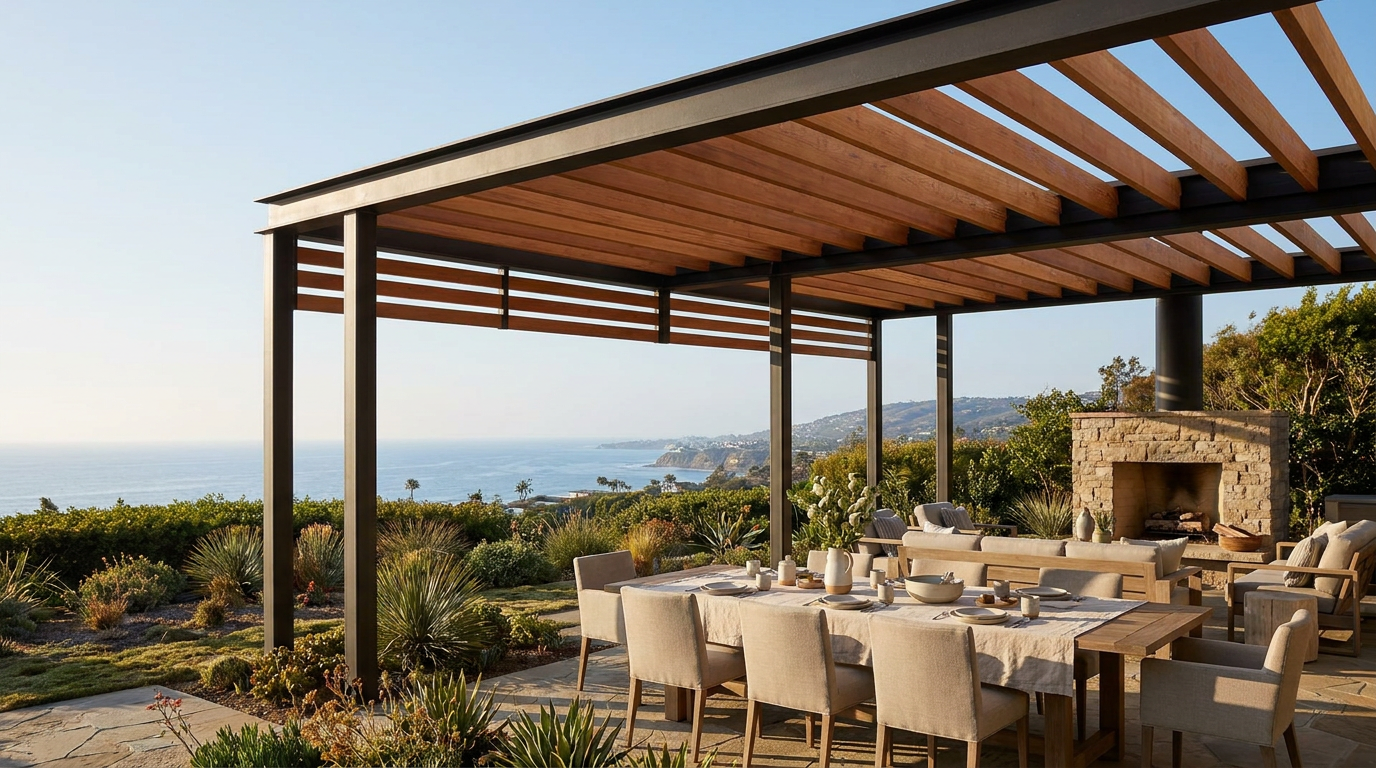
Steel — powder-coated or COR-TEN — is the right structure on a contemporary or modern property where the design wants a thin, clean overhead profile. Steel powder-coated to a marine-grade specification holds up at coastal exposure without the rusting that uncoated or standard-coated steel shows. COR-TEN at the bluff edge develops its patina correctly and belongs on the right contemporary property.
Architecture-specific approach by sub-neighborhood
Bird Rock — compact contemporary and cottage architecture on tight lots. The pergola is often a freestanding shade sail or a simple attached structure at the back of the primary patio. Scale matters: a pergola that extends significantly beyond the footprint of the house reads out of proportion on a Bird Rock lot. Alumawood or cedar, attached and permitted.
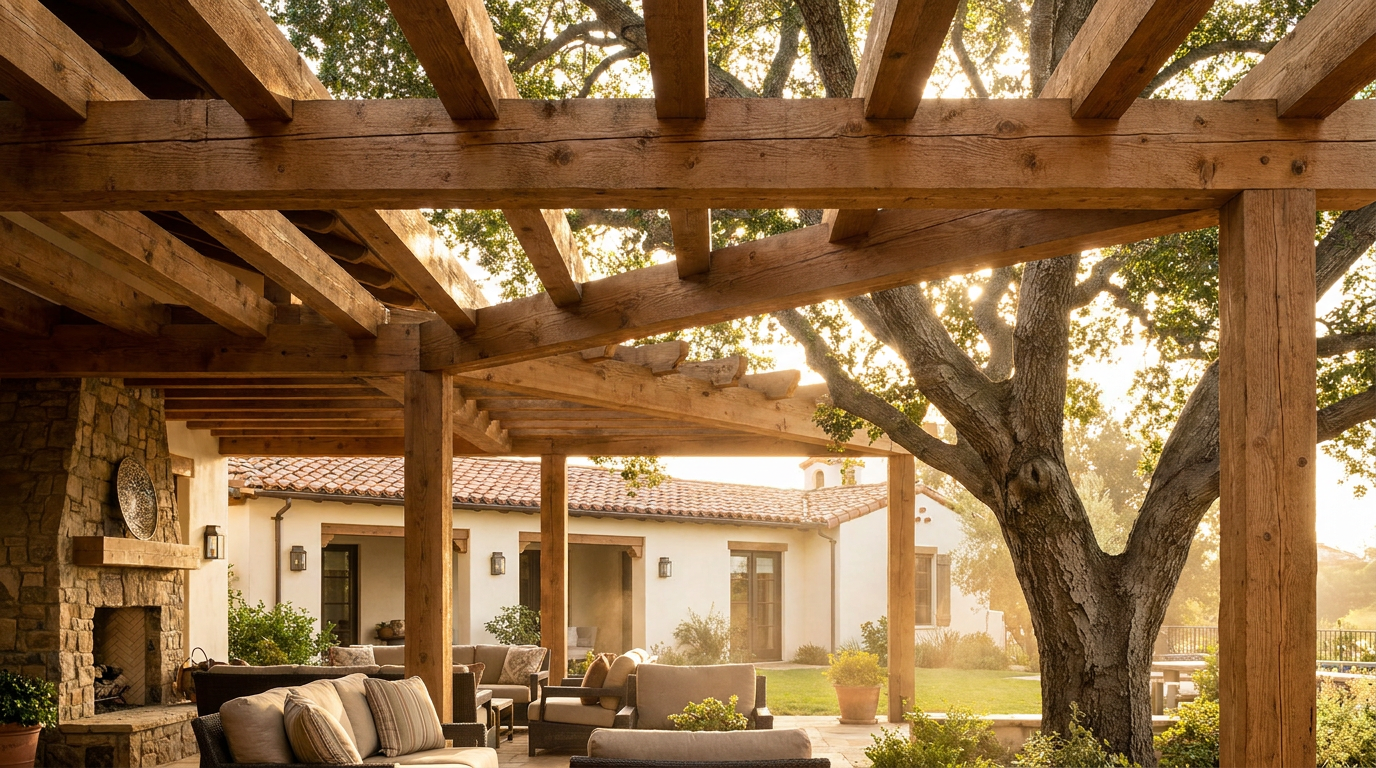
The Muirlands — estate lots with architectural diversity. Spanish Revival properties read rough-sawn cedar at post and beam, with a heavier profile and a warm-stained or natural finish. Contemporary properties read steel column with cedar or modified-wood rafter, clean connection hardware, minimal decorative detail. Country Club and The Barber Tract fall between these poles depending on the specific house.
La Jolla Farms — bluff-edge exposure, large footprints, estate programs. Material specification is at the top of the range. The pergola here is often a primary covered terrace structure, not a supplemental shade element. Full structural engineering, marine-grade specification at every fastener and connection, and the design discipline to hold the sightline to the ocean.
Permits and the CCC
Pergolas in La Jolla require building permits. Attached pergolas require structural review. On parcels inside the California Coastal Commission jurisdiction — most of the coastal bluff side of La Jolla — a Coastal Development Permit may be required for structures above a certain size or within the coastal setback. We pull the permits. We do not install structures without them, and we do not advise clients to proceed without them in a coastal zone.
LJCPA advisory review may add a step before Development Services approval on projects visible from the public right-of-way. We build that step into the schedule.
Licensed and insured general contractor, operating under Mike’s Class B license — CSLB #1139785.