Shade without sacrifice
A pergola in Del Mar faces a constraint that does not appear in the inland project briefs: it has to provide shade without blocking what the property is valued for. On a Del Mar Village lot where the morning light comes over the hedge, a shade structure placed wrong ruins the best part of the day. On a Del Mar Heights view lot where the ocean is visible to the west, a pergola set one foot too high or one foot too far blocks the sightline from the primary seating.
Shade and view are not always in conflict. When the pergola is designed correctly — oriented to the sun angle, proportioned to the lot, and placed with the view axis as the first constraint — it provides the shade the terrace needs in July without taking the thing you actually bought the property for.
Del Mar Design Review Board and shade structures
A pergola visible from the public right-of-way in Del Mar goes through Design Review Board review. Height, material, footprint, and the relationship of the structure to the house facade are all inside the board’s scope. Projects that present with clean drawings and a material palette that belongs to the neighborhood vernacular move through the process. Projects that arrive with catalog-selected materials or a form that reads out of context with the house require additional review cycles.
For parcels in the Coastal Zone — west of I-5, and throughout the Beach Colony — California Coastal Commission review may apply to structures above the coastal setback. We scope the permit path from the first site visit and build the review windows into the project calendar.
Scale and the village lot
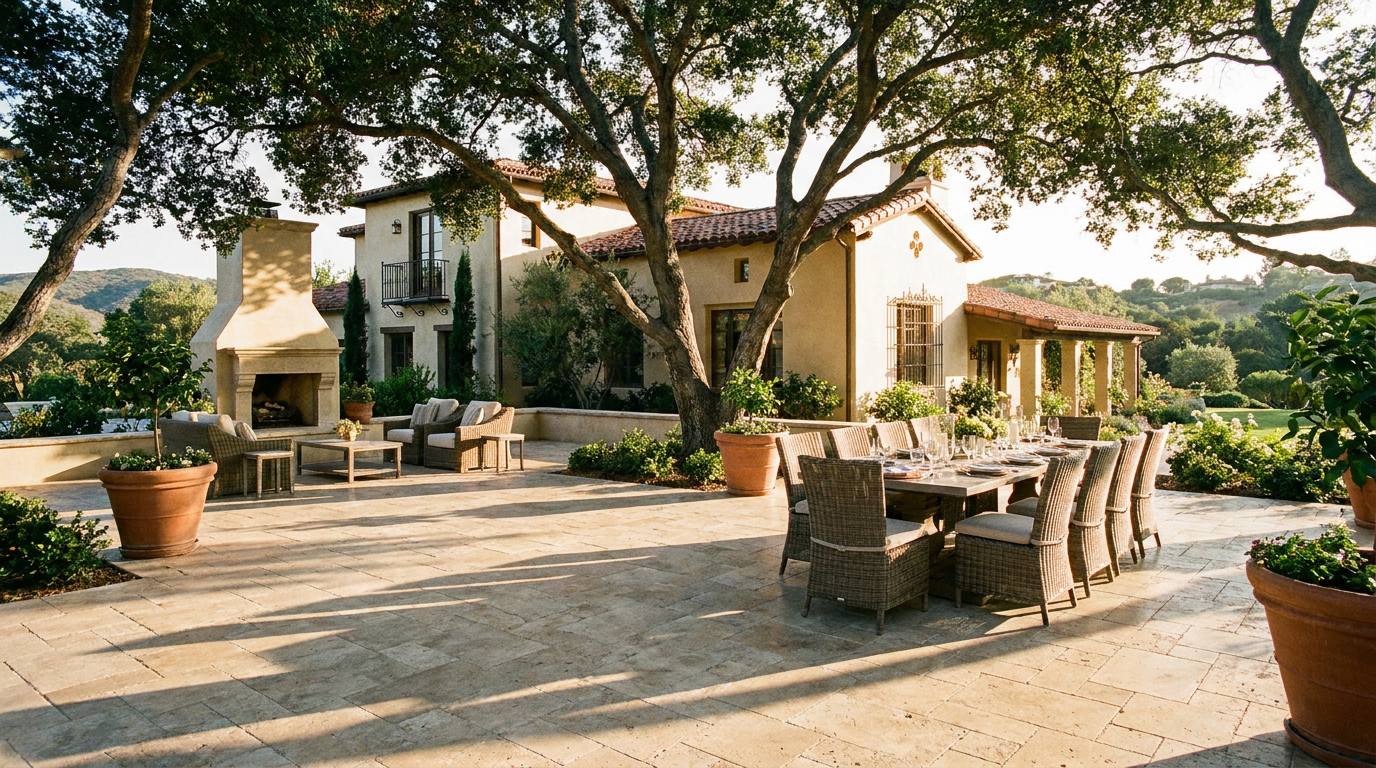
Del Mar Village lots average 5,000 to 8,000 square feet, and the house typically occupies a large portion of that footprint. The pergola needs to be scaled to what remains: a covered terrace of 12 by 16 feet reads correctly on a Bird Rock-sized Village lot. A 20 by 24 foot structure reads overbuilt, fights the house, and will likely require DRB comment before approval.
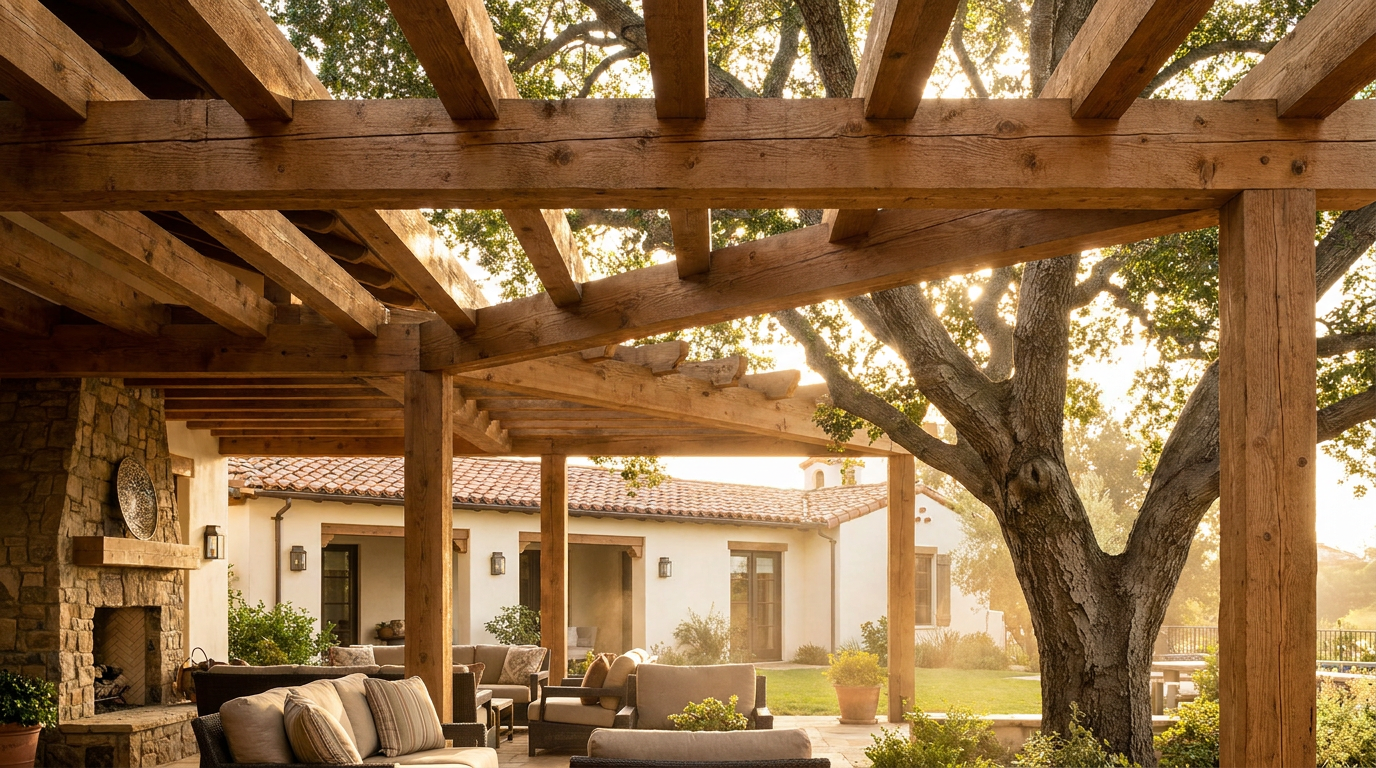
The columns matter. A heavy timber post at 6 by 6 or 8 by 8 reads correctly on a cottage or Mediterranean house where the material weight belongs. A thinner steel column reads correctly on a contemporary. The column profile sets the visual register of the entire structure — get that right and the rafters, the finish, and the scale follow naturally.
Materials for a coastal village
Cedar is the right material for most Del Mar pergola work — it belongs to the coastal cottage and Mediterranean vocabulary the village reads as correct, it holds up under salt air with proper finishing, and it ages with the kind of weathered grace that looks at home in a village that was built in the 1920s. Rough-sawn cedar at the post and beam, smooth-dressed at the rafter and purlin, with a medium-brown oil finish or a natural silver-grey left to age. That is the version that will still read correct in fifteen years.
Modified wood — thermally modified or acetylated cedar or pine — is the better specification for the Beach Colony and properties within a block of the sand, where the salt load and the moisture cycling is more intense. The visual character is similar; the durability gap is significant.
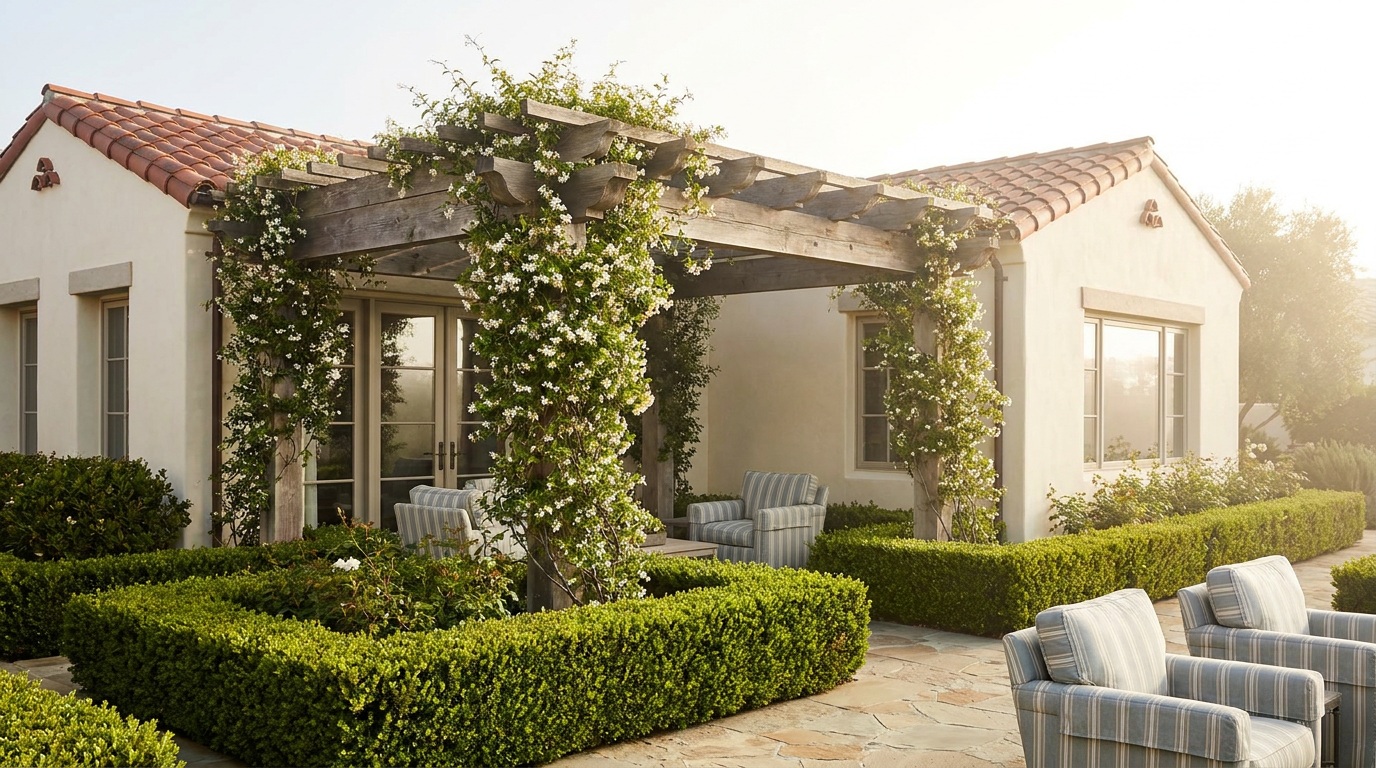
Alumawood systems are appropriate on informal or contemporary Del Mar properties where the maintenance-free characteristic matters more than the timber aesthetic. They read correctly on a 1960s beach house or a contemporary rebuild. They do not read correctly on a Spanish Colonial or a formal Mediterranean cottage.
Heights view lots
Del Mar Heights pergola work is often about terracing as much as shade. On a view lot with a 15-foot grade change, the pergola sits at the upper terrace and frames the ocean view to the west — the structure becomes the compositional anchor of the outdoor program rather than a secondary shade element. At the Heights the lot is large enough to allow a more generous structure, and the permit path through the City of Del Mar is typically less complex than the coastal-zone properties to the west.
Licensed and insured general contractor, operating under Mike’s Class B license — CSLB #1139785.