A new pool in San Diego is a significant project — not just in budget, but in coordination, approvals, and timeline. Most homeowners come to their first consultation with a 60-day mental model. The realistic timeline is considerably longer. Before you start talking to pool builders, here is what the process actually involves.
Licensing — Who Builds What
In California, pool shell construction — gunite, shotcrete, fiberglass — requires a C-53 Swimming Pool Contractor license, separate from a general contractor’s Class B license. This distinction matters when you are vetting who does what.
The pool shell itself (the structure that holds the water) must be contracted through a C-53 licensee. Everything around the pool — the deck, coping, waterline tile, spa structure, water features, drainage, lighting, and outdoor living elements — falls under general contractor scope.
This is a coordination issue on most major projects: the pool builder handles the shell, and a separate general contractor (or the pool builder, if licensed for both) handles the surrounding hardscape. Projects where these two scopes are not coordinated from the start typically produce design conflicts, scheduling collisions, and material inconsistencies. Plan for that coordination before you sign with anyone.
You can verify any California contractor’s license at CSLB.ca.gov.
Permits
A new pool in San Diego County requires permits. This is not optional and not a formality — it involves actual plan check and inspection.
Permit requirements vary by jurisdiction, but a standard residential pool permit covers:
- Structural review: Shell design, rebar schedule, and water volume calculations
- Electrical: Bonding, GFCI requirements, pump wiring, and lighting circuits
- Plumbing: Drain, return, and equipment pad connections
- Gas: If a gas heater is part of the installation
- Enclosure / barrier: California law (Health and Safety Code Section 115920–115929) requires a specific barrier around any residential pool. This affects fence design and gate specification
Timeframes by jurisdiction:
- City of San Diego (DSD): 4–8 weeks for plan check, longer for complex sites
- Unincorporated San Diego County (PDS): 4–8 weeks
- Coastal Zone projects: Additional California Coastal Commission review may apply; add 6–16 weeks
- HOA communities: Separate HOA approval process runs in parallel with the city permit — HOA boards typically meet monthly, so a missed submission date adds four weeks
Permit-phase surprises — correction cycles, missed HOA meetings, grading plan requirements — are the most common source of schedule slippage on pool projects. Budget for them in your timeline, not your best-case scenario.
HOA Approval
If your property is in an HOA, your pool project requires HOA approval before the city permit issues in most cases — or at minimum before construction begins. HOA architectural committees typically review:
- Pool shape, dimensions, and equipment placement
- Coping and deck material choices
- Fence and gate design for the required barrier
- Equipment noise screening (pump, heater, filter)
- Any water feature or elevated spa visible from common areas or neighboring lots
HOA review cycles run on their own calendar. A submission that misses the monthly meeting date waits for the next one. Build this into your timeline explicitly.
Utility Coordination
New pool construction involves more utility coordination than most homeowners anticipate:
- Electrical service: Most pools require a dedicated 240V circuit for the pump and a separate circuit for lighting. If your panel is already near capacity, a panel upgrade may be required before the pool permit will issue.
- Gas: A gas heater adds a gas line extension from the meter to the equipment pad location.
- Water supply: Filling a pool initially (and refilling for seasonal top-off) involves significant water volume. In drought-restriction periods, San Diego County Water Authority may have restrictions on initial pool fills.
- Sewer: Pool draining and backwash may require approval from the local sanitation authority, depending on the volume and discharge point.
The Surrounding Work — Deck, Coping, and Tile
The pool shell is only part of the finished picture. The materials around the pool — the deck, the coping cap, the waterline tile — represent a significant portion of the finished project’s cost and most of its visual quality.
These decisions deserve as much attention as the pool shell itself:
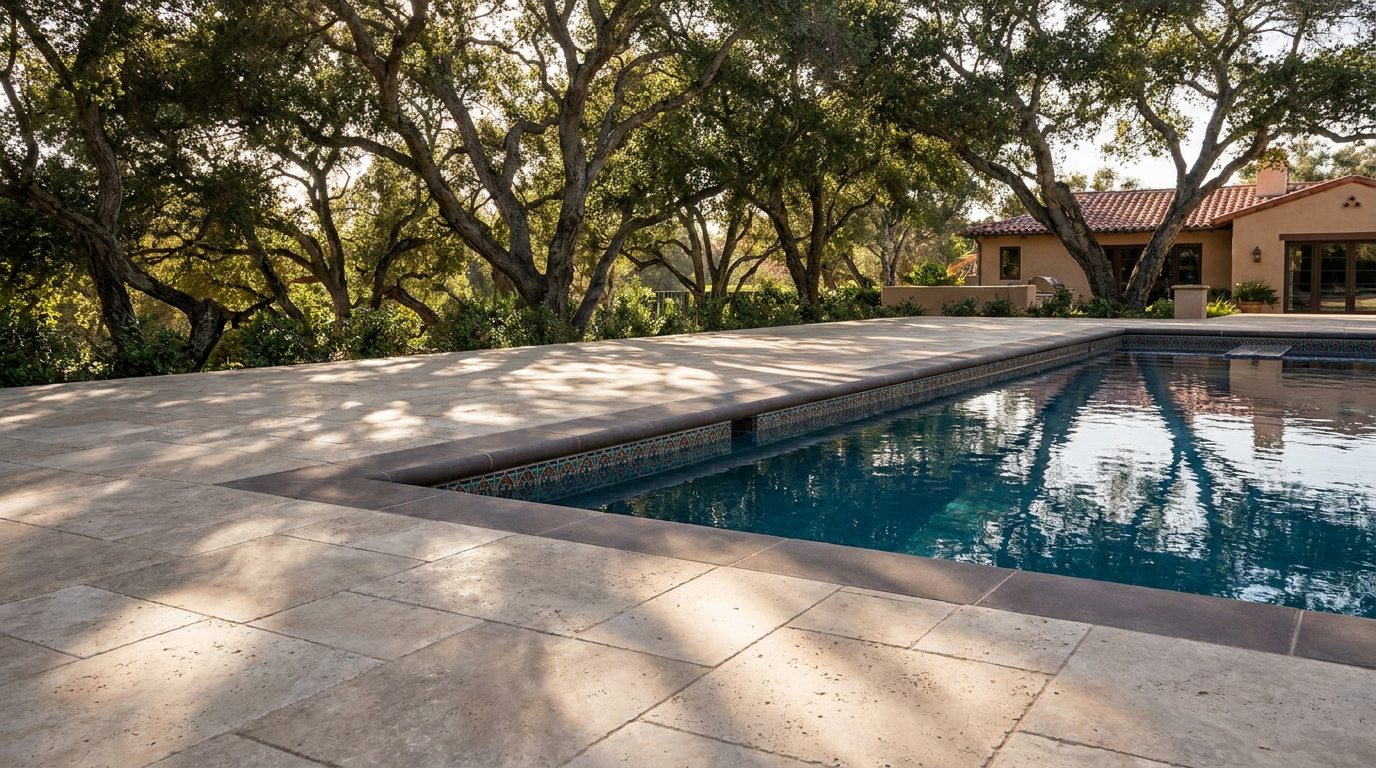
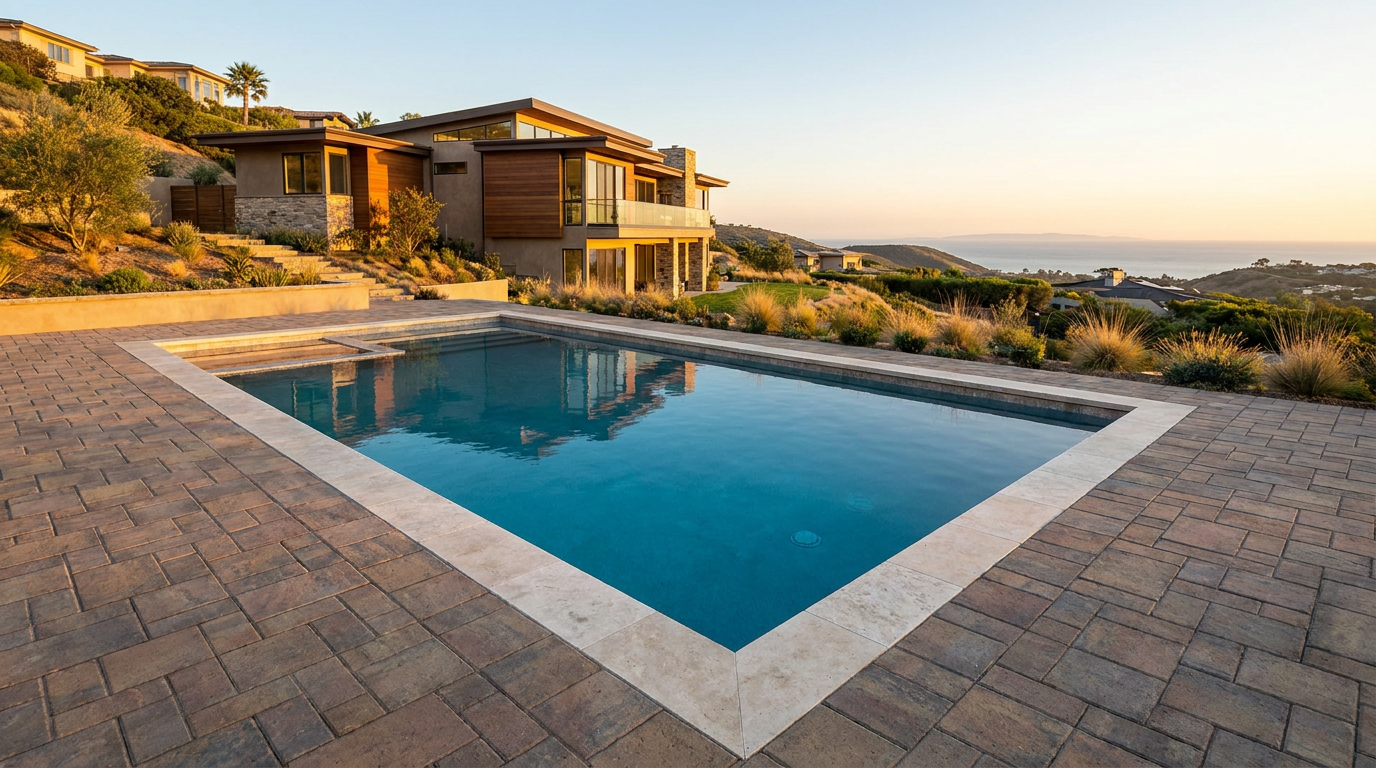
Coping is the cap material at the pool’s edge. Natural travertine, natural stone, concrete cantilever, and bullnose tile each have different performance, maintenance, and cost profiles in San Diego’s climate. The coping choice affects the deck material that terminates against it.
Pool deck is the hardscape surface surrounding the pool — the material your guests walk on barefoot. Surface temperature in San Diego’s summer sun is a real consideration. Material options include natural travertine, concrete pavers, Kool Deck, and large-format porcelain, each with distinct performance tradeoffs.
Waterline tile is the tile band at the water’s edge inside the pool. Glass tile, porcelain mosaic, and natural stone each age differently in pool chemistry.
If you are hiring a pool builder for the shell and a separate contractor for the surrounds, those two scopes need to be coordinated from day one — not handed off sequentially. The detail where the coping meets the pool beam, and where the deck meets the coping, must be designed together.
Realistic Timeline
| Phase | Realistic Duration |
|---|---|
| First conversation to signed contracts | 3–6 weeks |
| HOA approval (if applicable) | 4–8 weeks (runs in parallel) |
| Permitting | 4–10 weeks |
| Pool shell construction | 6–10 weeks |
| Surrounding hardscape, tile, water features | 4–8 weeks |
| Equipment installation, startup, and curing | 2–3 weeks |
| Total: first conversation to first swim | 5–9 months |
These are honest ranges, not best-case scenarios. Projects with Coastal Zone permits, complex grading, or HOA correction cycles run longer.
What We Do on Pool Projects
SDLR holds a Class B General Contractor license (CSLB #1139785). We design and build everything around the pool — deck, coping, waterline tile, spa structure, water features, drainage, and the broader outdoor living space. On projects where a pool shell is being built or rebuilt, we work in coordination with a C-53 licensed pool contractor and handle the surround scope under our license.
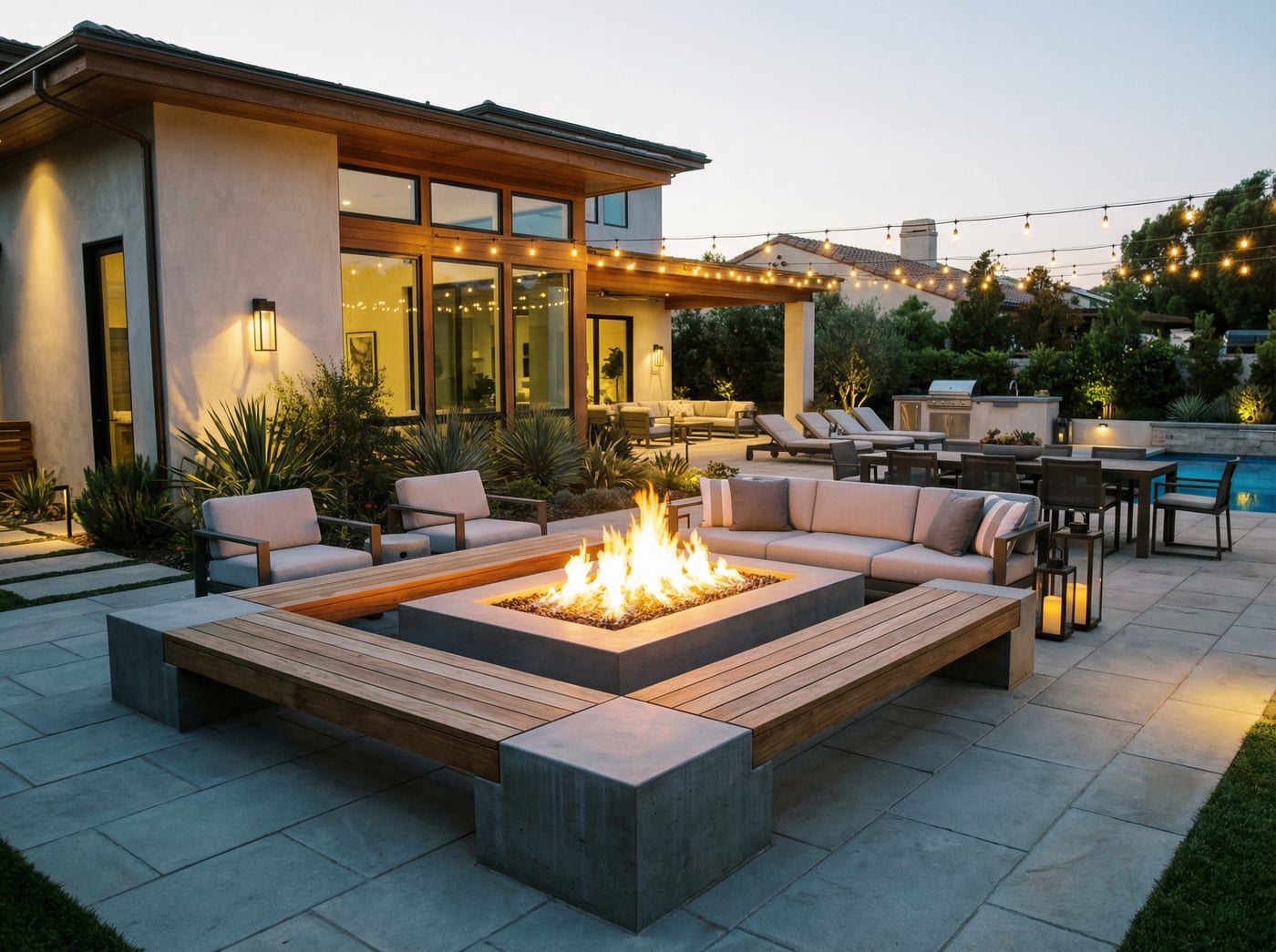
We also plan the full backyard as a single design — pool, hardscape, outdoor kitchen, fire feature, pergola, lighting — so the finished result looks like one coherent space, not a series of separate contracts.
If you are planning a new pool and want to talk through the surrounding design — thirty minutes, no cost, no pitch — that is how we start.
Related: Pool Decks & Poolside Hardscape · Full Backyard Remodels · Fire Pits & Fireplaces · Projects in Rancho Santa Fe · Projects in Encinitas · CSLB license verification · San Diego County permit portal