What the Covenant looks like after sunset
A Rancho Santa Fe property at night is its own thing. The road goes quiet, the bridle path is dark, and the houses set back behind the oaks go invisible except for what the lighting reveals. The ones that read as estates — that read as complete and deliberate and worth what they cost — are the ones where the lighting was designed rather than installed. The ones that look residential with good landscaping are the ones where the lighting was added after the fact.
The difference is consistent. A designed lighting plan treats the landscape as a composition and lights it the way a museum lights a painting: with intent, at the specific elements, in a hierarchy that guides the eye from arrival to the terrace to the garden to the view. An installed lighting plan treats the yard as a set of areas to illuminate and installs fixtures until it is bright enough.
On a two-acre Covenant property, designed is not a preference. It is the only approach that works at that scale.
What the CDRC reviews in a lighting plan
The Covenant Design Review Committee includes exterior lighting in its scope of review — fixture type, lumen output, shielding, and sometimes specific color temperature. The Covenant has a commitment to dark-sky preservation that is not universal among San Diego jurisdictions. Fixtures need to be fully shielded, downward-aimed, and within the color temperature range the CDRC accepts. We prepare the lighting plan to those specifications from the first drawing, not after the first CDRC comment.
The oak uplighting decision
Coast live oaks are the visual centerpiece of most Covenant properties. The question of whether to uplight them, and how, is the most architecturally significant lighting decision on the property.
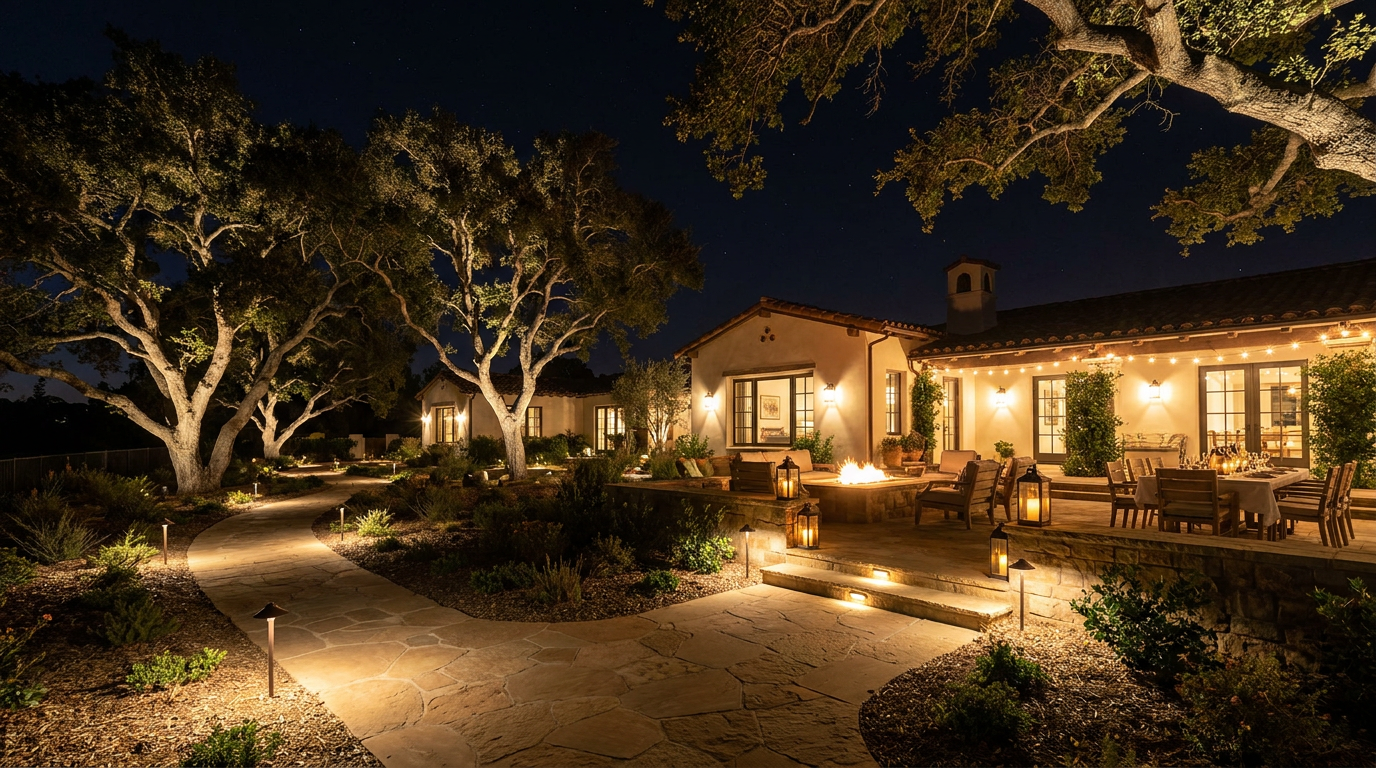
When done correctly, oak uplighting from ground fixtures places the canopy in relief against the dark sky — the spread of the branches, the texture of the bark, the visual weight of a mature oak made visible in a way it cannot be by day. A correctly uplighted mature oak becomes the anchor of the entire nighttime composition.
When done incorrectly — too bright, wrong color temperature, too many fixtures, aimed at the canopy center rather than the trunk and branch structure — the result is a floodlit tree that reads as a parking lot feature, not as a designed landscape element. One or two well-placed 3000K uplight fixtures at the trunk base is usually better than six.
Motor court and arrival sequence
The arrival sequence — from the road through the gates, along the driveway, to the motor court and the front entry — is the first impression the property makes at night and the last impression it makes at departure. That sequence should be lit as a continuous composition.
Path lights along the driveway edge frame the approach without competing with the oak canopy above. Motor court lighting illuminates the parking surface without spilling onto the house facade. Entry uplighting on the house corners and the architectural features of the front facade gives the arrival its focal point. The sequence should build — arrive, approach, enter — without any single element overwhelming the others.
The terrace and entertaining zones
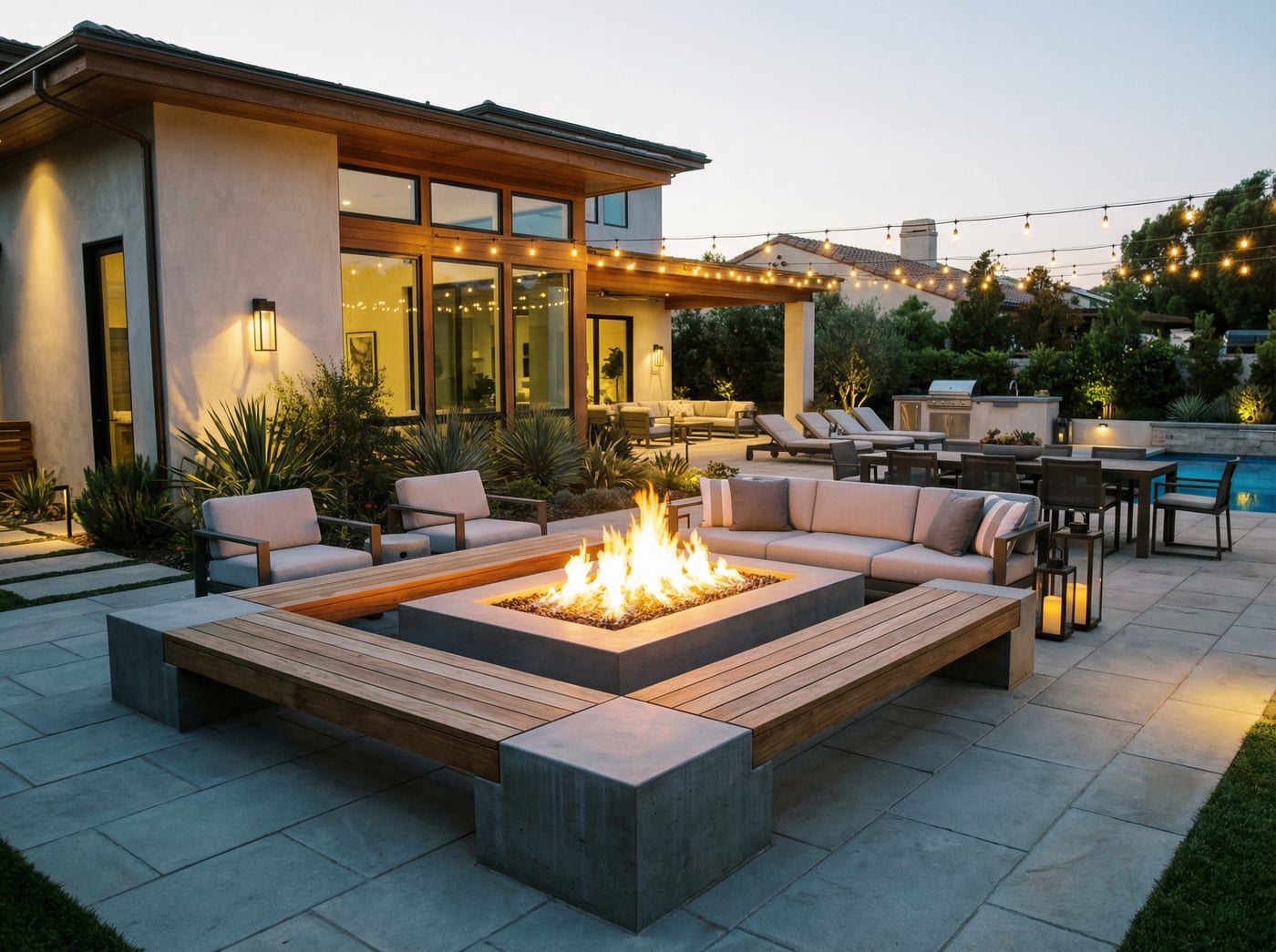
The primary entertaining terrace is where the lighting program needs the most layering. Overhead: recessed downlights or pendant lighting under a pergola or covered terrace. Path level: low-profile step lights at grade changes. Accent: uplighting at specimen plants or architectural features that anchor the terrace design. Ambient: the fireplace or fire pit contributes its own warm light, which the electrical plan needs to account for rather than compete with.
The goal is a terrace that can be used for dinner without supplemental lighting from the house interior. The goal is not a terrace that is brightly lit in a way that kills the stars above the oak canopy — which is one of the most significant views from a Covenant property at night.
Low-voltage design and the transformer
A two-acre property requires a thoughtfully sized low-voltage transformer (or multiple transformers, zone-distributed) and wire runs planned from the design stage, not the installation stage. The wire run that was not planned for in the design stage means trenching across the finished patio two years later. We run the transformer sizing and wire layout alongside the landscape and hardscape drawings, not after them.
Licensed and insured general contractor, operating under Mike’s Class B license — CSLB #1139785.