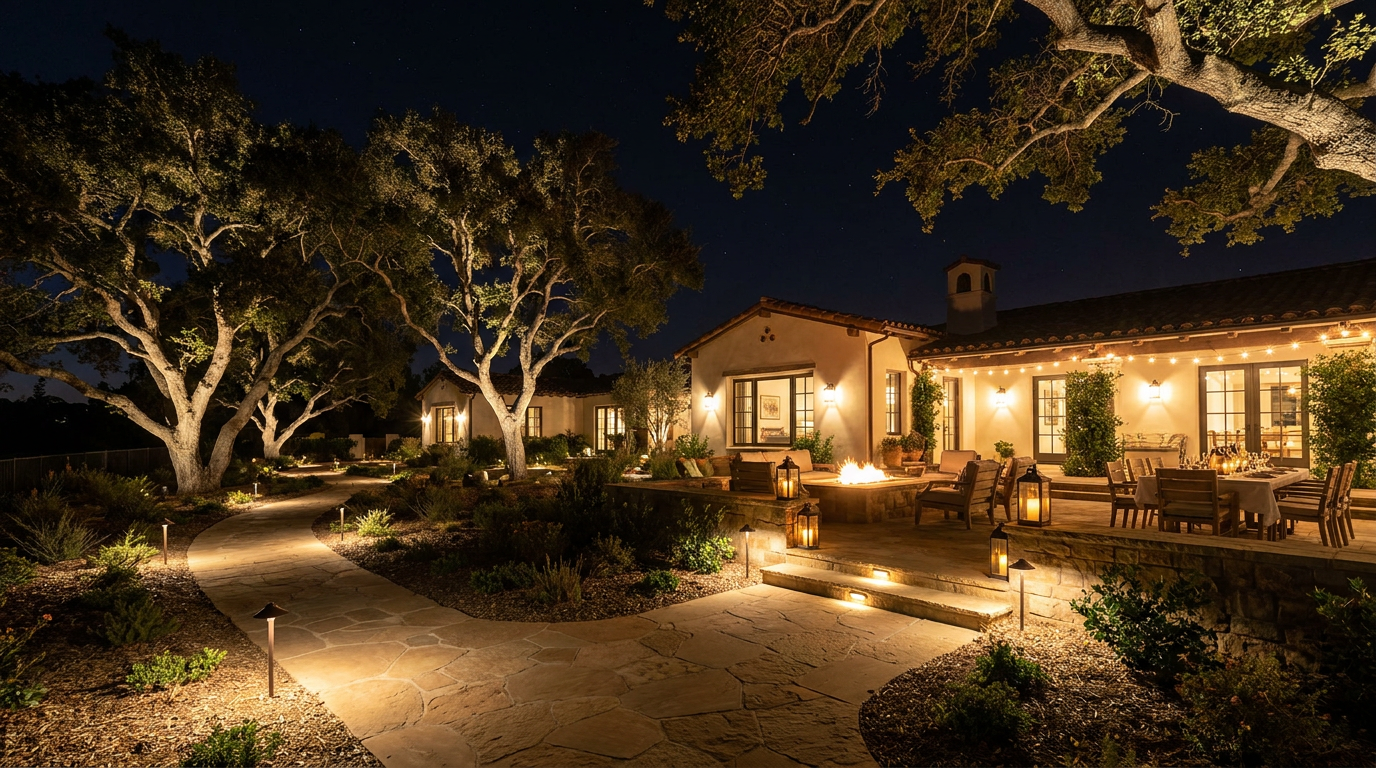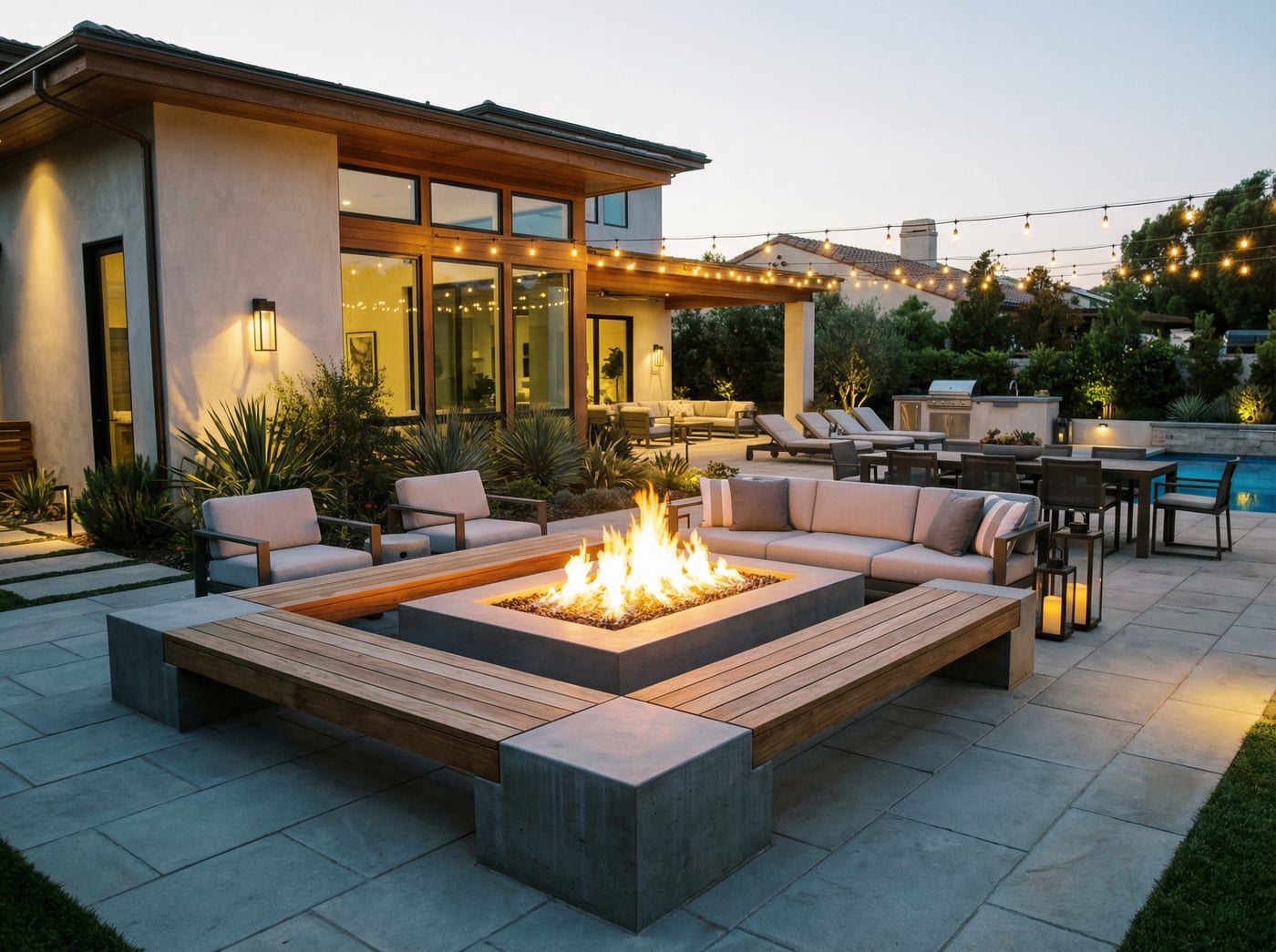
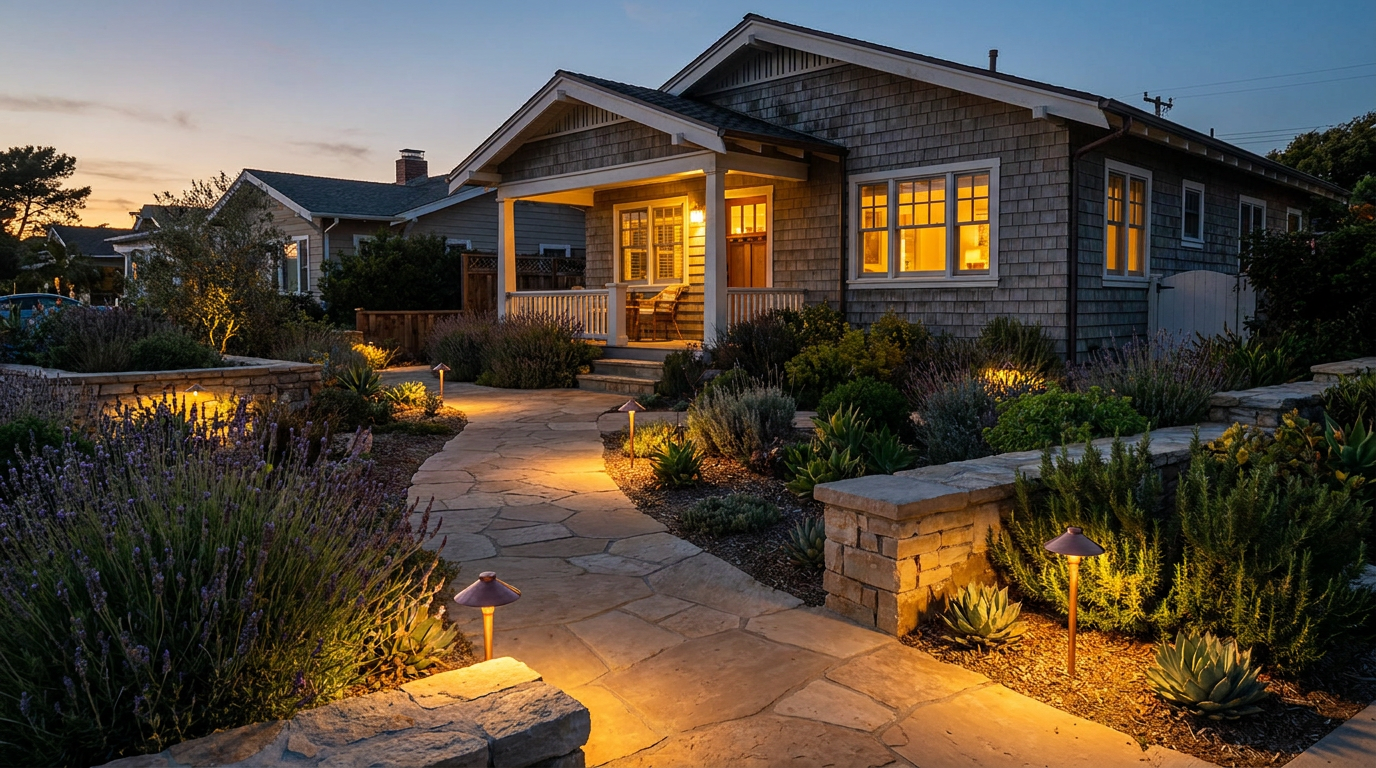
A Del Mar evening and what the lighting does
In Del Mar, July evenings go like this: the marine layer has burned off by noon, the light is warm by 4 PM, and by 7 the temperature has dropped enough to make a sweater reasonable and the fire comfortable. The group moves from the dining table to the fire pit as the light fades. The garden path lights are already on — set to a timer or a dusk-sensor — and the terrace is at the right level to continue the conversation without going inside.
That is what landscape lighting does in Del Mar. It extends the evening. It makes the outdoor room functional after the sun is down. It frames the garden that took two seasons to establish and the hedge that finally looks correct. It does not try to be impressive.
Del Mar lighting that tries to be impressive fails. The village is too small and too specific to accept it. What reads correct here is quiet, intentional, and barely visible by day. It operates by night without calling attention to itself.
Marine-grade fixtures for a village that lives near the water
Del Mar is a coastal village. Every address in the Village and the Beach Colony sits within meaningful salt-air exposure distance. Standard landscape fixtures — the brass-painted zinc bodies that represent most of the entry-level landscape lighting market — corrode in Del Mar conditions within three to four years. The finish goes first, then the body begins to pit, then the fixture cap seal fails and water enters the fixture housing, and within five years what was installed is an eyesore that needs to be replaced.
Real brass, real bronze, and marine-grade rated aluminum with coastal powder coat are the specifications for Del Mar. They cost more upfront. They do not need to be replaced in four years. On a Del Mar property at any price point, the installed-and-forgotten specification is the correct one.
Village scale and what it allows
Del Mar Village lots give the lighting designer a specific canvas: compact, defined, with tight clearances to fences and property lines. The lighting program has to work within those constraints.
What fits: low-profile path lights at the perimeter walk, one to two accent fixtures at specimen plants (the olive tree, the mature Podocarpus, the bougainvillea on the wall), a downlight or two under the pergola for the dining table, and a dusk-to-dawn timer on a simple two-zone transformer. That is the program for most Village lots and it is enough.
What does not fit: an inventory of twenty-plus fixtures on a 6,000-square-foot lot. The over-lit Village yard reads as anxious rather than confident. Del Mar is not a neighborhood where more light signals more value.
Beach Colony specification
The Beach Colony sits closer to the ocean than any other Del Mar address, and the salt load reflects it. Every fixture here is brass or bronze. Every wire connection is a gel-filled marine-grade splice. The transformer is mounted in a protected location — under an eave, inside a cabinet, not surface-mounted on a fence post at direct ocean exposure.
The Beach Colony is also the address where the evening terrace experience is most specifically coastal: the sound of the surf, the smell of the water, the last orange line at the horizon. The lighting program should support that experience rather than compete with it. A Beach Colony terrace at night should feel like the best version of a summer evening in this specific place.
Heights view lots
Del Mar Heights properties have a different lighting brief than the Village: the view to the west is the primary nighttime asset, and the lighting plan has to be designed so that it illuminates the terrace and the garden without washing out the dark sky that makes the view valuable. Downward-aimed fixtures. Shielded accent lights. Path lights at the low end of the appropriate lumen range. The view is doing most of the work; the lighting plan supports it.
For Del Mar remodel cost context, see our Del Mar remodel cost guide.
Licensed and insured general contractor, operating under Mike’s Class B license — CSLB #1139785.