From appliance to theater
A built-in grill island cooks dinner. The chef-grade pavilion performs it. The distinction that separates estate outdoor kitchens is not a more expensive grill — it is fire in multiple forms, under a real roof, arranged so cooking and company share the same room.
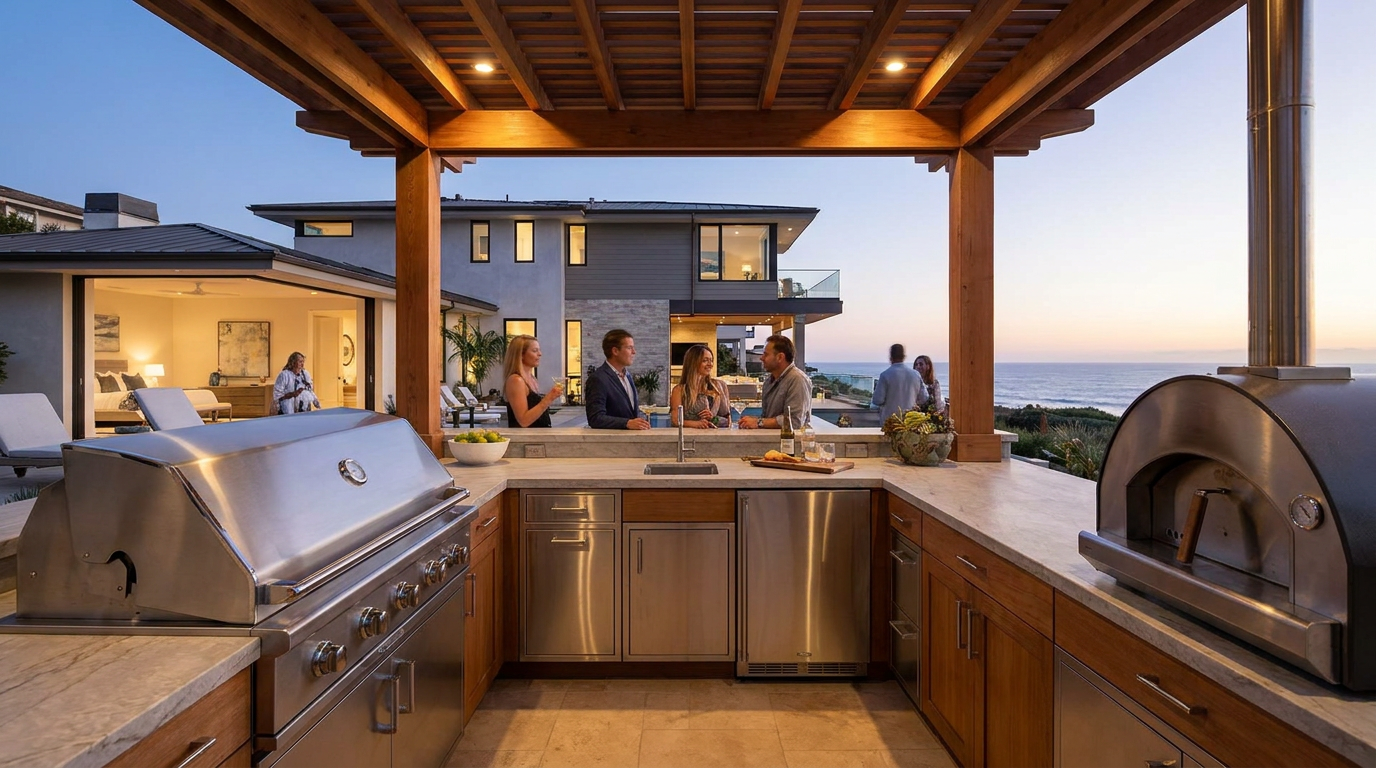
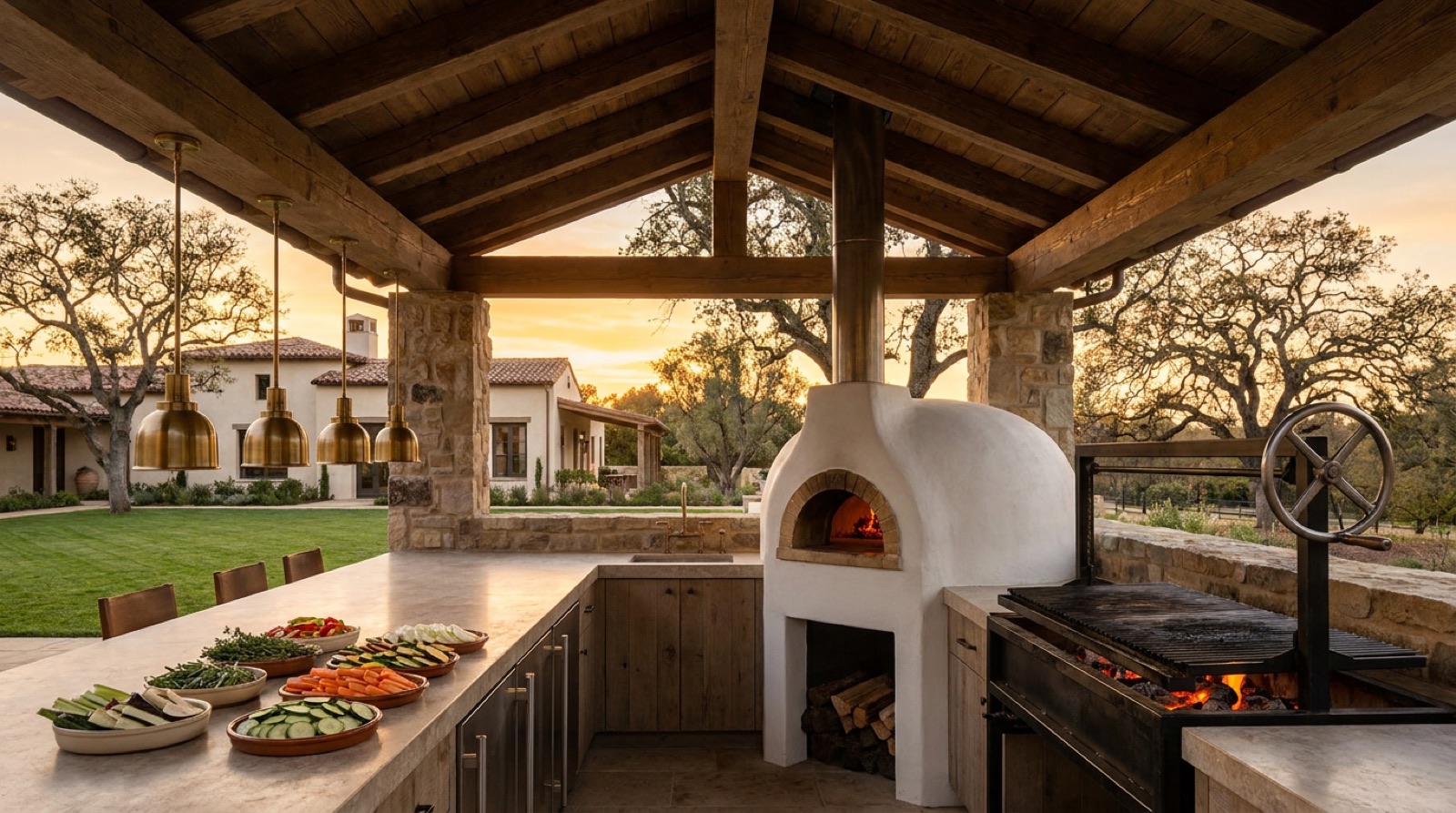
The programs we see at this tier read like a small restaurant’s line: a wood-fired oven, a live-fire grill, a gas workhorse, refrigeration, ice, a true prep zone with water, and seating that faces the cook. Cooking at this level is the entertainment; the pavilion is its stage.
The three fires
The wood-fired oven. A plastered dome or modern cube reaching 800 degrees — pizza in ninety seconds, but the owners who use theirs most talk about everything else: roasted vegetables, whole fish, bread on Sunday. The oven is masonry construction with real weight; it needs an engineered footing and a considered position, because it will never move again.
The gaucho grill. The Argentinian crank-wheel grill — a raised firebox burning hardwood down to embers, a grate that rises and falls over them — is the current signature of serious outdoor cooking. It is slow, social, and theatrical in exactly the way estate entertaining wants. Santa Maria-style variants carry the same live-fire tradition with local history.
The gas line. A premium built-in — the tier we spec runs from Summerset through Lynx depending on the program — remains the Tuesday-night workhorse. The estate kitchen is not gas or wood; it is both, each doing what it does best.
The pavilion is what makes it a room
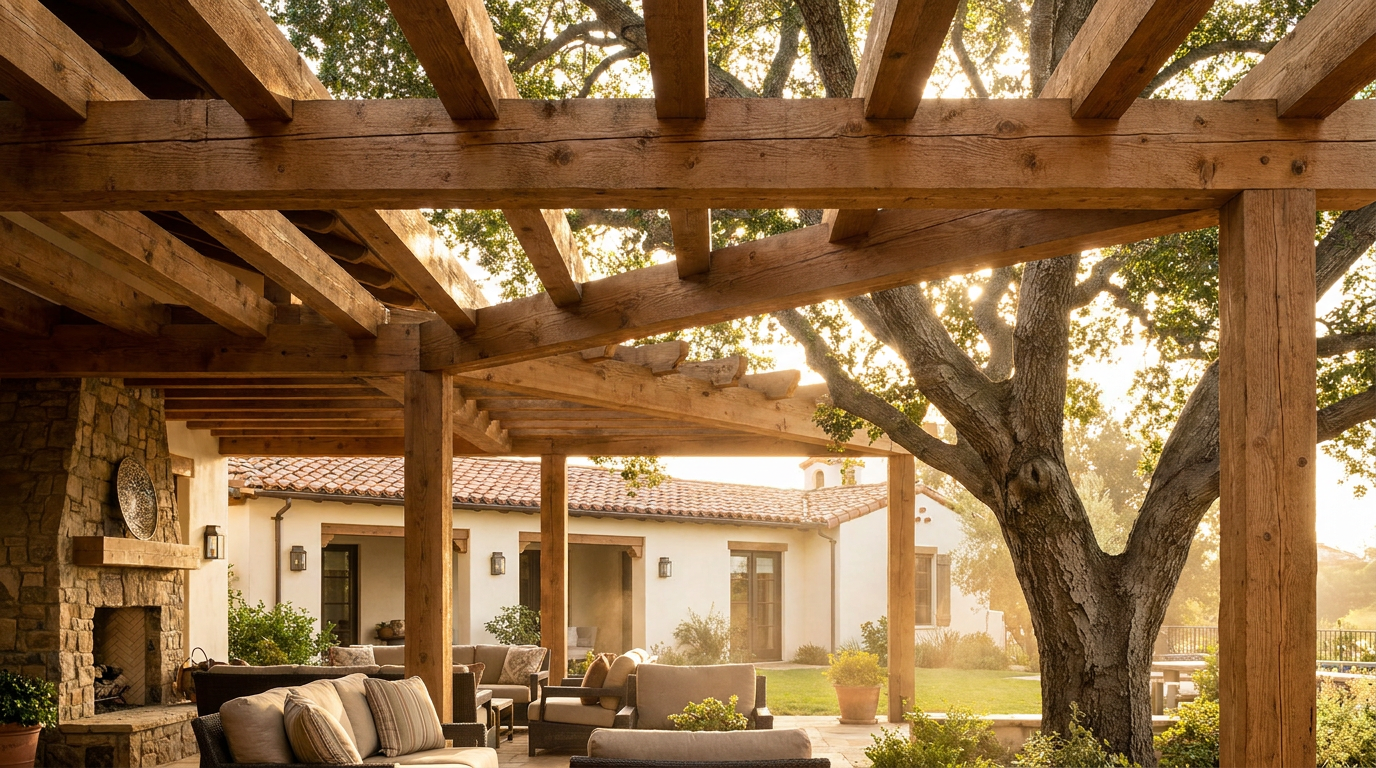
Fire in three forms demands shelter built like architecture: a solid or louvered roof with real ventilation planning, lighting zoned from task to dinner, heat for winter evenings, and a ceiling that hides the infrastructure. A louvered structure opens the roof over the live fire and closes it over the dining end — one reason the pavilion brief and the shade structure brief are drawn together.
Around the fires: stone counters with a working landing zone at every station, an under-counter refrigerator and ice maker, a sink with hot service, and the detail that quietly defines chef-grade — distance discipline, with cook, prep, and service zones laid out like a working line rather than a row of appliances. Our outdoor kitchen practice covers the masonry, gas, ventilation, and counter engineering underneath all of it.
Where these get built
Pavilion kitchens want land and they want a view of the table from the cook’s position. The estates of Rancho Santa Fe and Poway give the footprint; coastal properties compress the same program into tighter, more vertical compositions. Either way, the meal ends the same: everyone standing around the dying embers of the gaucho grill, unwilling to go inside.
Licensed and insured general contractor, operating under Mike’s Class B license — CSLB #1139785.