La Mesa is not one backyard market. It is at least three, stacked inside the same zip code, and the cost of a remodel is different at each end of the range. A 0.18-acre village lot with clay soil and a 1955 ranch house has a different budget conversation than a hillside custom on the Mount Helix saddle with a grade change, a retaining wall, and a view corridor to manage. Both are real La Mesa projects. Neither uses the same number as the other.
This guide gives honest ranges for what serious outdoor remodel work costs in La Mesa — by scope, by lot profile, and by the decisions that actually drive the number.
The ranges, stated plainly
Entry-level hardscape — a quality paver patio, a new concrete retaining wall, or a turf replacement with proper base work — typically runs $25,000 to $55,000 for a single-scope project on a flat village lot.
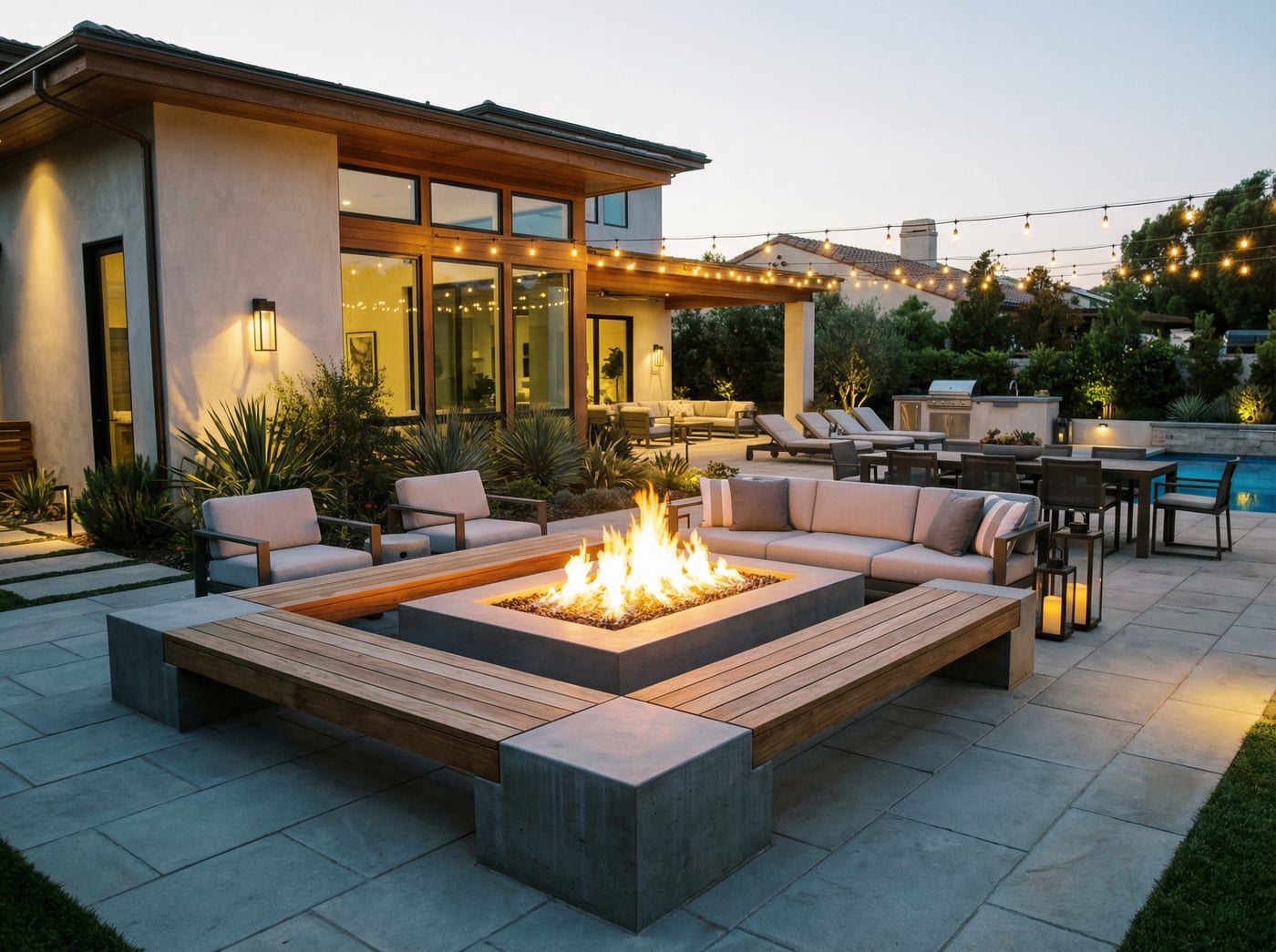
Mid-range full backyard remodel — a coordinated plan covering patio, shade structure, fire feature, and planting — typically runs $80,000 to $160,000.
Hillside or high-finish projects — grading, retention, pool deck or kitchen, architectural lighting, premium materials throughout — typically run $150,000 to $300,000 and can go higher on complex lots.
These ranges hold for most residential projects we see in La Mesa. Where a specific project lands inside them depends on the variables below.
What actually drives cost in La Mesa
Lot type: village flat vs. hillside
The split in La Mesa is real and it shows up in every budget. Village-flat lots — east of 70th, the grid south of the 8, the craftsman corridor near the trolley — are workable ground. Clay soil needs proper base preparation, but the grade is manageable and the structural conversation is limited.
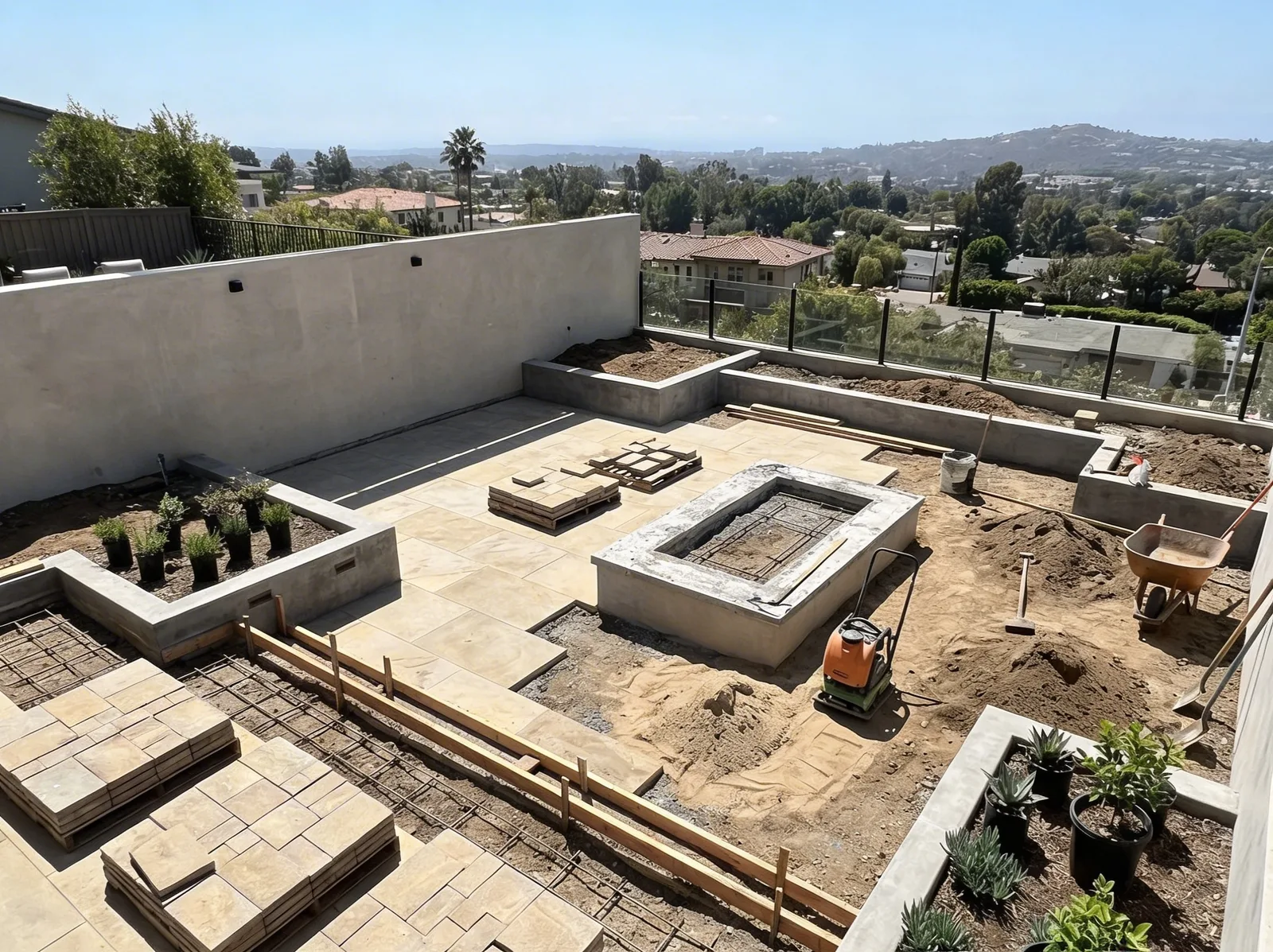
Move toward Mount Helix and the calculus changes. Hillside lots carry grade changes that require retention, decomposed-granite-over-bedrock conditions that change the excavation plan, and drainage challenges that have to be solved before the first paver is laid. A retaining wall that is incidental on a flat lot becomes the central structural conversation on a hillside parcel. That engineering earns its cost — it is the difference between a terrace that holds for twenty years and one that starts moving in the second winter.
Scope
A single-scope project — one patio, one wall, one turf zone — costs less than a coordinated outdoor room. The difference is not just additive. Coordinating five trades into one plan, managing material sequencing, running utility rough-ins before hardscape, and finishing every junction correctly takes more time and more skill than doing each thing in isolation. Full remodels are priced as systems, not as line items added up.
Materials
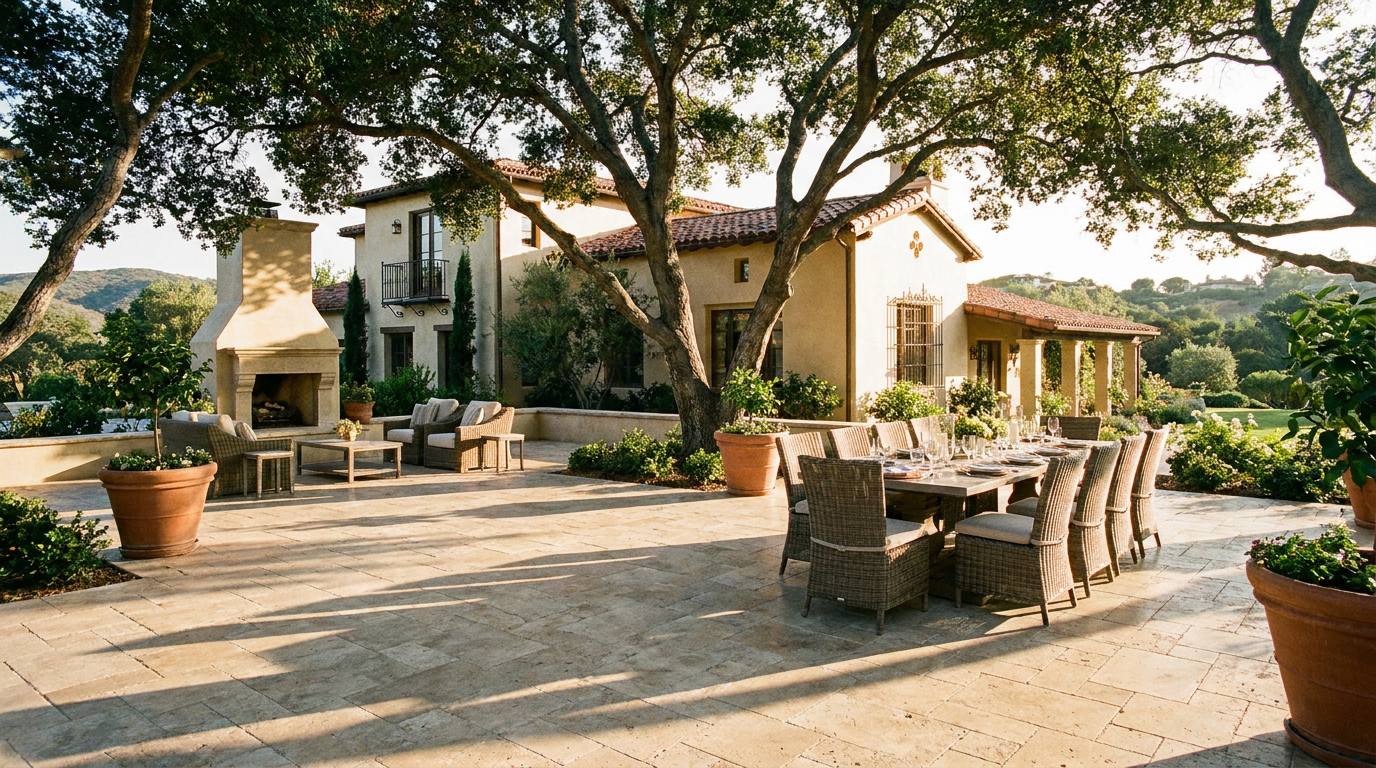
La Mesa’s design register spans the full material spectrum. A mid-century ranch typically wants concrete pavers or a poured-and-formed slab — honest materials that read right with the architecture. A hillside contemporary custom may want large-format porcelain or natural stone, board-formed concrete walls, and COR-TEN steel edging. The cost difference between those two palettes is significant.
Standard concrete pavers run $18–$28 per square foot installed on a properly prepared base. Natural stone — travertine, flagstone, large-format limestone — runs $35–$65 per square foot or more depending on the cut and pattern. Neither is wrong. The right material is the one that belongs to the house and holds up to the soil it’s sitting on.
Permitting
Any structure — a pergola over a threshold size, an outdoor kitchen with gas, a retaining wall over four feet, any electrical — requires permits. In La Mesa this means either the City of La Mesa Community Development Department for incorporated addresses or San Diego County PDS for the unincorporated Mount Helix parcels that carry a La Mesa mailing address but live under county jurisdiction. The review process, fees, and timelines differ between the two.
Permit costs are real project costs. A firm that skips permits or waves them away is moving risk onto you — future sale complications, insurance exposure, and the possibility of a stop-work order mid-build are all yours to carry.
What you get at different budget levels
$30,000–$55,000
A well-executed single-scope project: a new paver patio with a proper aggregate base and detailed edge, a simple retaining wall, or an artificial turf replacement done correctly. On a flat village lot this is a meaningful upgrade. Done by the right crew, it reads as the permanent solution it is. Done fast by the wrong one, it cracks on a schedule.
$80,000–$130,000
A coordinated plan that addresses the primary use areas: patio, shade structure, fire feature or fire pit, and planting that belongs to the yard. This is where a backyard starts to function as an outdoor room rather than leftover space behind the house.
$130,000–$220,000
A full backyard remodel: everything above plus an outdoor kitchen or built-in grill station, upgraded finish materials, landscape lighting designed into the build, and possibly a pool deck or seating wall system. Projects in this range typically involve permitting, two or three structural elements, and a build timeline of six to ten weeks on site.
$220,000–$300,000+
Hillside La Mesa projects with grading, significant retention, pool or spa deck coordination, and high-finish materials throughout. The driving costs here are engineering, earthwork, and the structural complexity of building on a slope — not luxury finishes for their own sake. A well-designed hillside terrace is earned, not decorated.
Why two bids can be far apart
It happens constantly. A La Mesa homeowner gets two bids for the same rough scope — one at $70,000, one at $110,000 — and assumes someone is wrong. Usually neither is. The gap is almost always:
- Different scopes: one bid assumed a thinner material, a smaller footprint, or left out a permit or drainage item the other included
- Different base work: one crew is pouring on native soil; the other is properly compacting a six-inch aggregate base first
- Different crews: generalist landscaping labor versus a senior crew with specialty construction background
- Permits: one proposal includes them; the other plans to skip or minimize them and pass the risk downstream
The question when comparing bids is not which number is lower. The question is whether the scope is actually the same scope.
How to think about your specific La Mesa lot
The first step is knowing which jurisdiction you’re in. A La Mesa mailing address on the Mount Helix side may put you in unincorporated county territory rather than city limits — and the permit path, timeline, and review process are different depending on the answer. We confirm this on the first site visit before any design work begins.
The second step is a soil conversation. Clay-loam village lots and decomposed-granite-over-bedrock hillside lots require different base preparations, different drainage strategies, and different structural details under every paver and post. Getting the sub-surface right is the part of this work that never photographs — and the part that determines whether the visible work holds.
A thirty-minute first conversation, on the property, tells us enough to give you a real number for your specific lot and scope. That conversation is free and comes with no sales pressure. We will tell you honestly what we see — including if the scope you have in mind is larger or smaller than what the lot warrants.
Learn more: Full Backyard Remodels · Patios & Hardscape · Retaining Walls · Outdoor Remodeling in La Mesa · Outdoor Remodeling in Mount Helix