The difference between a movie night and a cinema
Anyone can hang a screen on a fence. The estate version is something else entirely: a dedicated garden room where the projection wall is architecture, the equipment is invisible, the seating is built for a three-hour film, and the lighting dims in scenes instead of switching off. San Diego’s climate makes the outdoor cinema usable perhaps 300 nights a year — which, per night of use, makes it one of the most rational luxuries a backyard can hold.
The projection wall is the architecture
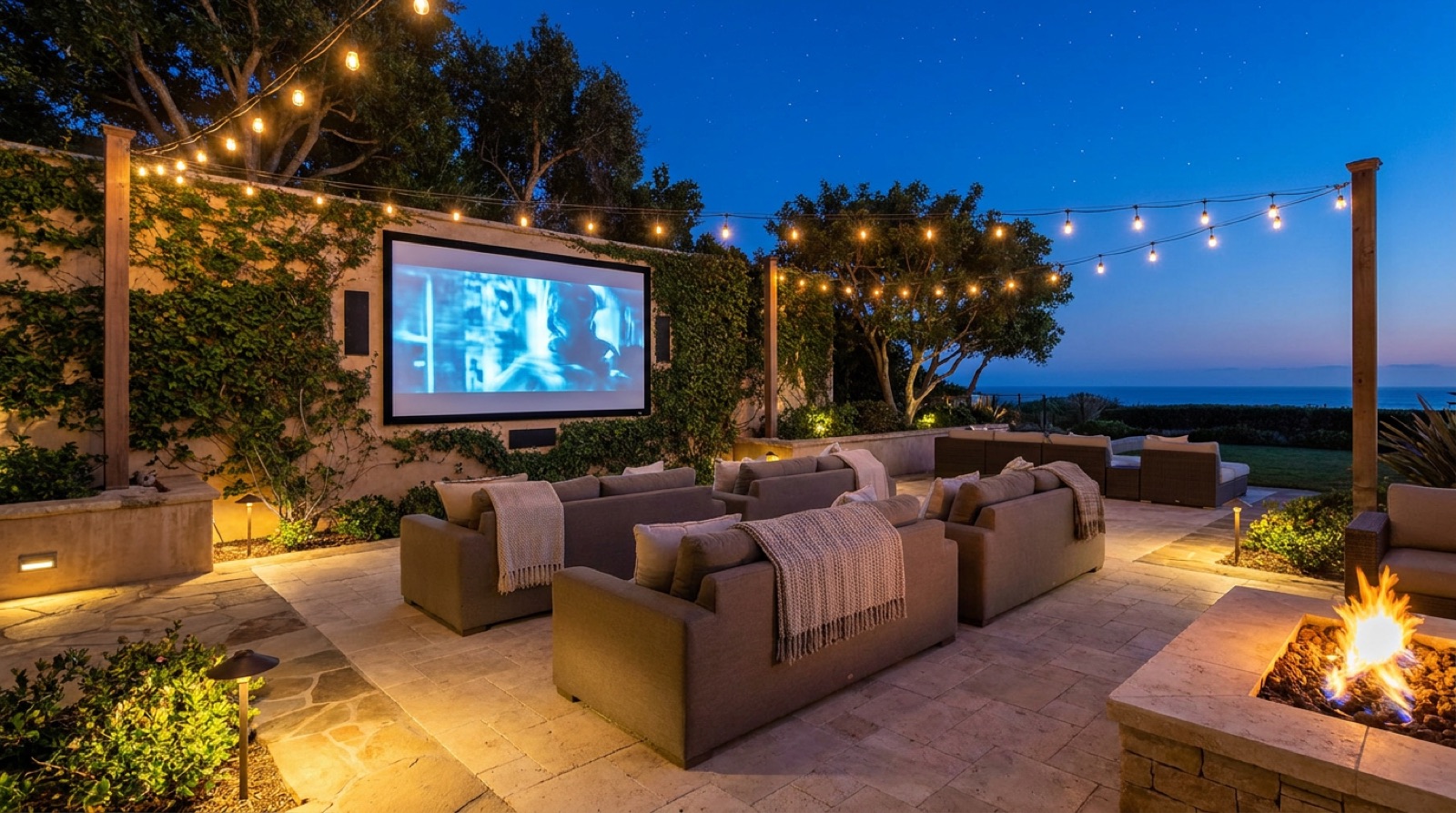
The best outdoor cinemas project onto a purpose-built wall — smooth plaster in a neutral tone, sized for the viewing distance, doubling as a garden wall or the back of a cabana when the projector sleeps. A wall reads permanent and sculptural by day; a retractable screen, however good, always reads as equipment. Where a wall will not work, a motorized screen that drops from a pergola beam disappears completely when retracted — the discipline is that nothing about the cinema should be visible at noon.
What the seven-figure version gets right
Hidden everything. The projector lives in a ventilated masonry enclosure or rises from a cabinet at showtime. Speakers are in-ground and landscape-integrated — the brands that matter here disappear into planting beds and throw sound evenly across the seating area at low volume, which is also what keeps the neighbors friendly. Wiring runs in conduit placed under the hardscape during construction — this is why the cinema has to be designed into the full remodel, not added after the pavers are down.
Tiered seating, gently. A single 12-to-18-inch grade step behind the front row — two rows of deep lounge seating on subtly split levels — gives every seat a clean line to the screen. On a sloped lot the hillside does the work; the cinema becomes the highest and best use of grade that would otherwise be a retaining problem.
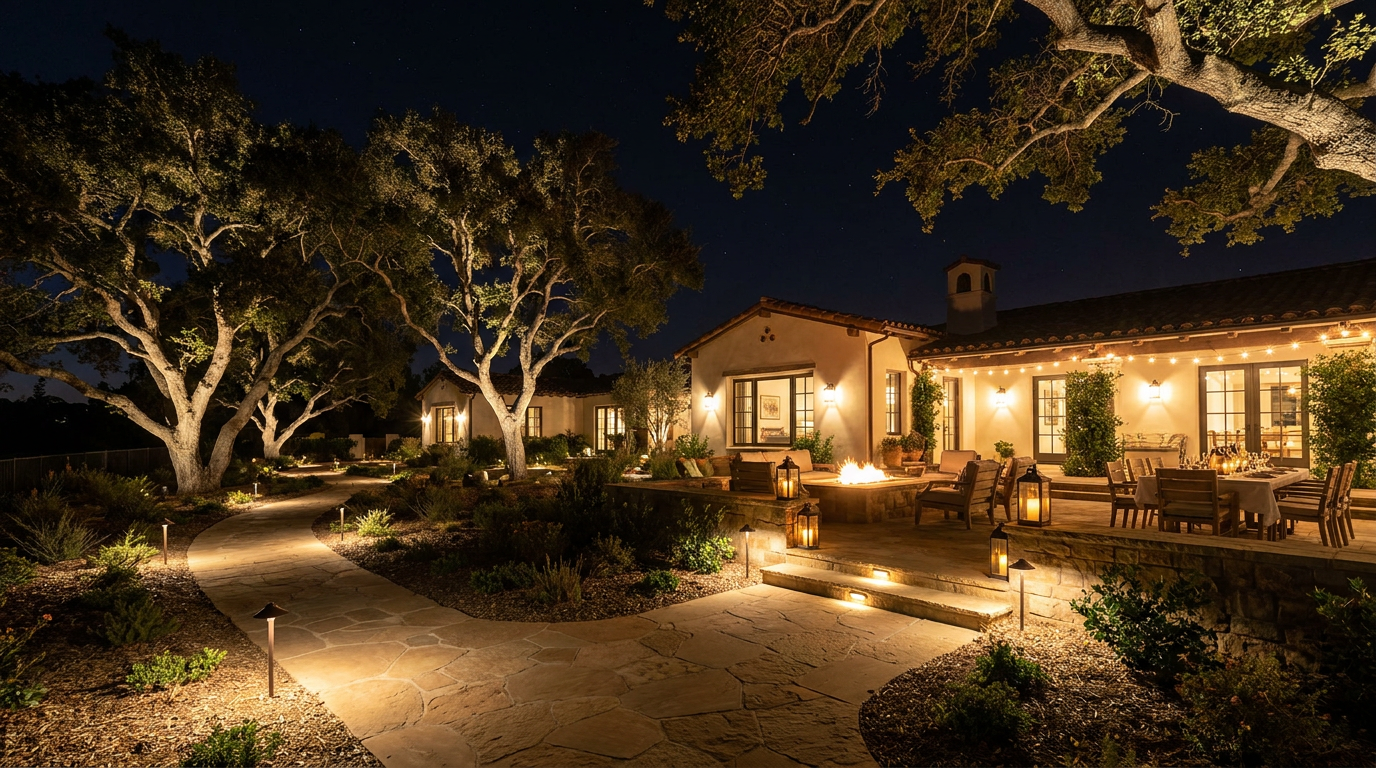
Light in scenes, not switches. The film needs darkness; the walk to the kitchen needs light. A zoned system — we spec FX Luminaire’s Luxor for exactly this — drops the garden to two percent during the film and restores it at credits, from a phone. Step lights stay on at a whisper. Nobody trips; nothing glares.
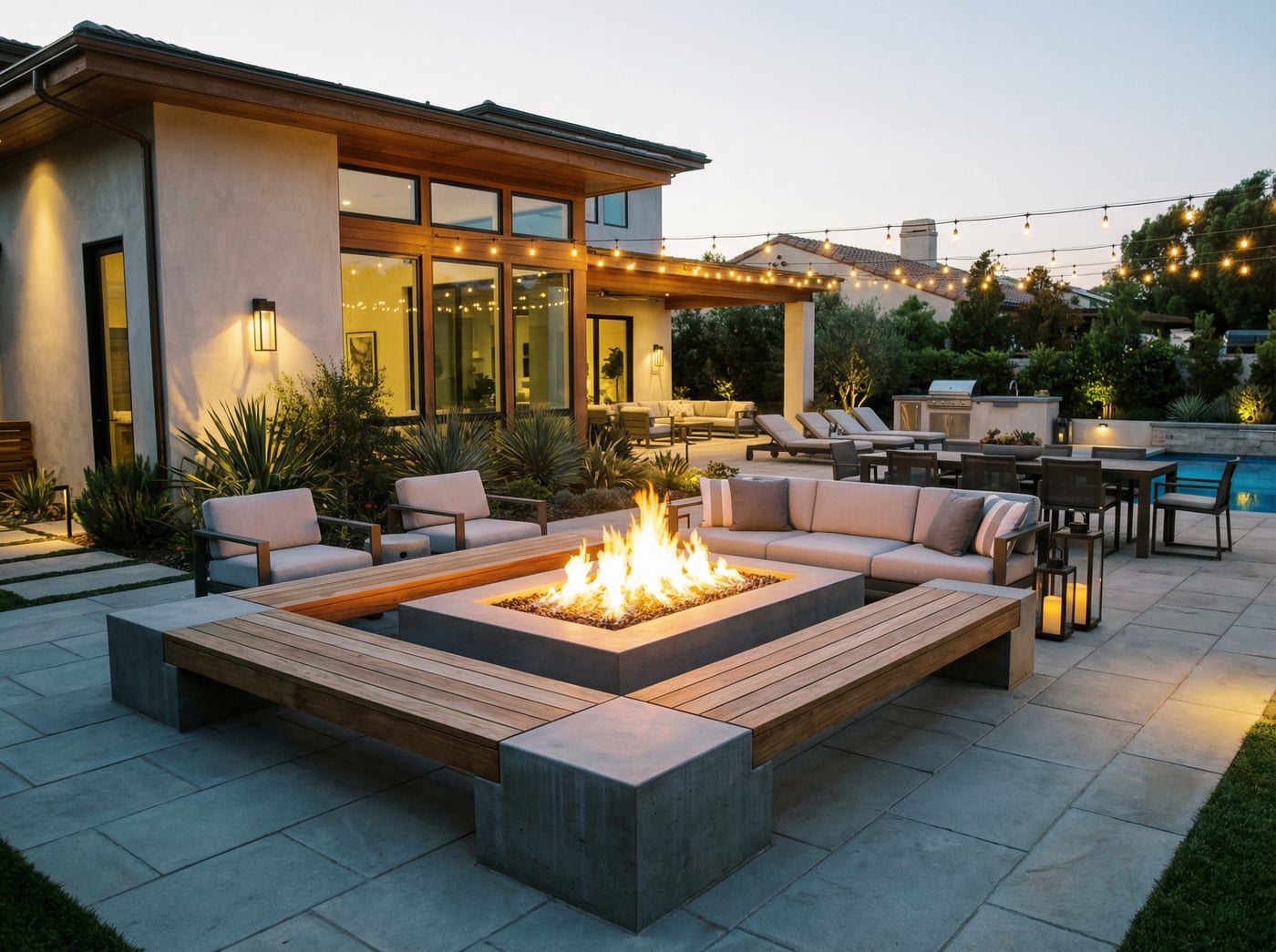
Fire at the edges. A fire feature just outside the sight line — flanking the seating, never behind the screen — holds the space between films and keeps the room warm after the marine layer arrives.
Where it works
Coastal lots in La Jolla and Del Mar contend with the marine layer’s ambient glow; inland estates in Poway and Rancho Santa Fe get the darker skies that make projection sing. Either way the screen wall wants a north or east orientation so summer sunset does not wash out the first act.
A designed outdoor cinema — wall, equipment, seating terrace, lighting scenes — typically runs as one chapter of a larger estate program rather than a standalone project. It shares infrastructure with everything around it, which is exactly why it should be drawn on day one.
Licensed and insured general contractor, operating under Mike’s Class B license — CSLB #1139785.