The feature that gets used every day
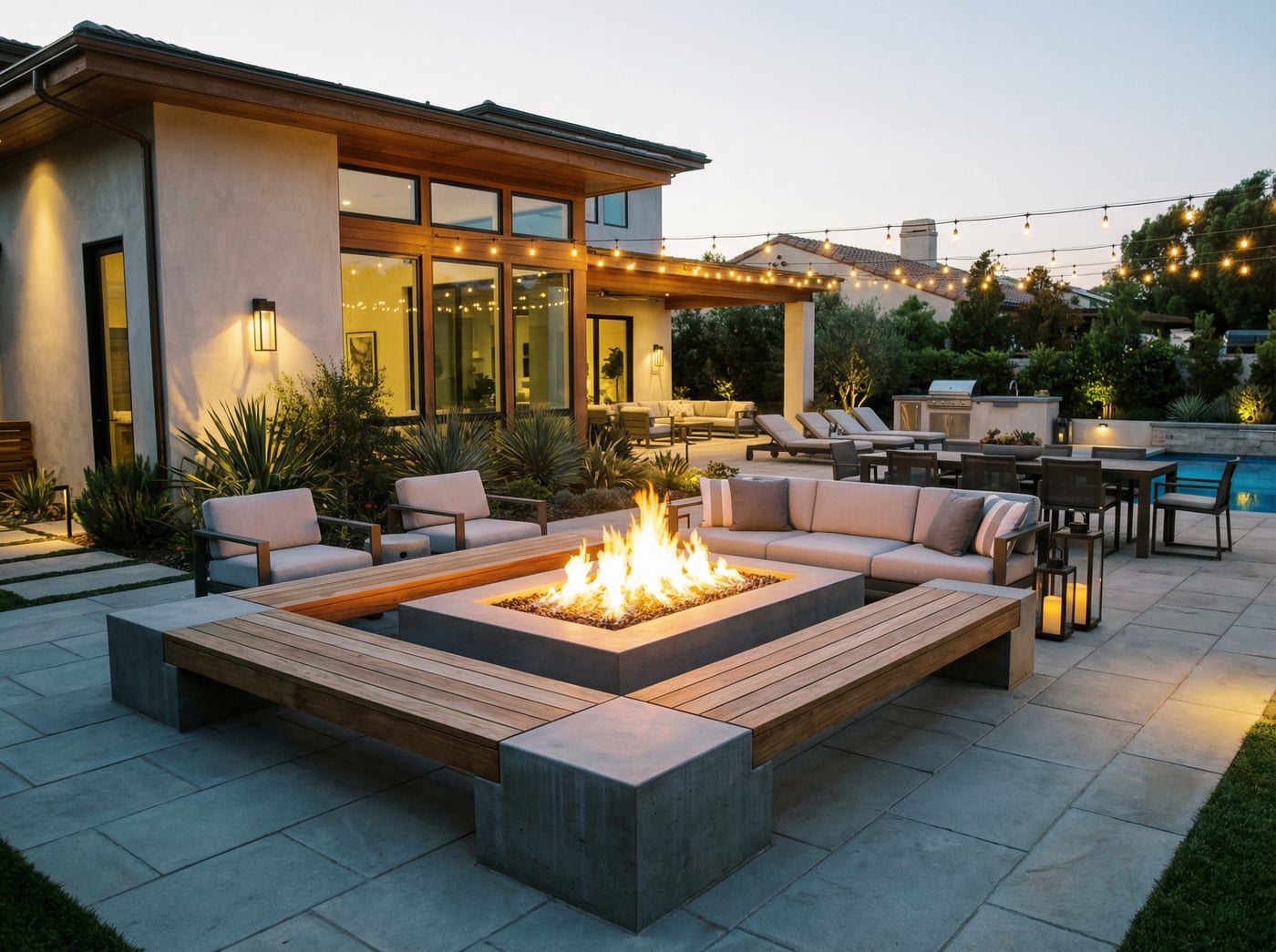
Ask estate owners which feature they actually use most and the answers are unglamorous: the fire pit, the kitchen — and, for the golfers, the green. Daily. Twenty minutes with a wedge before dinner, a putting contest after it. Among all the seven-figure features, the short-game complex has the highest use-per-dollar of anything in the yard, because golfers do not need an occasion.
The difference between novelty and practice is design. A flat kidney of turf with a single cup is a putting toy. The real version is built like a golf facility, scaled to a backyard.
What tour-grade means at home
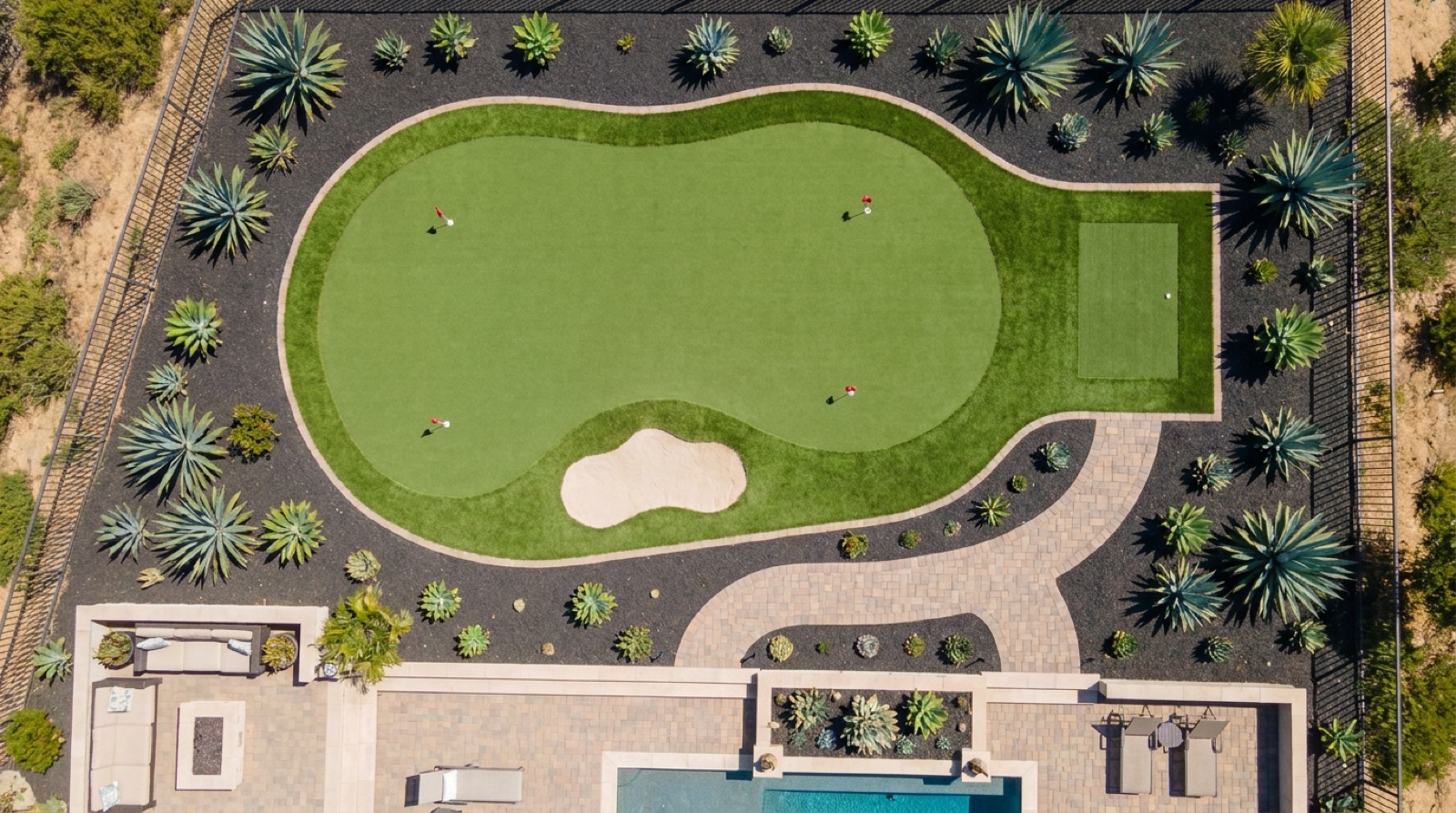
Contour. Real greens break. The sub-base is shaped with deliberate movement — a ridge, a tier, a subtle bowl — so a ten-foot putt is a different read from every angle. This is shaping work done in the base compaction, not the turf, and it is the entire difference between rolling putts and rolling your eyes.
True speed. Purpose-built putting surfaces — SYNLawn Golf is the system we install — are engineered for honest ball roll and a stimp speed chosen like a paint color: slower for family play, tournament-fast for the obsessive. The surrounding fringe cut takes a chip and holds it.
A place to hit from. The chipping tee — a dedicated pad of hitting turf 10 to 25 yards out — turns the green from a putting surface into a practice facility. On larger properties, two or three tee positions at different distances and angles complete the short game.
The bunker. One modest, well-drained sand bunker guarding the green is the feature that makes low-handicap visitors laugh out loud. It is also a drainage project wearing a golf costume — liner, gravel base, and a plan for where the January rain goes.
The design layer that makes it estate-grade
What separates the complexes we build from a sports-catalog installation is that the golf lives inside the landscape composition. The green’s shape follows the garden’s lines; the fringe transitions into planting or decomposed granite rather than a plastic edge; boulders and olives frame approach angles. Lit for evening play with low fixtures that never glare off the surface, the green reads as garden by day and facility by dusk.
Drainage discipline is non-negotiable — a green is a large impermeable-ish surface, and the sub-base has to move storm water into the yard’s larger drainage system without ever puddling the low read.
Lot size decides ambition: a 1,200-square-foot green with real contour fits suburban estates in Poway and 4S Ranch; the multi-tee complexes with bunkers want the acreage of Rancho Santa Fe. Both get built as part of the larger remodel, sharing grading, drainage, and stone with everything around them.
Licensed and insured general contractor, operating under Mike’s Class B license — CSLB #1139785.