The Del Mar yard and what it asks of turf
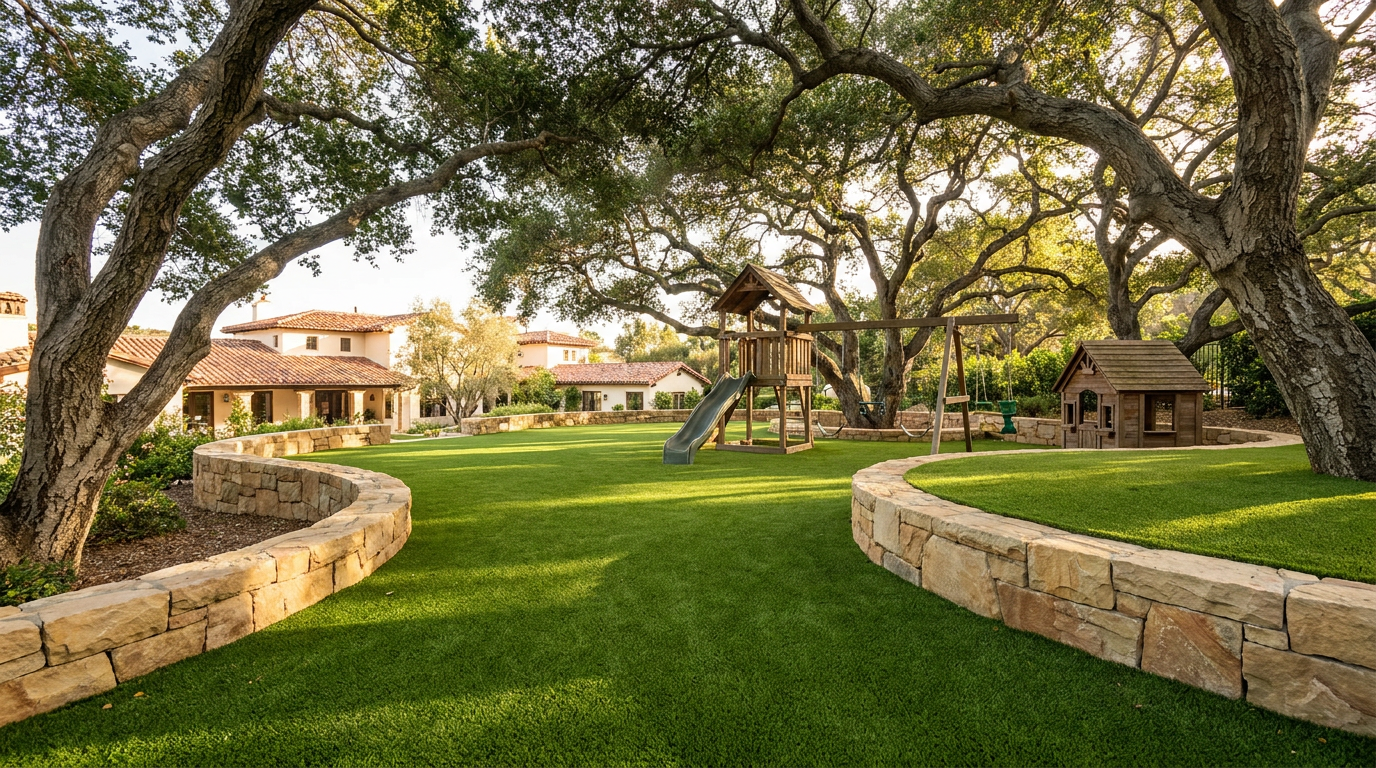
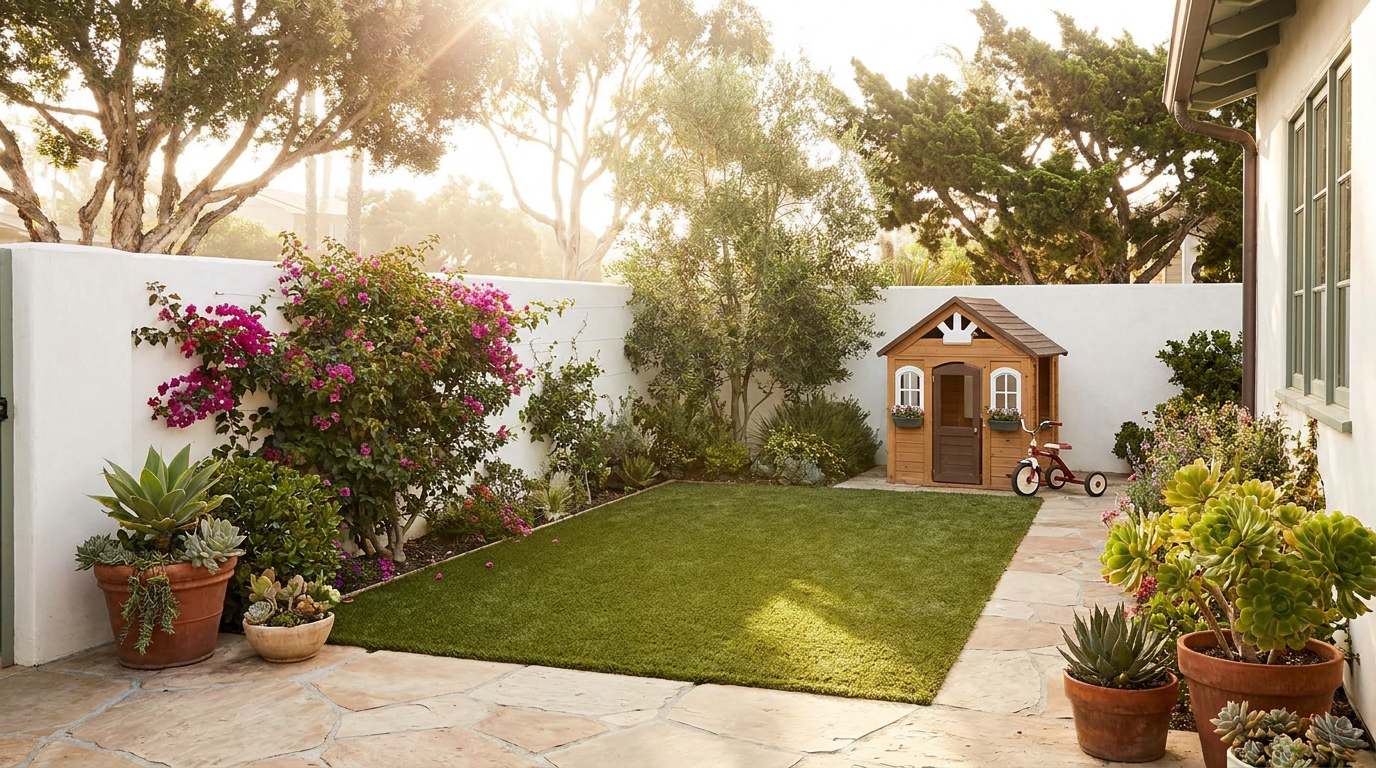
Del Mar Village lots do not have lawn space. What they have are defined outdoor areas — a 15 by 20 foot zone between the patio and the fence, a side yard run of 8 feet by 40, the strip of ground that reads as a back lawn but is too small and too shaded to support real grass reliably. On these lots, artificial turf solves a specific problem: giving that area a clean, finished, year-round green surface that performs under children and dogs without irrigation, mowing, or the persistent bare-patch problem that real grass develops on compact coastal soils.
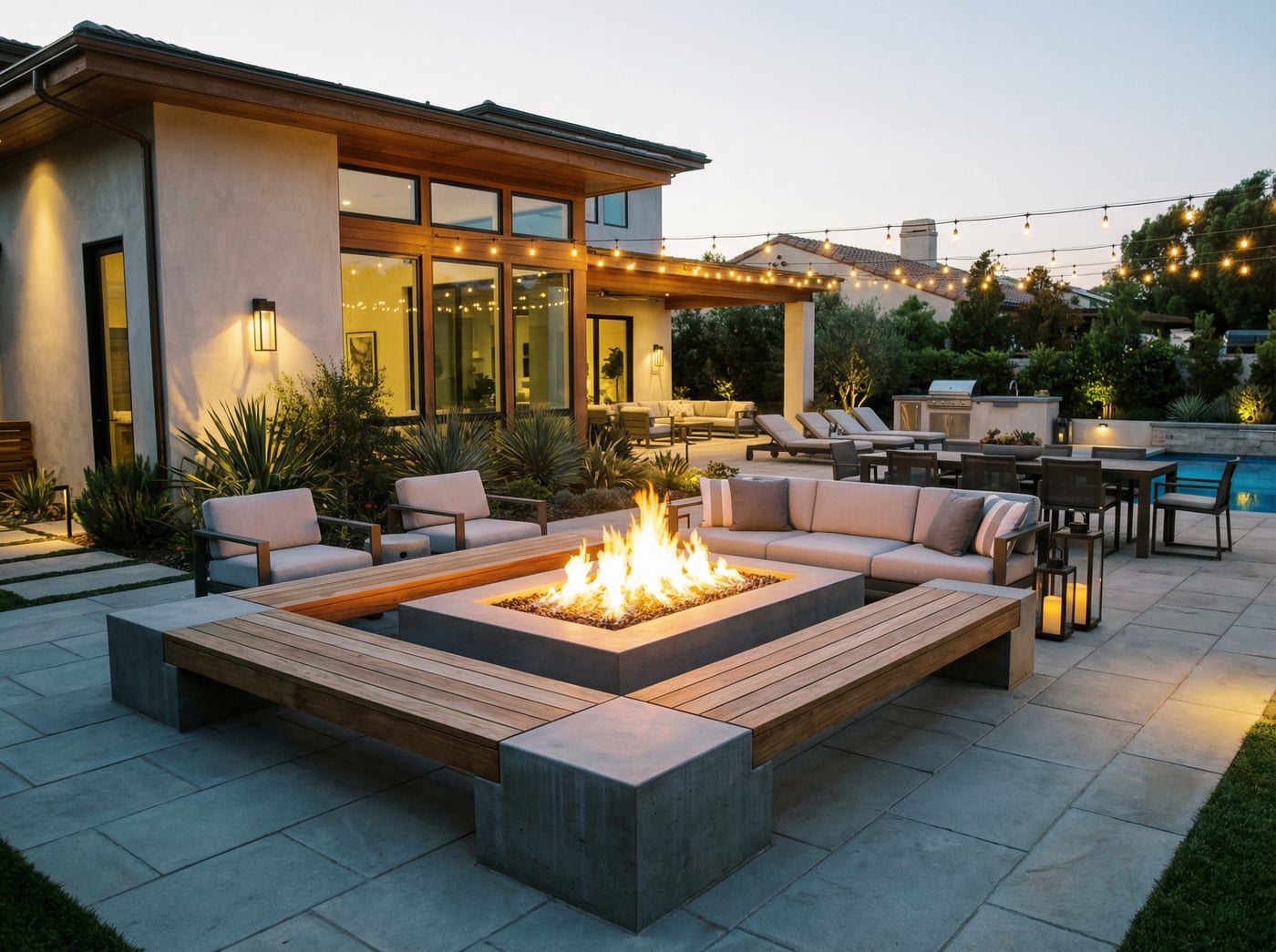
Families with children who buy in Del Mar consistently find that the outdoor play area is the highest-use part of the yard. Not the patio, not the fire pit, not the dining area — the place where the kids can run. A well-installed artificial turf area in a Del Mar yard gives that zone permanence and usability that real grass on a coastal lot cannot match.
Sandy soil and the drainage reality
Del Mar soil is sandy on the bluff side and sandy-to-loam in the Village interior — a profile that drains fast, which is mostly an advantage for artificial turf installation. Unlike the clay-heavy subsoils in other coastal cities, Del Mar’s sandy base allows moisture to move through rather than pool. A correctly installed turf base on Del Mar soil will drain the heaviest February rain event within an hour.
The exception is the Del Mar Heights side of I-5, where the mesa topography and heavier soil profile create drainage conditions more like the rest of North County. On Heights lots with a grade, the drainage design has to account for how water moves across the slope, not just through the base.
Beach Colony installations are a different matter: the soil is essentially beach sand, which drains almost instantly but requires careful base preparation to avoid settling under foot traffic. We compact the base to the appropriate density for the use — a children’s play area requires more compaction than a decorative lawn — and use a crumb-free infill that doesn’t track through the house.
What reads correct in Del Mar
Del Mar notices aesthetics. A turf installation that looks synthetic from the street or that has a cheap-green color will be noticed, talked about, and will depreciate the first impression of the property.
What reads correct in Del Mar: a natural-tone artificial grass — olive green with a mix of two to four blade lengths and a thatch layer that mimics natural lawn depth. A pile height of 1.5 to 2 inches. A blade shape that disperses light rather than reflecting it flat. Perimeter edging that is clean and tight at the transition to patio or planting, not a raised-bender-board edge that traps debris.
What reads wrong: uniformly bright green turf at 2.5-inch pile with a reflective blade. The “golf green” look that announces itself as artificial. We do not install product that will read wrong in this zip code.
The Beach Colony and salt exposure
The Beach Colony has the highest salt-air exposure in Del Mar — some lots are within a block of the sand. Artificial turf itself handles salt air well; the concerns are the hardware. Aluminum edging at the right spec, stainless fasteners throughout, and a drainage channel that does not rely on iron or untreated steel components. We specify coastal-grade hardware on all Beach Colony installations.
DRB and permit considerations
Artificial turf installations in Del Mar’s rear yard are typically below the DRB’s review threshold unless they are visible from a public right-of-way. Front yard turf installations are reviewed. We confirm the review path before installation and do not proceed without the applicable clearances.
For the broader Del Mar remodel cost picture, see our Del Mar remodel cost guide.
Licensed and insured general contractor, operating under Mike’s Class B license — CSLB #1139785.