Grade work at Covenant scale
A Rancho Santa Fe estate with a two-acre parcel rarely sits on flat ground. The decomposed granite ridges, the clay loam drainage swales, and the gentle to moderate slopes that define most Covenant parcels create grade differentials that have to be managed before the outdoor program can be designed. A retaining wall on a Covenant property is not a landscape accessory. It is a structural system that determines where the usable outdoor area exists, how water moves across the site, and whether the oak canopy above it will survive the change to the grade below it.
The CDRC reviews retaining wall height, material, finish, and relationship to the property’s architectural character. A wall in the Spanish Colonial vernacular reads correctly — hand-set or cut stone, or a plastered masonry with a clay tile cap. A wall in an off-the-shelf concrete block product without a finish reads incorrectly. The submittal includes a material board and elevation drawings, same as any other Covenant exterior element.
Where retaining walls appear on Covenant properties
The most common locations are three.
The main entertaining terrace transition. The primary outdoor terrace on a hillside Covenant property often requires a retaining system at the downslope edge to create the flat area the terrace needs. A seating wall or a low retaining wall in estate-grade stone or plastered masonry at this location serves double duty: structural grade retention and the visual boundary of the entertaining area. We design both functions from the first drawing.
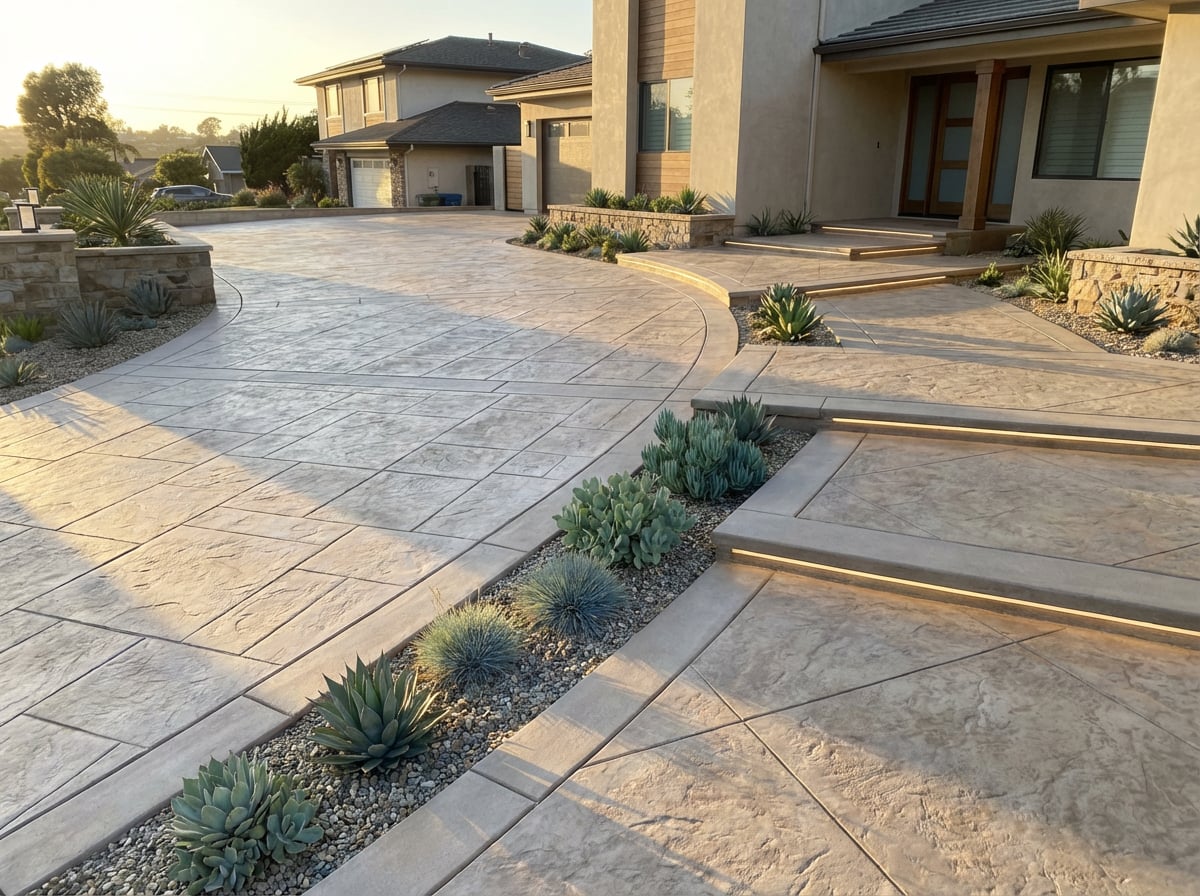
The motor court and driveway approach. Wide, flat motor courts on sloped Covenant parcels require retaining at the uphill edge to cut into the grade and at the downhill edge to fill. The retaining here is often the most visible structure on the property from the entry approach. The material has to be correct in the RSF vocabulary and structurally sound for the vehicular loads at the motor court edge.
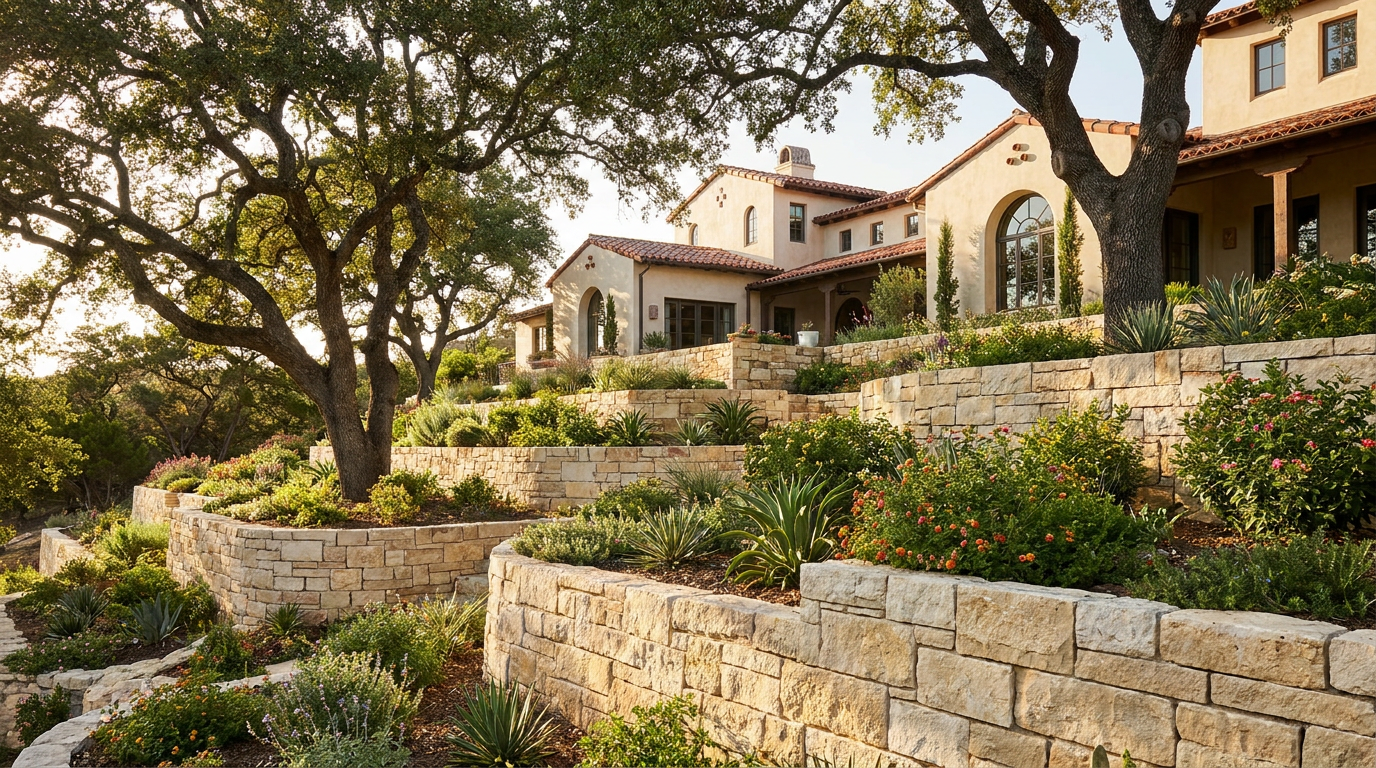
The lower landscape and view grade. On properties with a view to the south or west, a tiered retaining and terrace system below the main entertaining area creates usable lower lawn, garden, or viewing terrace from what would otherwise be a slope. This is often the most design-intensive retaining scope on a Covenant property.
Materials and CDRC expectations
Cut limestone. The highest-finish, most architecturally serious material for a large-scale retaining wall on a Covenant estate. Dry-stack or mortared. Reads as permanent, native to the Spanish Colonial vernacular, and worth what it costs.
Hand-placed natural stone. River cobble, granite, or quarry stone laid with visible variation. Reads as organic and appropriate to the RSF landscape. More labor-intensive than block but produces a wall that looks correct in forty years.
Plastered concrete block. The cost-effective Covenant solution when the architecture calls for a stucco-finish wall rather than exposed stone. A smooth plaster coat in the right cream or warm white, with a clay tile or cut stone cap, reads correctly alongside a Spanish Colonial house. The construction is conventional; the finish is what carries the wall aesthetically.
COR-TEN steel. Correct on a very small number of Covenant properties where the architecture has already moved in a contemporary direction. Not the default.
Oak root zones and wall placement
No retaining wall footing can be placed inside a protected oak root zone without arborist-reviewed mitigation. Root zones on mature coast live oaks extend far beyond the canopy drip line — a wall footing cut through a root zone damages the tree in ways that appear two to five years later and cannot be reversed.
We map the root zones before any wall is designed. Where the program requires a wall that would conflict with a root zone, we use either a helical pier foundation system that minimizes excavation, or we redesign the wall alignment to clear the protected area. The oak is not a negotiating point.
Drainage behind the wall
A retaining wall without proper drainage behind it fails. Water pressure in the soil behind the wall — hydrostatic pressure — is the structural force most often underestimated on residential retaining installations. We install drainage pipe, gravel backfill, and filter fabric as part of every retaining wall scope. On a clay-loam Covenant parcel, the drainage design is not optional; it is the reason the wall is still plumb in twenty years.
Licensed and insured general contractor, operating under Mike’s Class B license — CSLB #1139785.